Tired Brick? Sydney’s Tuckpointing & Rendering Fix-It Guide

Author Archives: tuip_18

Tired Brick? Sydney’s Tuckpointing & Rendering Fix-It Guide

Your Brickwork Called. It Wants an Intervention.

There’s a particular kind of Sydney sadness that only a homeowner understands: standing on your own front lawn, coffee in hand, looking at a facade that used to be handsome and is now doing its best impression of a biscuit that’s been left out in the rain. Mortar crumbling out of the joints like stale cake. A render job from 2004 that’s cracked into a relief map of Tasmania. And somewhere under three coats of “it seemed like a good idea at the time” paint, actual bricks that just want to breathe again.

You are not alone, and more importantly, you’re not stuck with it.

We’re Sydney Tuckpointing & Rendering, and we’ve built our whole trade around one thing: taking tired, cracked, painted-over, or just plain unloved brick and masonry and turning it back into the reason people slow down when they walk past your place. Not with shortcuts. Not with a tub of filler and a prayer. With the actual trade skills this kind of work demands — because brickwork is basically the skeleton of your house, and skeletons deserve better than a Band-Aid.

This is the guide we wish more homeowners read before their mortar started falling out onto the garden bed.

Why Sydney Brick Cops Such a Beating

Sydney’s climate is gorgeous for barbecues and genuinely hostile for masonry. Harsh UV bakes mortar and render until it’s brittle. Salt-laden coastal air eats into lime and cement. Sudden downpours flood into hairline cracks. Clay-heavy soils shift just enough over the decades to stress brick joints. Add in a city full of Federation and inter-war housing stock — gorgeous bones, ageing mortar — and you’ve got a place where facade problems are less “if” and more “when.”

The good news: almost none of it is unfixable. The bad news: it’s rarely a one-size-fits-all job, which is exactly why “how do I sort my brickwork out” ends up being a genuinely complicated question with about eleven different right answers depending on what’s actually gone wrong.

First Things First: Tuckpointing vs. Repointing

Half the tuckpointing enquiries we field are actually repointing jobs in disguise, so let’s clear it up.

Repointing is straightforward mortar replacement — the old, crumbly stuff between your bricks gets raked out and replaced with fresh mortar colour-matched to your brick. It’s the workhorse fix for genuine deterioration.

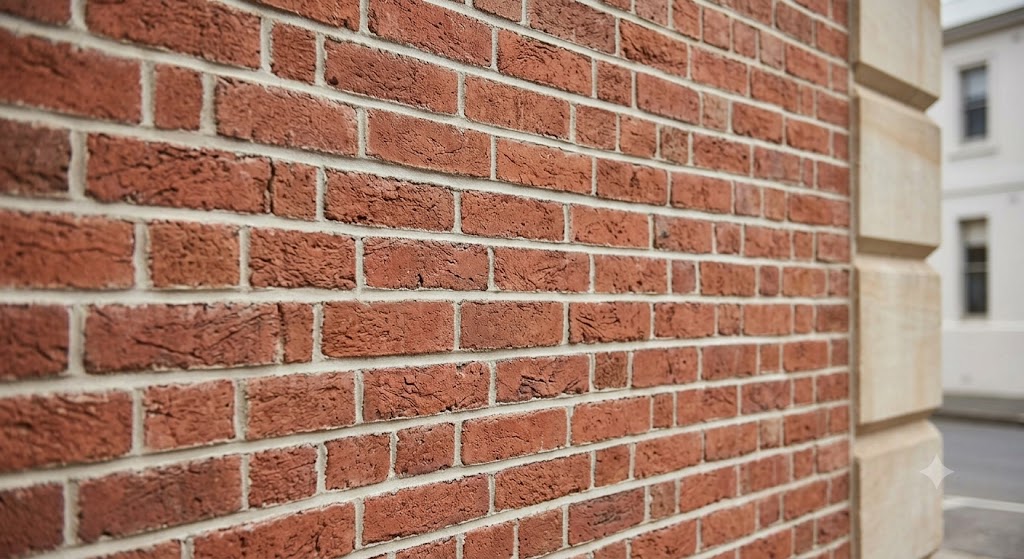
Tuckpointing is the fancier cousin. It’s a two-step, heritage-grade technique where mortar is coloured to match the brick, then a fine raised line (usually white or black) is run through the centre to create the illusion of perfectly uniform, razor-straight joints — a look originally invented to make lower-quality bricks look like premium ones. It’s stunning on Federation homes, and it’s why so many North Shore and Eastern Suburbs facades look almost architecturally drawn rather than bricklaid.

Both jobs matter for the same reason: once mortar joints fail, water gets behind the brick face, and that’s when small cosmetic problems turn into structural ones. Our tuckpointing and repointing team covers both, and part of the first visit is genuinely just working out which one your house needs — spoiler: it’s not always the fancier, pricier option.
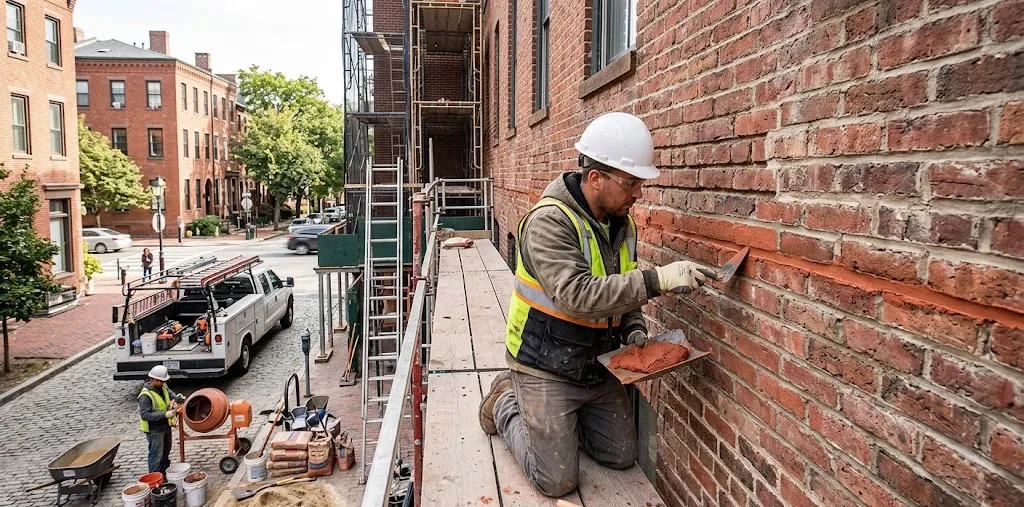
What Does It Actually Cost?

Nobody wants to read 2,000 words and still not have a ballpark figure, so here’s the honest range based on typical Sydney jobs in 2026:

  • Repointing and tuckpointing: roughly $90–$150 per square metre, depending on access, colour-matching complexity, and how far gone the existing joints are
  • Cement render: around $30–$60/sqm — cheapest option, but needs painting afterwards
  • Acrylic render: roughly $45–$70/sqm — pricier upfront but pre-coloured, flexible, and far more crack-resistant
  • Texture coating: about $45–$80/sqm, and it skips the separate paint job entirely
  • Removing old render or paint before starting fresh: add another $15–$40/sqm
  • Scaffolding for double-storey work: budget an extra $1,500–$5,000

A full single-storey exterior generally lands somewhere between $6,000 and $14,000 depending on the finish, and double-storey homes climb from there thanks to scaffolding and access. The thing that blows a “cheap” quote out isn’t usually the render itself — it’s whatever was hiding under the old paint or render that nobody budgeted for. Which brings us to the next bit.

The Sneaky Culprit: What’s Actually Under There?

You can’t fix what you can’t see, and this is where a lot of DIY attempts — and, frankly, some cheaper contractors — come unstuck.

Cracked brick and structural movement. Hairline cracks are often cosmetic. Stepped cracks that zigzag along the mortar joints can point to movement in the footings or a tired lintel. Either way, patching over a crack without understanding why it happened is how you end up paying for the same repair twice. Our brickwork and mortar repair specialists assess the cause before a trowel gets anywhere near the wall.

Full masonry restoration. For heritage homes, older commercial buildings, or brick that’s had a genuinely rough life, sometimes the whole facade needs a proper going-over — brick ties replaced, structural cracks stitched, spalled bricks cut out and replaced, the works. That’s a different beast to a quick patch job, and it’s exactly what our masonry restoration and renovation service is built for.

Painted brick that wants its freedom back. Someone, at some point, painted over beautiful face brick, and now you’re wondering if you’re allowed to undo it. You are. Removing paint from brick without wrecking the brick face underneath is a genuine skill — get too aggressive with the chemicals or the pressure washer and you’ll strip the surface right off the brick, which is a one-way trip. Done properly, our brick paint removal specialists get you back to natural brick without turning your wall into gravel.

The Render and Finish Side of Things

Not every home wants exposed brick, and that’s a completely legitimate call too.

Faux sandstone finishes. Want the warm, textured look of sandstone without the astronomical cost or ongoing maintenance of the real thing? A well-applied imitation finish gives you that heritage, old-money street appeal for a fraction of the price, and it holds up brilliantly against Sydney weather when it’s installed right. Our sandstone imitation finishes are worth a look if that’s the direction you’re leaning.

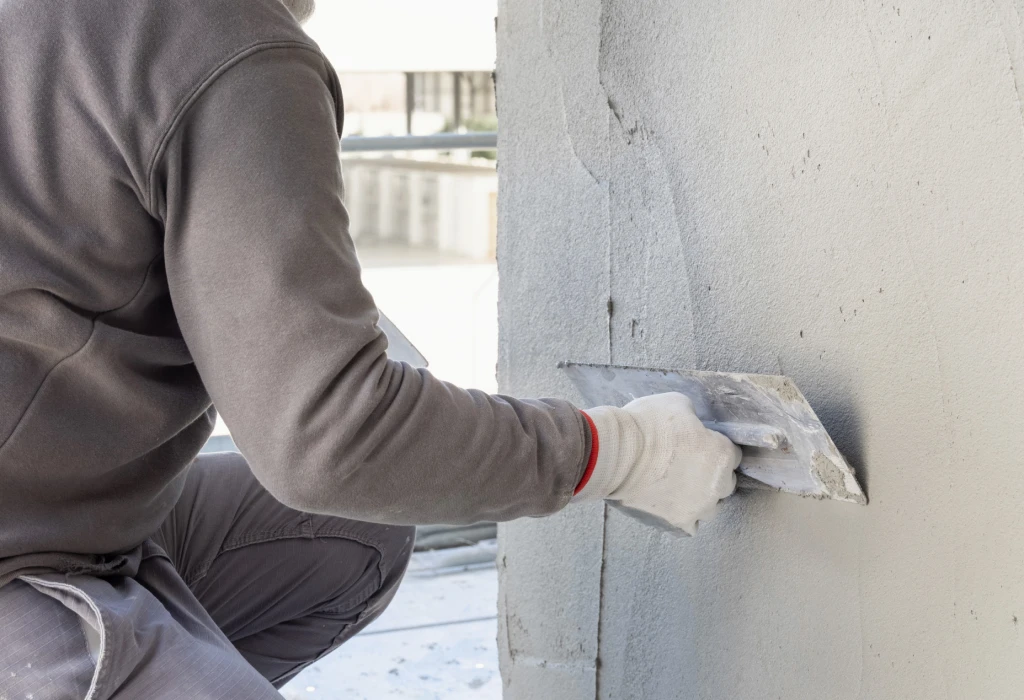
Acrylic and cement rendering. This is the classic modern-home transformation — a tired, dated brick facade goes under fresh render and suddenly looks like a completely different, and considerably more valuable, property. Acrylic is the pick if you want crack resistance and colour that doesn’t need repainting down the track; cement is the budget play if you’re happy to paint afterwards. Our acrylic and cement rendering crew will talk you through which one suits your wall, your budget, and your patience for future maintenance.

Rockcote colour rendering. If you want a coloured, textured, weatherproof finish genuinely designed for the Australian climate — not just imported and hoped for the best — Rockcote systems are hard to beat, and they come in a colour range that doesn’t scream “project home.” We run Rockcote colour rendering across residential and strata jobs alike.

Texture coating. For walls that need a bit more visual interest, or need to hide surface imperfections a flat render would show up, texture coating adds grip, depth, and weather resistance in one hit. Have a browse of our texture coating options if “flat and boring” isn’t quite the vibe you’re after.

Modern cladding solutions. Blueboard and foam cladding systems have become the go-to for renovators chasing a sleek, contemporary look with genuinely good thermal performance — particularly popular on extensions and new builds where a rendered finish over lightweight cladding gets you the modern aesthetic without the weight or cost of full masonry. Our cladding solutions cover exactly this.

Pool area rendering. Pool surrounds cop an absolute hiding from chlorine, sun, and general Sydney-summer chaos, so they need a finish that’s actually built for it, not just a standard wall render slapped on and hoped for the best. Our pool area rendering service is designed specifically around that kind of punishment.
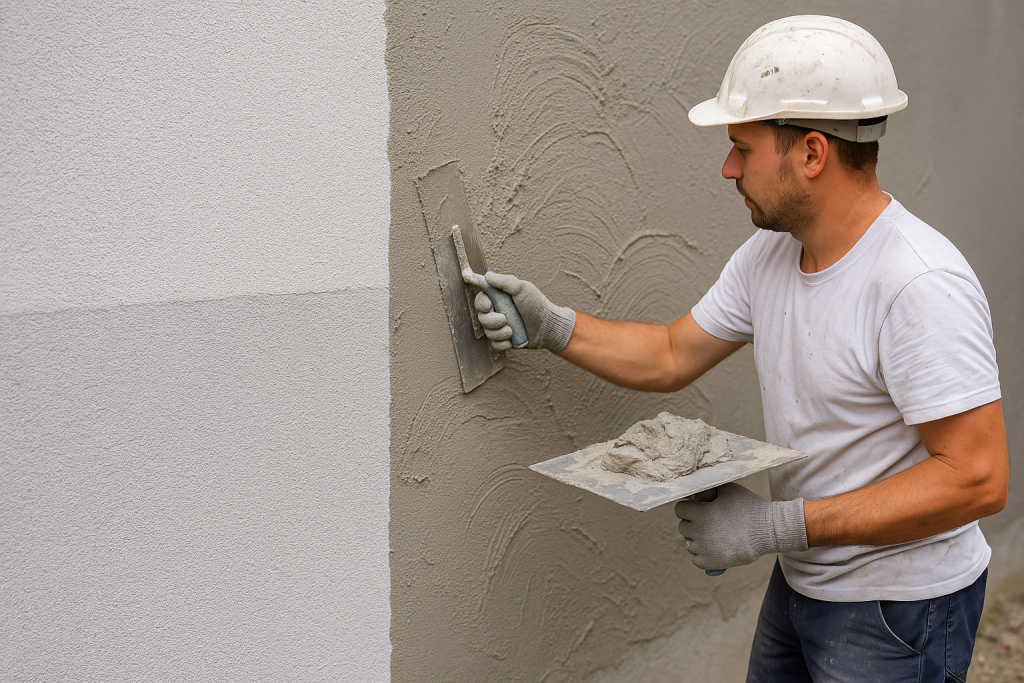
Acrylic & Cement Rendering Sydney

Call us on 0452 522 232 for a free quote, or explore more masonry guides and tips on our blog.

Your walls have been patient long enough. Let’s give them the help they deserve.

How We Actually Do the Work (No Mystery, No Smoke and Mirrors)

  1. Inspection and honest assessment. We look at what’s actually going on, not just the crack you called us about, but what’s causing it.
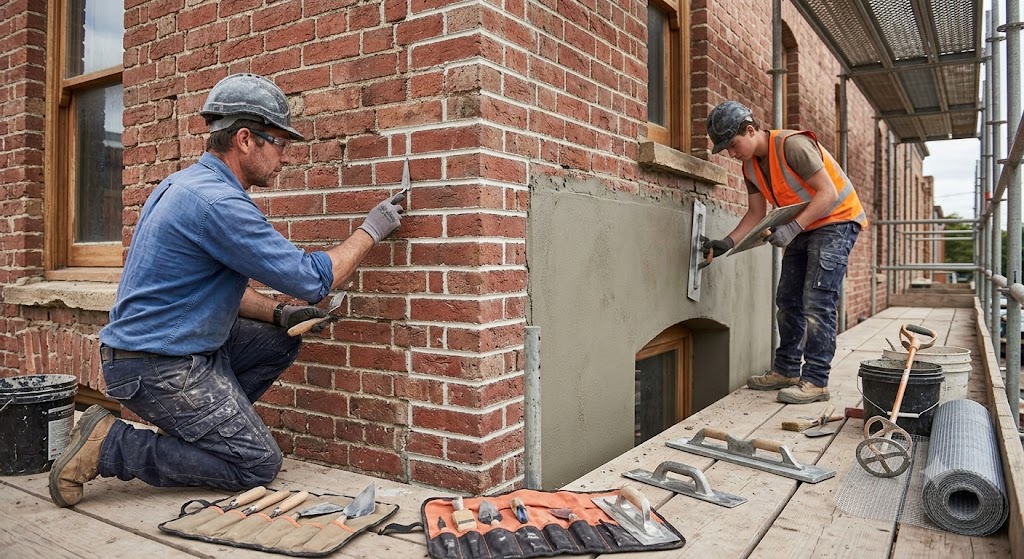
  2. Prep, prep, and more prep. Raking out old mortar, removing failed render or paint, treating damp if it’s present. This is the unglamorous 60% of the job that decides whether the finished result lasts 15 years or 15 months.
  3. The actual craft. Colour-matched mortar, correctly mixed render systems, proper coat thickness and cure times — none of which can be rushed without it showing up as cracking six months later.
  4. The finish. Whether that’s a tuckpointed line so straight it looks laser-cut, a smooth acrylic render, or a textured Rockcote coat, this is where the transformation actually becomes visible.
  5. Clean-up and a walkthrough. We don’t vanish the second the last coat goes on — you get to see it, ask questions, and know exactly what maintenance, if any, is needed going forward.

Why Bother? (The Bit Where We Justify the Spend)

Beyond the obvious “it’ll look nice” argument, which is a completely valid reason on its own, proper tuckpointing and rendering does three practical things:

  • It stops water getting in. Failed mortar and cracked render are basically an open invitation for moisture, and moisture is how small problems become expensive ones — rising damp, timber rot, the lot.
  • It protects your biggest asset. A well-maintained or freshly rendered facade genuinely lifts kerb appeal and resale value. Real estate agents aren’t just being nice when they mention it.
  • It’s cheaper than the alternative. Fixing mortar joints or render cracks now is dramatically less expensive than dealing with structural repairs or full masonry restoration later.

FAQs (The Questions We Get Asked on Every Second Job)

How long does tuckpointing or rendering actually last? Done properly, quality tuckpointing and repointing can last 20–50 years. Acrylic renders and texture coatings typically hold up for 15–20 years before needing attention, with proper care extending that further.

Can I just paint over cracked render instead of fixing it? You can, and you’ll be back here again within a year or two. Paint doesn’t fix movement or failed adhesion underneath, it just hides it temporarily.

Do I need council approval for rendering or tuckpointing? For most standard residential facade work, no. Heritage-listed properties or significant structural changes can require approval, and we’ll flag that during the initial inspection if it applies to your place.

Is tuckpointing more expensive than repointing? Yes, generally. It’s a two-step process requiring more skill and time, so it commands a higher price than standard repointing. Worth it if you want that heritage, architecturally uniform look.

What’s the difference between texture coating and rendering? Rendering is the base coat system applied to the wall itself; texture coating is often the finish layer over render, or directly over a suitable substrate, that adds grip, pattern, and weather resistance.

How do I know if my brick needs paint removal or a full re-render? If the underlying brick is in good condition and you like the exposed-brick look, paint removal is usually the answer. If the brick is damaged, patchy, or you want a completely different finish, rendering over it is often the smarter call.

Right, What Now?

If your facade is currently the neighbourhood’s most talked-about eyesore — in a bad way, not the “ooh I love that heritage charm” way — it doesn’t need to stay that way. Whether it’s a quick repoint, a full masonry restoration, a fresh Rockcote colour render, or finally freeing your brick from decades of paint, there’s a fix that suits your house and your budget.

Have a browse of our other project write-ups and guides for more before-and-afters, or if you’re ready to stop staring sadly at your own wall, get in touch through our contact page for a free, no-obligation inspection and quote. We’ll tell you exactly what’s going on, what it’ll cost, and — refreshingly — what you don’t actually need to spend money on.
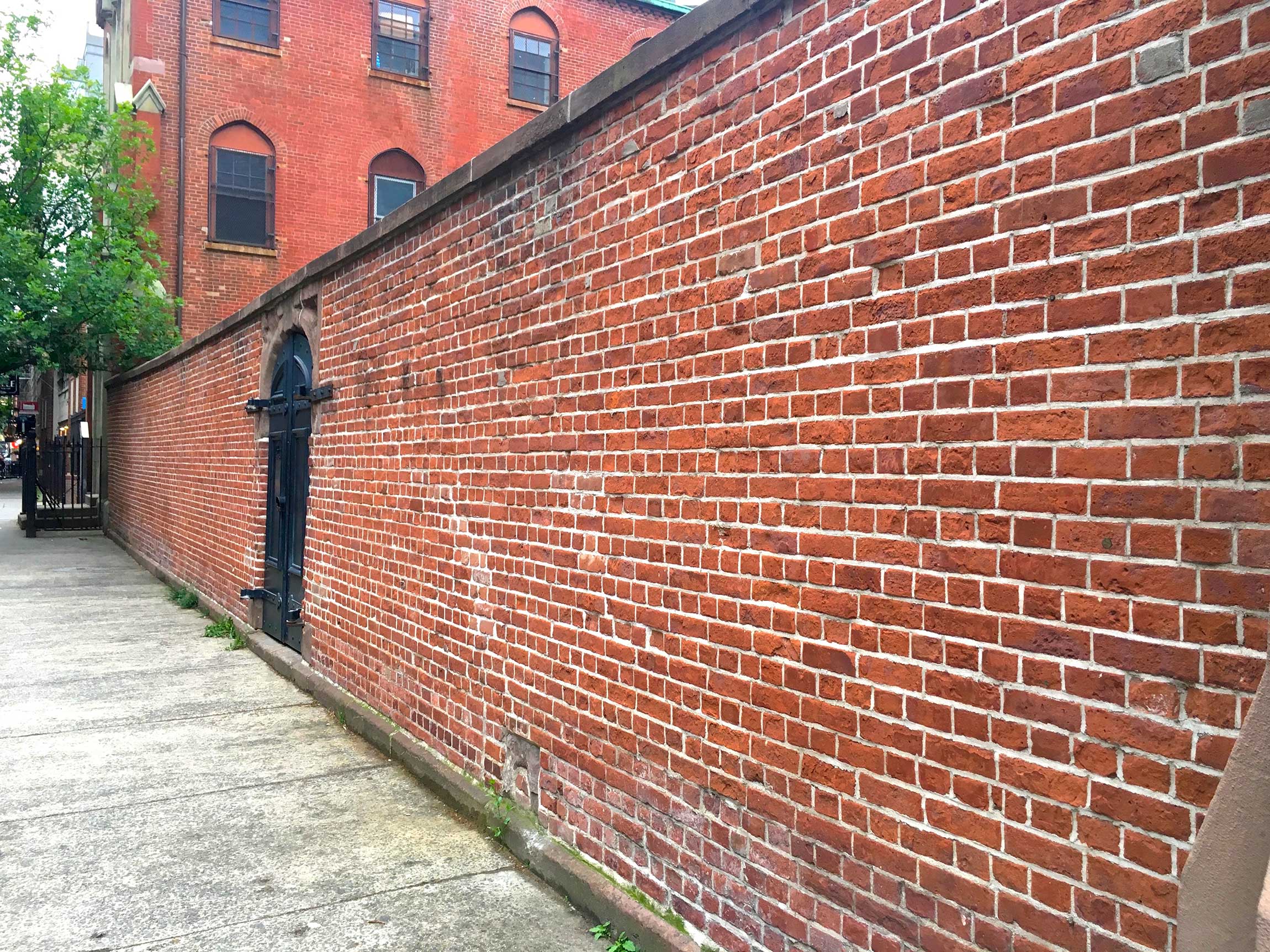
Your Bricks Are Older Than Your Nonna’s Recipes — Here’s How to Fix That

Walk down any street from Balmain to Belrose and you’ll spot the same crime scene: gorgeous old brickwork left to fend for itself against Sydney’s salt air, storm season and the occasional backyard cricket ball. Mortar’s crumbling like a stale Anzac biscuit. Render’s cracked worse than a P-plater’s confidence at the Bondi carpark. And somewhere in there, a homeowner is Googling “why does my house look 40 years older than it is” at 11pm.

Fair dinkum, we get it. Brick and render don’t fail overnight — they fail quietly, year after year, until one day the whole facade looks like it’s given up. That’s the gap Sydney Tuckpointing & Rendering fills. Not with jargon, not with a hard sell, just straight-up expert brickwork and render restoration that actually holds up to a Sydney summer.

This one’s a proper deep dive — how tuckpointing actually works, why cracked brick isn’t just a cosmetic issue, what “affordable” should really mean when you’re hiring a tradie for masonry, and how finishes like Rockcote render, texture coating and faux sandstone can transform a tired facade without a full rebuild. Grab a cuppa, this is the long read.

Why Sydney’s Brick and Render Take Such a Beating

Sydney’s climate is basically brickwork’s worst enemy dressed up as good weather. Salt-laden air off the coast, humidity that swings wildly, and clay soils that shift under footings all conspire to open up mortar joints and crack render. Add sandstone-era homes in the Inner West and Federation cottages on the North Shore, and you’ve got a city with some of the oldest, most character-rich brickwork in the country — and some of the most vulnerable.

Left unchecked, deteriorating mortar lets water into the wall cavity. Water in the cavity means efflorescence (that chalky white bloom), spalling bricks, and eventually structural issues that cost a lot more than a repoint would have. This is the “why should do” question answered plainly: brick and render maintenance isn’t vanity, it’s the cheapest insurance your building will ever get. A tuckpointing job done properly today can save a full masonry rebuild in fifteen years.

Tuckpointing vs Repointing: What’s Actually the Difference?

Here’s where most homeowners get tangled up, and honestly, half the industry doesn’t explain it well either. Repointing is straightforward — raking out failed mortar and packing the joint with fresh, colour-matched mortar. Tuckpointing goes a step further: after the joint is filled, a fine contrasting line (traditionally white or black) is drawn precisely down the centre, creating the illusion of perfectly uniform brickwork — a technique that goes back to Georgian-era England and still turns up on Federation homes across the Eastern Suburbs and North Shore today.

Professional tuckpointing in Sydney is a two-layer, high-skill process, and it’s genuinely one of the more delicate trades in the building game — get the tuck line even slightly off and the whole wall looks worse, not better. If you want the specifics on how the team approaches colour-matching, joint depth and finish, the tuckpointing and repointing service page walks through exactly how each job is scoped before a single tool touches your wall.

Quick way to decide which you need: if your mortar is simply failing and you want a clean, durable finish, repointing does the job. If you’re restoring a heritage look or want that classic crisp brick-line aesthetic, tuckpointing is worth the extra labour.

When the Damage Runs Deeper: Masonry Restoration

Sometimes a wall needs more than fresh mortar. Bowing brickwork, cracked lintels, subsidence-related movement, or decades of botched DIY patch jobs call for a proper structural assessment and full masonry restoration. This is where a lot of “affordable tuckpointing Sydney” searches actually lead people astray — cheap fixes on structurally compromised brick just delay a bigger bill.

A genuine restoration job looks at the whole picture: brick replacement where units have spalled beyond saving, lintel and DPC (damp-proof course) checks, and rebuilding sections that have moved. For anyone dealing with an older Sydney home — sandstone footings, double-brick construction, the works — it’s worth having a look through the masonry restoration and renovation breakdown before assuming a simple repoint will fix things.

Cracked Brick Repair: Small Job, Big Consequences

Hairline cracks are sneaky. They start as nothing — a stress crack from a bit of ground movement, maybe a shrinkage crack from the original build. Left alone through a few wet Sydney winters, they widen, let water in, and start eating away at the brick face itself (that’s spalling, and once it starts it doesn’t stop on its own).

The fix depends entirely on the crack: hairline cracks can often be filled and monitored, while wider or “stepped” cracks (the ones that zigzag along the mortar joints) usually point to movement that needs addressing before cosmetic repair. Mortar matching also matters more than people think — mismatched mortar colour is the single biggest giveaway of a rushed repair job. There’s a full explainer on crack diagnosis and mortar repair technique over on the brickwork and mortar repairs page, including how the crew figures out whether it’s a surface issue or something worth flagging to an engineer.

Brick Paint Removal without Wrecking the Brick Underneath

This one comes up constantly: someone buys a place where a previous owner slapped paint over perfectly good face brick (usually in the ’80s, usually white, usually a crime against architecture). Getting that paint off without damaging the brick face is its own specialist skill — this isn’t a job for a pressure washer and a prayer.

Soda blasting has become the preferred method across Sydney for exactly this reason: it’s a dustless, low-abrasion technique that strips paint and coatings without the surface damage you’d get from aggressive sandblasting, and it doesn’t rely on harsh chemical strippers either. Done right, you get the original brick back looking closer to its 1920s self than its 1980s self. The brick paint removal page covers which method suits which brick type, because — spoiler — sandstock bricks and modern extruded bricks don’t respond the same way to blasting.

Faux Sandstone: All the Grandeur, None of the Quarry Bill

Real sandstone is stunning and also, let’s be honest, ruinously expensive to source and install at scale. That’s why faux sandstone finishes have become such a popular move for Sydney renovators chasing that heritage look — think sandstone-clad entries, feature walls, or fence caps — without needing an actual quarry on speed dial.

A well-applied sandstone imitation finish replicates the colour variation, texture and joint detailing of real stone using specialised render systems, and when it’s done by someone who actually understands stone texture (not just someone who can hold a trowel), the difference from real sandstone is genuinely hard to spot from the footpath. Have a browse through the sandstone imitation gallery for a sense of what’s achievable on a standard brick veneer home.

Acrylic Render and Rockcote: The Workhorse Finishes of Modern Sydney

If tuckpointing is the heritage end of the spectrum, acrylic rendering is the modern workhorse. Acrylic render blends cement-based components with acrylic polymers, which makes it far more flexible than traditional cement render — meaning less cracking over time, better water resistance, and a finish that can go straight over brick, blueboard, polystyrene panels, or even previously painted walls.

Rockcote is the industry benchmark here, and for good reason — the range covers everything from smooth Cerano finishes to sandy Sandcote textures to full coloured render systems engineered specifically for harsh Australian conditions. Getting the colour right the first time (rather than repainting every five years) is one of the underrated perks of a proper Rockcote colour system, since the pigment runs through the render itself rather than sitting on top as a coat of paint. Details on the acrylic systems used are on the acrylic cement rendering page, and the specific colour and finish options are covered on the Rockcote colour page.

Acrylic & Cement Rendering Sydney

Texture Coating: Turning a Flat Wall Into a Feature

Texture render is the difference between a wall that looks “done” and a wall that looks designed. Whether it’s a fine sponge finish, a heavier bagged texture, or a coarse sand-based coat, texture coating adds depth and hides minor surface imperfections that a flat render would show up in direct light — which, in Sydney, is most of the year. It’s also a solid option for anyone renovating an extension who wants the new render to blend seamlessly with the existing house rather than looking like a patch job. The full range of textures and finish samples live on the texture coating page.

Blueboard: The Cladding Substrate Behind a Lot of Sydney’s Best Renders

Not every rendered wall is sitting on brick. Extensions, granny flats and lightweight builds across Sydney increasingly use blueboard (fibre cement sheeting) as the substrate, precisely because it takes acrylic render beautifully and is far lighter than a full brick skin. Getting the installation right — correct jointing, proper fixing patterns, weatherproof detailing at corners and openings — is what determines whether the render sitting on top lasts twenty years or five. It’s a job that rewards precision far more than speed. See how it’s approached on the blueboard and foam cladding page.

Pool Surface Rendering: Because Nobody Wants Sandpaper Feet

Pool rendering is its own beast entirely. Older Sydney pools finished in marblesheen or pebblecrete eventually go rough, stained or simply dated (that ’90s dark blue isn’t ageing well), and resurfacing means stripping the old coating back to sound concrete — usually via grinding or blasting — before a new finish goes on. Skip that step and the new render just fails again within a couple of seasons, because nothing bonds properly to a chalky, failing substrate.

Whether you’re after a smooth modern pebble finish, a refreshed marblesheen, or a full colour change to lift a tired backyard, the process starts with the same non-negotiable step: proper surface prep. There’s more detail on how pool surfaces are assessed and resurfaced on the swimming pool rendering page.

How Sydney Tuckpointing & Rendering Actually Runs a Job

No two Sydney homes are the same, so the process isn’t a copy-paste job either:

  • On-site assessment — checking mortar condition, brick health, existing render, and any structural red flags before quoting.
  • Honest scoping — telling you straight if it’s a repoint, a full tuckpoint, or something that needs a broader restoration conversation.
  • Surface prep done properly — raking, cleaning, blasting or grinding, whatever the substrate actually needs (this is the step budget operators skip, and it’s the step that determines whether the job lasts).
  • Colour and finish matching — mortar, render tint or texture matched to the existing brick or design brief, not just “close enough.”
  • Clean handover — site cleared, offcuts and dust gone, walls looking like they mean it.

That’s the difference between a job that photographs well for six months and one that’s still holding up when the grandkids are climbing the same brick fence.

Call us on 0452 522 232 for a free quote, or explore more masonry guides and tips on our blog.

Your walls have been patient long enough. Let’s give them the help they deserve.

A Few Honest Answers (FAQs)

Is tuckpointing worth the extra cost over regular repointing? If you want that classic crisp, contrasting-line brick look — particularly on Federation or heritage-style homes — yes. If you just want solid, weatherproof mortar and don’t care about the aesthetic line, standard repointing is more cost-effective.

How long does acrylic render actually last in Sydney conditions? With proper prep and a quality system like Rockcote, well-applied acrylic render commonly holds up for 15+ years before it needs recoating, though coastal salt exposure can shorten that window slightly.

Can render be applied straight over old paint or existing render? Sometimes, but it depends entirely on the condition of what’s underneath. Loose, flaking or drummy sections need to come off first, or the new render will fail with them.

Is brick paint removal going to damage the brick face? Not if it’s done with the right method for that brick type. Soda blasting and controlled mechanical methods are far gentler than old-school sandblasting, which is why they’re the go-to now.

Do older Sydney pools need special handling during resurfacing? Pools rendered before the early 1990s can contain asbestos in the marblesheen coating, so any removal work on pre-’90s pools should start with a proper assessment before any grinding or blasting begins.

Ready to Stop Ignoring That Wall?

Whatever’s bugging you about your place — flaking paint on the facade, mortar that’s seen better decades, a pool that looks like a science experiment, or just wanting a fresh render colour before summer — it’s worth getting an actual assessment rather than guessing. Have a browse through more real project breakdowns on the blog, or if you’re ready to talk specifics about your place, get in touch and the team will point you toward the right fix, not just the most expensive one. You can also start from the homepage for a full rundown of every service on offer.

Sydney Rendering & Repointing Experts | Free Quote

Building Stronger Homes Starts with Stronger Brickwork

Walk down any street from Manly to Marrickville and you’ll spot it: a lovely old brick home with mortar joints that look like a packet of Salada crackers left out in the rain. Crumbly. Sad. One good sneeze away from falling out entirely. Sydney’s weather doesn’t muck about — we’ve got salt air rolling in off the coast, clay soil that shifts under our feet like it’s dancing to Triple J, and a sun that could tan a lamington. Bricks, mortar and old render cop all of it, every single day.

That’s where Sydney Tuckpointing & Rendering comes in. We’re not here to sell you a quick patch-up that looks fine for six months and falls apart faster than a Bunnings snag on a windy day. We do the job properly — the kind of properly that means your place still looks sharp when your grandkids inherit it. Below, we’ve pulled together everything you need to know about rendering, repointing, masonry repair and the rest of it, why it matters, and how we tackle it in the real world, not just in a brochure.

Why Sydney Houses Age Faster Than They Should

Here’s the thing nobody tells you when you buy a beautiful sandstone-fronted terrace or a chunky 1920s brick bungalow: the building started deteriorating the moment it was finished. Rain gets into mortar joints. UV rays cook old paint and render until it’s brittle. Coastal salt eats away at brick faces from Bondi to the Hawkesbury. And Sydney’s reactive clay soils mean foundations move just enough, over enough years, to crack render and open up mortar joints.

None of this is a reason to panic. It’s just a reason to get on top of it before a cosmetic issue becomes a structural one. That’s the whole philosophy behind Sydney Tuckpointing & Rendering — spot it early, fix it right, and use products and techniques that are actually built for our climate, not imported assumptions from somewhere with a mild, dry winter.

Repointing Services Sydney Homeowners Actually Need

Repointing is the unsung hero of brick maintenance. It’s the process of raking out old, crumbling mortar and packing new mortar into the joints — matched in colour, profile and strength to the original. Done well, it stops water ingress, stabilises loose bricks, and can genuinely add years, sometimes decades, to a wall’s life.

Tuckpointing takes it a step further — a fine contrasting “tuck” line is worked into the fresh mortar to create the illusion of perfectly uniform, hairline joints. It’s an old English bricklaying trick that heritage homes in Paddington and Balmain still show off today. Our tuckpointing and repointing Sydney crew handles both, whether you’ve got a Federation cottage with fretting mortar or a 1970s brick veneer that’s started weeping at the joints.

Why should you bother?

Because loose mortar is a gateway problem — it invites water, which invites damp, which invites mould, rot, and rusting wall ties. Catching it now is cheaper than rebuilding a wall later.

Masonry Repair Sydney Trusts for the Tricky Stuff

Some jobs are bigger than a mortar joint. Spalling bricks, cracked lintels, bowed walls, brick ties that have corroded and let a wall creep outward millimetre by millimetre — this is where proper masonry repair Sydney wide gets serious. Our team assesses the actual cause (not just the symptom), because slapping render over a structural crack is like putting a Band-Aid on a broken arm.

Our masonry restoration and renovation Sydney service covers everything from heritage-listed conservation work — where councils expect period-correct materials and techniques — through to straightforward brick-swap repairs on newer homes. We work with churches, terraces, federation homes and everyday brick veneers alike, and we treat all of them with the same respect.

Mortar Repair Sydney Weather Actually Demands

Not all mortar is created equal, and this is where a lot of dodgy jobs come unstuck. Old sandstone and soft brick homes need a breathable, lime-based mortar — cram them full of hard modern cement mix and you trap moisture inside the brick, which then spalls and crumbles from the inside out. It’s a classic mistake, and one we see plenty of when we’re called in to fix someone else’s “repair.”

Our brickwork and mortar repairs Sydney team matches mortar mix to the age and type of your masonry every single time. That means colour-matched pointing, correct joint profiles (flush, weathered, bucket-handle — whatever your original build called for), and a mix that actually breathes the way your walls need it to.

Paint Removal from Brick Sydney Owners Regret Doing Themselves

Someone, at some point in the ’80s, decided painting exposed brick was a good idea. Whoever that was, we’ve got a bone to pick. Paint on brick traps moisture, hides structural issues, and honestly, most Sydney sandstock brick looks a hundred times better bare. But stripping it wrong — with harsh acid washes or over-aggressive sandblasting — can permanently scar the brick face.

Our bricks paint removal Sydney process uses the gentlest method that’ll still get the job done, chosen based on your brick type, paint age and how many previous coats are lurking under there. Done properly, it reveals the brick underneath looking like it never should’ve been painted in the first place.

Sandstone Rendering Sydney’s Heritage Homes Deserve

Sydney was practically built on sandstone — literally, in the case of half our older public buildings. If you’ve got genuine sandstone or you want that warm, textured heritage look without the eye-watering cost of quarried stone, sandstone rendering Sydney specialists (that’s us) can replicate it convincingly using rendered finishes and colour techniques.

Our sandstone imitations Sydney service is popular with owners restoring period frontages or wanting a heritage-style extension that doesn’t clash with the original stonework next door. It’s also considerably kinder to your budget than sourcing and cutting real sandstone blocks.

Cement Rendering Sydney Wide, Done the Old-School Right Way

Cement rendering is still the backbone of exterior wall protection across Sydney, and for good reason — it’s tough, weatherproof, and gives you a clean, contemporary base for any colour or texture finish you fancy. Our acrylic and cement rendering Sydney team applies proper full-strength mixes (no “stretching” the sand-to-cement ratio to save a buck), on properly prepared, dampened brick or block, in the right weather conditions — because render applied in 35-degree western Sydney heat behaves very differently to render applied on a mild autumn morning.

Benefits, in plain English: better weatherproofing, hidden imperfections in old or mismatched brickwork, improved insulation, and a serious jump in kerb appeal if you’re ever selling.

Rockcote Colour Rendering Sydney Loves for a Reason

If you want colour that doesn’t fade, chip or need repainting every five years, Rockcote colour rendering Sydney homeowners go for gives you through-colour acrylic finishes baked into the render itself, not painted over the top. Our Rockcote colour Sydney service is a favourite for renovators after a clean, modern Hamptons or contemporary look, with a huge range of tones and textures to pick from.

Texture Wall Coating Sydney Renovators Are Requesting More and More

Texture coating is the difference between a flat, plain render and a wall with genuine character — coarse, fine, sponge, or heavily textured finishes that catch the light beautifully at different times of day. Our texture coating Sydney applications are popular on everything from suburban knockdown rebuilds to commercial shopfronts wanting a distinctive street presence.

Foam Cladding Sydney Builders Rate for Multi-Storey Jobs

Structural steel and scaffolding blow out budgets fast, especially on double-storey extensions. Rendered foam cladding — polystyrene panels finished with a durable render coat — gives you the insulation benefits and finished look of solid masonry at a fraction of the weight and cost. Our blueboard and foam cladding Sydney work is a genuine budget-saver on new builds and extensions without compromising on the final finish.

Swimming Pool Rendering Sydney Summers Actually Require

Chlorinated water, constant UV exposure and Sydney’s brutal summer sun are a nightmare combination for a pool shell. A tired, cracked, algae-stained pool render isn’t just ugly — it can mean water loss and structural issues down the track. Our swimming pool rendering Sydney specialists use pool-grade render systems built to handle constant water contact, so your backyard oasis actually looks like one.

Acrylic & Cement Rendering Sydney

How We Help: Our Process, Start to Finish

  • Free onsite inspection and quote — we look at your actual walls, not a stock photo
  • Honest diagnosis — cosmetic fix or structural issue, we’ll tell you straight
  • Matched materials — mortar, render and colour matched to your property’s age and style
  • Proper prep — cleaning, raking, priming and protecting doors, windows and gardens
  • Skilled application — our tradespeople have handled everything from federation cottages to commercial facades
  • Clean handover — we leave your site tidier than we found it, promise

For more before-and-afters, tips and real Sydney project stories, have a browse of our blog — we add new posts regularly covering everything from render cracking causes to heritage colour matching.

Call us on 0452 522 232 for a free quote, or explore more masonry guides and tips on our blog.

Your walls have been patient long enough. Let’s give them the help they deserve.

FAQs

How much does rendering cost in Sydney? It varies hugely based on wall condition, render type and surface area, which is why we always recommend a free onsite quote rather than a rough phone estimate.

How long does repointing last? Quality repointing with correctly matched mortar typically lasts 25 to 50 years, depending on exposure and building movement.

Can you match render colour to my existing house? Yes — colour matching is one of the most common requests we get, particularly for patch repairs and extensions.

Is tuckpointing purely cosmetic? No — it also protects the mortar joint underneath, though the decorative fillet is what gives it that classic heritage look.

Do you work on heritage-listed properties? Regularly. We’re used to council requirements around period-correct materials and finishes.

Whatever’s ageing, cracking, peeling or crumbling on your place, Sydney Tuckpointing & Rendering has almost certainly fixed one just like it before. Get in touch through our contact page for a free, no-obligation quote — your bricks will thank you.

Bricks Talking? What Your Sydney Home Wants to Tell You

Looking Beyond the Cracks: Understanding Brick and Render Problems

If your house could talk, it wouldn’t be subtle about it. It’d be yelling. Every crumbling mortar joint, every hairline crack snaking across the render, every patch of brick paint peeling like a bad sunburn — that’s your home’s way of tapping you on the shoulder and saying “oi, sort me out.”

Most Sydneysiders ignore it. We’re busy. We’ve got a mortgage, two kids, a dog that eats shoes, and a Bunnings run to make. So the bricks keep talking, quietly, for years — right up until a chunk of mortar the size of a 50-cent coin lands on the patio and someone finally asks, “hang on, when did that happen?”

Here at Sydney Tuckpointing & Rendering, we’ve spent years listening to exactly this kind of talkback from homes across the North Shore, the Eastern Suburbs, the Inner West and everywhere in between. So consider this your translation guide — what your brickwork is really saying, what’s actually wrong, and what we do about it (without the jargon, and with a proper cuppa’s worth of straight talk).

Why Sydney Homes Cop It Worse Than Most

Sydney’s climate is basically a brick’s worst nightmare on rotation. We get baking UV in summer, driving rain in autumn, salty coastal air if you’re anywhere near the water, and enough humidity to make mortar swell, shrink, and eventually give up entirely. Federation homes in Mosman and Willoughby, 1970s brick veneer in the west, apartment blocks in the east — none of it is immune.

Add in a few decades of “she’ll be right” maintenance (translation: none), and you end up with:

  • Mortar joints that have turned to sand you can scrape out with a fingernail
  • Render that’s blistering, bubbling or dropping off in dinner-plate-sized chunks
  • Old paint on bricks that’s flaking and trapping moisture underneath
  • Sandstone features that have weathered into something closer to rubble
  • Pools with render so tired it looks like it’s been through a war

Sound familiar? Good — that’s exactly what we fix, and it’s exactly why we exist.

Tuckpointing and Repointing — Not the Same Thing (and Why It Matters)

Here’s a pub-quiz fact that trips up half of Sydney: tuckpointing and repointing are not the same job, even though tradies use the words interchangeably. Repointing is simply raking out old, failed mortar and replacing it. Tuckpointing is a decorative finishing technique, often used on Federation and heritage homes, where a fine contrasting line — usually white or black — is worked into fresh mortar to create the illusion of perfectly uniform brickwork.

Get the wrong one and you’ll either overpay for a decorative finish you didn’t need, or underdeliver on a heritage home that deserves the real thing. Our team walks you through exactly which approach suits your property before quoting, which you can read more about on our tuckpointing and repointing service page. Done properly, it doesn’t just look sharp — it stops water tracking behind the brick skin, which is the single biggest cause of long-term structural damage in older Sydney homes.

Masonry Restoration — Bringing Old Bones Back to Life

Some homes need more than a mortar touch-up. Sandstone lintels crumbling, heritage brick facades with structural movement, chimney stacks that lean a little more than they used to — this is where full masonry restoration and renovation comes in. It’s slower, more considered work, often involving heritage-matched materials and techniques that respect the original build rather than papering over it.

We’ve worked on plenty of properties where the brief was essentially “make it look like nothing ever happened” — which, frankly, is the highest compliment a masonry job can get. If your place is showing genuine structural wear rather than just cosmetic tiredness, our masonry restoration and renovation team is worth talking to early, before small movement becomes an expensive one.

Brickwork and Mortar Repairs — The Unsung Hero of Home Maintenance

Not every job needs a full restoration. Sometimes it’s a handful of loose bricks near a downpipe, a cracked lintel above a window, or mortar that’s failed in one particular corner that cops the worst of the weather. This is bread-and-butter stuff for our brickwork and mortar repair specialists — targeted, honest work that patches the problem without you paying for a job you don’t need.

The trick with mortar repairs isn’t just slapping in new mix — it’s matching the colour, texture and strength of the original mortar so the patch doesn’t stick out like a sore thumb (or worse, create a hard spot that cracks the surrounding brick under thermal movement). It’s a skill, not a shortcut.

Got Paint on Your Bricks? Here’s the Bad News (and the Good News)

Someone, at some point in Sydney’s renovation history, decided painting exposed brick was a great idea. It wasn’t. Painted brick traps moisture, hides deterioration, and ages badly — that once-trendy white brick exterior tends to end up looking more “abandoned service station” than “Scandi minimalist” within a decade.

The good news is that our professional brick paint removal service can undo the damage without destroying the brick underneath, which is the real risk of DIY sandblasting or the wrong chemical stripper. We use methods matched to the brick type and paint age so you get your original brickwork back — not a pockmarked, patchy mess. Worth doing properly, once, rather than fighting it yourself on a weekend with a wire brush and regret.

Sandstone Imitations — All the Look, None of the Quarry Bill

Real sandstone is gorgeous. It’s also heavy, expensive, and increasingly hard to source and match if you’re doing a partial repair. That’s where our sandstone imitation work earns its keep — a rendered, textured, hand-finished treatment that replicates the warmth and grain of genuine sandstone at a fraction of the cost, and without waiting months for quarried stone to turn up.

It’s especially popular for garden walls, entry features, and heritage-style homes where full sandstone simply isn’t in the budget but the look absolutely is. Done well, most people genuinely can’t pick the difference from the footpath.

Acrylic Rendering vs Cement Rendering — Which One Actually Suits Your House?

This is the question we get asked more than almost any other, so let’s settle it properly.

Cement render is the traditional option — sand, cement and lime, applied in coats and left to cure (properly, over weeks, not days). It’s cost-effective, suits heritage brick and masonry homes, and gives that classic slightly organic texture that a lot of Federation and post-war homes were built to show off.

Acrylic rendering is the newer, more flexible cousin. Because it incorporates polymer resins, it moves with the building rather than fighting it, which makes it far more crack-resistant — a genuine advantage across Sydney’s shifting clay soils and temperature swings. It also comes premixed with integrated colour, cures in days rather than weeks, and handles a wider range of substrates, including over existing surfaces.

Neither is objectively “better” — it depends on your home’s age, substrate, budget and how much movement the building’s likely to experience. Our acrylic and cement rendering team will generally walk the site with you and tell you straight which system suits your walls, rather than upselling whatever’s easiest for us to apply that week.

Acrylic & Cement Rendering Sydney

Rockcote and Colour — Because Grey Render Is a Missed Opportunity

If you’ve settled on render but haven’t locked in a finish, Rockcote systems are worth a proper look. They give you a huge range of textures and integrated colours, so you’re not stuck repainting every five years to keep the exterior looking fresh. It’s a popular choice for renovators wanting a genuinely contemporary street presence without the render looking flat or builder-grade. Our Rockcote and colour rendering service covers everything from subtle tonal finishes through to bolder, statement colourways.

Texture Coating — Hiding Imperfections Like a Pro

Not every wall is render-perfect underneath, and that’s fine — that’s precisely what texture coating is for. Applying a specialised textured finish over the surface doesn’t just look good, it actively disguises minor surface imperfections, hairline cracking and uneven patching that would otherwise show through a flat, smooth finish. It’s a favourite for renovations where the existing wall has “history” you’d rather not advertise to the street.

Blueboard and Foam Cladding — The Smart Way to Add a Second Storey

Thinking about adding a level, or cladding an extension without blowing the budget on structural beams and endless scaffolding? Our blueboard and foam cladding systems are a genuine game-changer here. They’re lightweight, fast to install, and dramatically reduce the structural load compared to traditional masonry — which means less engineering, less scaffolding time, and often a faster build overall. It’s increasingly the go-to for double-storey additions across Sydney where speed and weight savings actually matter to the bottom line.

Pool Rendering — Because Nobody Wants a Sad, Flaky Pool

A tired, algae-streaked, flaking pool shell doesn’t just look rough — it’s usually a sign the render’s lost its waterproofing integrity, which is a much bigger (and pricier) problem waiting to happen. Our swimming pool rendering specialists bring the right waterproof-rated products, correct curing around constant water exposure, and finish that resist chlorine, algae and UV without chalking or discolouring within a season. Get it right and your pool goes from “we don’t invite people over in summer” to genuinely the best part of the backyard again.

Our Process (Because “We’ll Sort It” Isn’t a Plan)

Every job — big or small — follows the same rough shape:

  1. We inspect, properly. Not a drive-by. We look at the actual problem, not just the symptom.
  2. We give you a straight quote. No vague ranges, no mystery add-ons halfway through.
  3. We match materials and finishes to your home’s age, substrate and existing style — colour-matched mortar, appropriate renders systems, the lot.
  4. We do the work properly, with the right curing times and prep, because rushing render or mortar is exactly how you end up back here again in two years.
  5. We clean up and hand it back looking like the problem never existed.

Why Bother Getting It Fixed at All? (The Bit Where We Get a Bit Serious)

Look, we like a laugh, but this part’s genuinely worth taking seriously. Deteriorating mortar and failing render aren’t just cosmetic issues — they’re the entry point for water into your home’s structure. Water behind brickwork leads to timber rot, rising damp, mould, and — eventually — genuine structural repair bills that dwarf what a timely tuckpointing or render job would’ve cost. Getting on top of it early isn’t vanity maintenance; it’s the cheapest insurance policy your home’s got.

There’s also the resale angle, obviously — kerb appeal sells houses, and nothing undersells a beautiful Sydney home faster than tired, flaking brickwork out front. But even if you’re not selling anytime soon, a home that’s properly maintained is simply a nicer, drier, more solid place to live in.

Call us on 0452 522 232 for a free quote, or explore more masonry guides and tips on our blog.

Your walls have been patient long enough. Let’s give them the help they deserve.

Frequently Asked Questions

How much does tuckpointing cost in Sydney? It varies with wall access, mortar condition and whether it’s tuckpointing (decorative) or straight repointing, but most Sydney jobs are priced per square metre once we’ve inspected the site and scoped the actual damage.

How long does render take to cure? Cement render typically needs several weeks to cure fully before painting, while acrylic render systems can often be painted within days. We’ll factor this into your project timeline upfront.

Can you remove paint from brick without damaging it? Yes — with the right method matched to your brick type and paint age. It’s exactly the kind of job we don’t recommend DIY-ing, because the wrong technique can permanently scar the brick face.

Do I need council approval for rendering or tuckpointing? Generally, like-for-like repairs and rendering don’t require approval, but heritage-listed properties and some strata buildings have specific rules. We can flag this during your inspection.

Is acrylic render better than cement render? Better is the wrong question — it’s about what suits your home. Acrylic suits movement-prone and modern builds; cement suits heritage brickwork and tighter budgets. We’ll tell you which one actually fits your place.

Ready to Stop Ignoring the Bricks?

Whatever your home’s been trying to tell you — a chimney that’s seen better days, render that’s had enough, or a pool that needs saving before summer — it’s a lot cheaper to listen now than to wait for the “50-cent coin on the patio” moment. Have a browse of our other project write-ups and guides for more real-world examples, or just skip straight to the good part and get in touch with the team for a free, no-nonsense quote. Your bricks will thank you. Probably not out loud, but you get the idea.

Brick Wall Problems

Brick Wall Problems Don’t Stay Small — Here’s What to Watch For

Brick Wall Problems Don’t Stay Small — Here’s What to Watch For

A no-nonsense guide to tuckpointing, repointing, masonry repair, and faux sandstone finishes in Sydney — from the mob who actually knows what they’re doing.

Let’s be real. Most Sydney homeowners don’t think about their brick walls until water starts dripping through the lounge ceiling, or a neighbour politely (or not so politely) points out that your fence looks like it survived the Blitz. By then, a simple maintenance job has turned into a rescue mission.

If you’ve got a Federation home in Newtown, a 1960s brick-veneer in Penrith, or a strata block somewhere between Parramatta and the CBD, your brickwork is working harder than you think — holding moisture at bay, keeping structural loads in check, and making sure your property looks like it belongs to someone who gives a damn.

This is your complete guide to tuckpointing in Sydney, repointing services, masonry repair, brick wall restoration, and why a faux sandstone finish might just be the smartest upgrade your home can get in 2025.

First Up — What Even Is Tuckpointing? (No, It’s Not Just Fancy Painting)

Tuckpointing gets thrown around a lot, but it’s actually a specific decorative technique with real functional benefits. Here’s the difference in plain English:

Repointing is the process of removing old, deteriorated mortar from between your bricks and replacing it with fresh mortar. It’s the maintenance backbone of any brick building. Think of it like re-grouting your tiles — except your tiles are load-bearing walls and the consequence of ignoring it is significantly worse than a mouldy bathroom.

Tuckpointing goes a step further. It’s a two-stage process where the mortar is matched closely to the colour of the brick face, then a thin, contrasting putty line is drawn through the centre to create the illusion of finer, more precise joints. It originated in 18th-century England as a way to make ordinary brickwork look like the expensive, finely-cut stuff. In Sydney, it’s still the gold standard for heritage restorations and period homes.

Both services are offered by the team at Sydney Tuckpointing & Rendering, who’ve been doing this across residential, commercial, and heritage properties throughout the city.

Why Should You Actually Care? The Signs Your Brickwork Is Crying Out

Your mortar doesn’t deteriorate dramatically overnight — it’s a slow, sneaky process that Sydneysiders often don’t notice until the damage is well advanced. Here’s what to look for:

  • Crumbling or powdery mortar joints — run your finger along the joints. If mortar comes away easily, it’s failing.
  • Visible gaps between bricks — mortar that’s fully recessed or missing entirely.
  • Water stains on internal walls — moisture is entering through the mortar joints.
  • White chalky deposits (efflorescence) — salt being pushed out by water moving through the masonry.
  • Loose or bulging bricks — a structural red flag that needs immediate attention.
  • Cracks following the mortar joints — the joints are failing, not the bricks themselves.

Here’s the thing: Sydney’s climate is not gentle on masonry. The combination of intense summer UV, coastal salt air (especially for properties in the Eastern Suburbs, Northern Beaches, and Inner West), and the thermal expansion-contraction cycle through our seasons accelerates mortar deterioration significantly. A mortar joint that might last 40 years in a milder climate can need attention in 20–25 years in Sydney.

Ignoring it is false economy. A full repointing job is a fraction of the cost of replacing structurally compromised brickwork or fixing water-damaged interiors. As a rule of thumb: repointing costs around $30–$60 per square metre in Sydney. Rebuilding a wall? Considerably more, and considerably more inconvenient.

The Tuckpointing & Repointing Process — Step by Step

Wondering what actually happens when you book a tuckpointing and repointing service in Sydney? Here’s how a proper job unfolds:

  1. Inspection and Assessment

A qualified tradesperson inspects the mortar joints, identifies the extent of deterioration, checks for structural issues, and assesses the type of original mortar used. This last point matters enormously for heritage properties — using Portland cement mortar on an old lime-mortar building is a classic rookie mistake that can cause brick damage and spalling.

  1. Mortar Raking

Old mortar is carefully raked out to a depth of approximately 15–20mm using angle grinders, oscillating tools, or manual chisels. The goal is to remove all the compromised material without damaging the brick faces. This is where skill really counts — an inexperienced operator can chip bricks and make a mess that’s expensive to fix.

  1. Mortar Matching

Fresh mortar is mixed to match the colour, texture, and composition of the original. For tuckpointing specifically, two separate mixes are required — a base mortar that blends with the brick, and a contrasting pointing putty for the fine line.

  1. Application and Finishing

New mortar is applied in layers, allowed to cure to the correct firmness, then tooled to the appropriate joint profile. For tuckpointing, the fine putty line is then carefully drawn using a jointing tool. The result: crisp, defined joints that give the brickwork a sharp, architectural quality.

  1. Clean-Up

A light acid wash removes any mortar smears from the brick faces, leaving the wall looking fresh and clean.

The whole process can take anything from a day (small patch repair) to several weeks (full exterior of a heritage home). Scaffolding is typically required for walls above 2.4 metres, which adds to cost and planning time — but it’s non-negotiable for safe, quality work.

Acrylic & Cement Rendering Sydney

Masonry Restoration in Sydney — More Than Just Mortar

Repointing is often just one part of a broader masonry restoration service in Sydney. When professionals assess your property, they may also identify:

Spalled or damaged bricks — bricks that have started to flake or break apart, often due to water freeze-thaw cycles or incorrect mortar causing salt build-up within the brick itself.

Failed lintels and arch bars — the steel bars above windows and doors that support the brickwork can rust and expand, cracking the surrounding masonry.

Brick replacement — individual damaged bricks can often be removed and replaced with matching reclaimed bricks, which is far more cost-effective than people assume.

Facade cleaning — decades of urban grime, pollution deposits, and biological growth (lichen, moss) can be removed through careful cleaning techniques appropriate to the masonry type.

Waterproofing and sealing — for properties in particularly exposed locations, a breathable masonry sealer applied after repointing dramatically extends the life of the repair.

Sydney has a huge stock of Federation-era, Interwar, and post-war brick homes — particularly in the Inner West, North Shore, and Eastern Suburbs — that are reaching an age where comprehensive masonry restoration is becoming essential. Getting ahead of the deterioration curve protects both the structural integrity and the heritage character of these properties.

Brick Wall Repair Sydney — When Things Have Gone Beyond Maintenance

Sometimes the damage has gone past the point where repointing alone cuts it. Brickwork and mortar repairs in Sydney can involve:

Crack repair and stitching — structural cracks in masonry walls can be stabilised using stainless steel helical bars bedded into the mortar courses, restoring structural continuity without full wall replacement.

Partial wall rebuilding — sections of brickwork that have bowed, bulged, or partially collapsed (not uncommon in 100-year-old unreinforced masonry) can be carefully dismantled and rebuilt, often using the original bricks.

Chimney repairs — Sydney has thousands of disused chimneys that are quietly deteriorating at roofline level. Crumbling chimney crowns, failed flashing, and cracked flaunching are all repairable without removing the whole stack.

Rising damp treatment — masonry that’s sitting in contact with damp soil can wick moisture upward through capillary action, leading to efflorescence and internal damp. Chemical damp-proof course injection can address this.

The key with significant brick wall repair is catching it before it becomes a structural safety issue. In Sydney, where many properties sit on sloping blocks with substantial earth retaining walls, failing masonry isn’t just ugly — it can be genuinely dangerous.

The Faux Sandstone Finish — Sydney’s Best-Kept Renovation Secret

Here’s one that surprises a lot of people: you don’t have to pay for real sandstone to get the look of it.

Sydney and sandstone have a deep historical relationship. From the original convict-era buildings in The Rocks to the grand terrace houses of Paddington and Balmain, sandstone has defined the city’s architectural character for over 200 years. But natural sandstone is expensive to quarry, heavy to work with, and increasingly difficult to source in the consistent quality needed for new construction.

Enter sandstone imitation finishes — a specialist render technique that replicates the warm, textured appearance of sandstone on virtually any substrate. Applied by a skilled tradesperson, a quality faux sandstone finish is:

  • Indistinguishable from the real thing at normal viewing distances
  • Far lighter — no structural implications for the underlying wall
  • Considerably cheaper — natural sandstone cladding can cost $200–$400/m²; a quality applied finish is a fraction of that
  • More consistent — natural stone varies; an applied finish can be colour-matched precisely
  • Repairable — damage can be patched invisibly, unlike natural stone where matching new to old is notoriously difficult

The technique involves specially formulated polymer-modified render systems applied over prepared masonry or render bases, worked with specialist tools and texturing techniques to achieve the characteristic grain, layering, and warm ochre palette of Sydney sandstone. The finish is sealed and UV-stabilised to perform in Sydney’s climate.

It’s a popular choice for extending heritage-character homes where matching original sandstone would be prohibitively expensive, for rendering rendered-brick homes to achieve a consistent stone aesthetic, and for retaining wall and fence treatments where real sandstone would be structurally complex.

Call us on 0452 522 232 for a free quote, or explore more masonry guides and tips on our blog.

Your walls have been patient long enough. Let’s give them the help they deserve.

What Do These Services Actually Cost in Sydney?

Let’s talk numbers, because everyone wants to know and half the industry is evasive about it.

Repointing: Generally $30–$60 per square metre in Sydney, with the national average running around $61/hour for labour. A typical Sydney terrace house might run $2,500–$6,000 for a full exterior repoint. Scaffolding, where required, adds significantly to this.

Tuckpointing: Slightly more than standard repointing due to the additional skill and materials involved in the two-stage finish. Budget 20–30% above standard repointing rates for heritage tuckpointing work.

Masonry restoration projects: Highly variable depending on extent of work. Minor brick repairs might start at $500–$1,000. A full masonry restoration on a Federation home can run $10,000–$30,000+ depending on the scope.

Faux sandstone finish: Variable by area and complexity, but typically $80–$150/m² for a quality applied finish — compared with $200–$400/m² or more for real sandstone cladding.

What drives cost up:

  • Height and scaffolding requirements
  • Heritage mortar matching complexity
  • Extent of structural damage
  • Access constraints (tight Sydney lots, anyone?)
  • Volume and scale of work

The honest approach is always to get a proper site inspection and written quote. You can get in touch with the team here for a no-nonsense assessment of what your property actually needs.

Why Professional Masonry Work Matters — The Case Against the Bloke With a Bag of Cement

Look, Sydney has no shortage of people willing to slap some mortar in your joints for a cheap day rate. But here’s why that’s a gamble worth avoiding:

Mortar compatibility is genuinely technical. Using too-hard mortar on old lime-mortar brickwork forces movement stresses into the bricks themselves rather than the joints, causing spalling and cracking. This is an irreversible mistake. Matching mortar strength, composition, and movement characteristics to the existing construction requires proper knowledge.

Poor workmanship shows — forever. Mortar that’s applied too thick, joints that aren’t properly profiled, or lines that wander: it’s all visible from the street and it depreciates the property’s kerb appeal.

Structural issues can be missed. A trained eye during a masonry inspection catches lintel failures, wall tie corrosion, and rising damp early. A general labourer with a mixer does not.

Safety. Working at height on scaffolding, using angle grinders, handling acid washes — these are tasks that require proper site safety practices. Do you really want an unlicensed contractor on your roof in a harness that was last checked in 2019?

The experienced brick and tile specialists at Sydney Tuckpointing & Rendering bring qualified tradespeople to every project — people who’ve done this professionally across hundreds of Sydney properties.

How We Help — What Working With a Real Sydney Masonry Specialist Looks Like

If you’re reading this thinking “okay, I probably need to do something about my walls” — here’s what the process looks like when you work with professionals:

  1. Free site inspection and assessment — a qualified tradesperson visits the property, identifies what’s needed, and explains it to you in plain English (not trade jargon designed to justify a bigger invoice).
  2. Written scope and quote — you get a clear breakdown of what will be done, how, and what it will cost. No vague estimates that double by completion day.
  3. Scheduling and access planning — scaffolding, access equipment, and work sequences are coordinated to minimise disruption to your household or tenants.
  4. The work — executed by experienced, licensed tradespeople who give a damn about the outcome. The mortar is matched, the joints are clean and consistent, and the finished wall looks like what it is: a job done properly.
  5. Clean-up and aftercare advice — the site is left tidy, and you get practical advice on maintaining your masonry going forward.

Whether you need a quick mortar repair on a garden wall or a full heritage masonry restoration on a Federation home, the full range of services is covered — from the repointing and tuckpointing specialists through to complete masonry renovation and sandstone imitation finishes.

FAQs — The Questions People Actually Ask

How often does brickwork need repointing? In Sydney’s climate, mortar joints in exposed brickwork typically need attention every 20–30 years. Heritage properties with lime mortar may need more frequent maintenance. Sheltered internal walls can go much longer.

Can I repoint brickwork myself? Technically, yes. Should you? Probably not, unless you have masonry experience. The risks are mortar incompatibility causing brick damage, poor aesthetics, and missing underlying structural problems. For anything structural or heritage, always use a professional.

Does repointing add value to a property? Absolutely. Well-maintained brickwork significantly improves kerb appeal and eliminates moisture ingress, which is a major red flag in building inspections. For investment properties, it’s one of the better-returning maintenance expenditures.

Is tuckpointing the same as repointing? They’re related but different. Repointing is functional — replacing deteriorated mortar. Tuckpointing is a decorative refinement on top of repointing, creating the fine-line aesthetic. You can repoint without tuckpointing, but tuckpointing always involves repointing.

What’s the best time of year to get repointing done in Sydney? Autumn and spring are ideal — temperatures are mild, mortar cures evenly, and you’re not competing with the peak summer renovation rush. That said, properly managed masonry work can be done year-round.

The Bottom Line

Sydney’s older housing stock is a genuine asset — architecturally, historically, and in pure property-value terms. But that asset depreciates fast if the masonry holding it together is neglected.

The good news? This isn’t open-heart surgery. Tuckpointing, repointing, brick repairs, and even faux sandstone finishes are relatively affordable, relatively quick, and make a genuinely dramatic difference to how a property looks and performs.

Don’t wait until water is coming through the wall. Don’t wait until a crack becomes a structural problem. And definitely don’t hand it to the cheapest tradie with a mixer and a sunny Saturday afternoon.

Your walls have been quietly doing their job for decades. Give them a bit of expert attention — they’ve earned it.

👉 Explore the full range of services, check out the project blog, or reach out for a quote — the team at Sydney Tuckpointing & Rendering is ready to take a look.

Serving residential, commercial, strata, and heritage properties across Greater Sydney — from the Northern Beaches to the Sutherland Shire, Inner West to the Hills District.

Crumbling Mortar, Tired Walls & Ugly Paint Jobs — Sydney, We Need to Talk About Your Brickwork

Crumbling Mortar, Tired Walls & Ugly Paint Jobs — Sydney, We Need to Talk About Your Brickwork

Published by Sydney Tuckpointing & Rendering | Reading time: ~9 minutes

Look, we get it. Life in Sydney is busy. Between dodging peak-hour traffic on the Parramatta Road and arguing about who makes the best meat pie, it’s easy to ignore that crumbling mortar line quietly spreading across your front wall like a bad haircut growing out. But here’s the thing — your brickwork doesn’t forgive neglect the way your mates might. And the longer you leave it, the worse (and more expensive) it gets.

Whether you’re dealing with cracked mortar joints, old paint slapped over beautiful heritage brick, a wall that looks more grey than it should, or an exterior that’s frankly embarrassing the neighbours — this guide covers everything Sydney homeowners need to know about tuckpointing, brick restoration, stone restoration, cement rendering, and exterior wall finishes.

No jargon. No fluff. Just straight talk from people who’ve been crawling around Sydney’s walls for years.

What Is Tuckpointing — and Why Should You Care?

Let’s start with the big one. Tuckpointing Sydney is one of those terms that gets Googled a lot but understood rarely. So here’s the short version.

Tuckpointing is a traditional brickwork technique that originated in 18th-century England (yes, the Poms actually got something right). It involves two layers of mortar applied to the joints between bricks. The first layer matches the brick colour, making it blend seamlessly. The second is a fine contrasting line — typically white — that creates the illusion of perfectly symmetrical, razor-sharp brickwork. The result? Your 1920s federation home looks like it was built last Tuesday.

But tuckpointing isn’t just about looks. Those mortar joints are the waterproof barrier between your brickwork and Sydney’s brutally unpredictable weather. Remember that storm that came through last winter? Your mortar was on the frontline. When it deteriorates, water gets in. Water in means rising damp, efflorescence (that white crusty stuff), structural movement, and ultimately costly damage to your home’s internal structure.

The rule of thumb: If your mortar joints look recessed, crumbly, powdery, or have gaps wider than 3–5mm, you need professional attention — fast. Our tuckpointing and repointing services address exactly this, from simple repointing jobs to full tuckpointing restoration on heritage properties.

What Is Tuckpointing — and Why Should You Care?

Let’s start with the big one. Tuckpointing Sydney is one of those terms that gets Googled a lot but understood rarely. So here’s the short version.

Tuckpointing is a traditional brickwork technique that originated in 18th-century England (yes, the Poms actually got something right). It involves two layers of mortar applied to the joints between bricks. The first layer matches the brick colour, making it blend seamlessly. The second is a fine contrasting line — typically white — that creates the illusion of perfectly symmetrical, razor-sharp brickwork. The result? Your 1920s federation home looks like it was built last Tuesday.

But tuckpointing isn’t just about looks. Those mortar joints are the waterproof barrier between your brickwork and Sydney’s brutally unpredictable weather. Remember that storm that came through last winter? Your mortar was on the frontline. When it deteriorates, water gets in. Water in means rising damp, efflorescence (that white crusty stuff), structural movement, and ultimately costly damage to your home’s internal structure.

The rule of thumb: If your mortar joints look recessed, crumbly, powdery, or have gaps wider than 3–5mm, you need professional attention — fast. Our tuckpointing and repointing services address exactly this, from simple repointing jobs to full tuckpointing restoration on heritage properties.

Brick Restoration & Masonry Repair Sydney: When Patching Won’t Cut It

Here’s a question: when did you last really look at your exterior brickwork? Not a quick glance — actually walk up close and inspect it. Chances are, if your home is more than 20 years old, you’ll find:

  • Spalling bricks — where the face of the brick is flaking or popping off
  • Cracked or missing mortar — classic sign of age and water damage
  • Staining and discolouration — from mould, moss, salt deposits, or past repairs
  • Structural cracks — the kind that require more than a tube of Selleys and a prayer

Damaged brick restoration in Sydney is a specialist trade. Not every builder can colour-match mortar, seamlessly replace individual bricks, or carry out brick stitching and brick ties to stabilise a failing wall. It requires experience, the right materials, and an eye for detail that goes beyond slapping fresh mortar in a gap and calling it done.

Our masonry restoration and renovation service covers the full spectrum — from heritage brick repairs and chimney repointing through to brick patching, brick staining, and structural crack repairs. We work on everything from post-war fibro cottages in Penrith to Victorian terraces in Paddington.

And yes, we actually colour-match. None of that “close enough” business that leaves your wall looking like a patchwork quilt.

Acrylic & Cement Rendering Sydney

Brickwork & Mortar Repairs: The Maintenance You Keep Putting Off

Here’s a dose of tough love. Mortar has a lifespan of roughly 25–30 years under typical Sydney conditions. After that, it starts to degrade — first slowly, then rapidly. The bricks themselves can outlast several mortar applications, but only if the mortar is replaced before water damage compromises the brick face.

Brickwork and mortar repairs in Sydney cover a huge range of jobs:

  • Repointing — removing deteriorated mortar and packing in fresh mix
  • Lintel repairs — rusting steel lintels above windows and doors cause cracking and bulging; left alone, they can cause brick faces to blow off entirely
  • Arch repairs — decorative brickwork arches over doors and windows are notoriously prone to movement
  • Weep holes and cavity drainage — critical for older double-brick homes to prevent moisture buildup

The thing is, none of these jobs are glamorous. But they’re absolutely essential. Think of it like getting your brakes serviced. Not exciting. Definitely worth it. Explore our brickwork and mortar repair solutions and find out what your home actually needs — not just what it looks like it needs from the footpath.

Paint Removal from Brick Sydney: Undoing Someone Else’s Bad Decisions

Oh, this one. We see it constantly — particularly in homes from the 1960s through the 1980s, when some well-meaning (but clearly misguided) previous owner decided to paint the entire brick exterior. Maybe it was fashionable at the time. Maybe they were trying to cover water damage. Maybe they just liked the colour.

Whatever the reason, painted brick is now your problem. And it’s not a simple one to fix.

Paint removal from brick in Sydney is a highly technical process. Apply the wrong chemicals or too much pressure, and you permanently damage the brick surface. Get it right, and you can restore the natural character and breathability of the brickwork underneath — and massively boost your home’s heritage appeal and street value in the process.

The process typically involves chemical stripping agents formulated for masonry, careful pressure washing at controlled settings, and follow-up treatments to neutralise residue. It’s painstaking work, and the results on a well-executed job are genuinely stunning — like peeling back years of bad decisions to find something beautiful underneath. (We’ve all been there.)

If you’re sitting on a heritage property in Glebe, Newtown, Annandale, or anywhere in Sydney’s inner west, stripping paint from your brickwork could be one of the highest-return investments you make. Learn more about our brick paint removal service and get a proper assessment before anyone goes near that surface.

Stone Restoration Sydney: Because Sandstone Is Basically Art

Sydney and sandstone go together like Tim Tams and a cup of tea. From the Rocks to Newtown, from Balmain to Hunters Hill, sandstone is woven through the city’s architectural DNA. It’s what makes Sydney’s heritage homes genuinely irreplaceable.

But sandstone is also delicate. It’s porous, it weathers differently to brick, and using the wrong mortar type — say, a hard portland cement mix — can literally pull the stone apart as it flexes with temperature changes. Stone restoration Sydney needs someone who understands heritage-appropriate mortar mixes, lime-based renders, and the conservation principles that protect the original material.

Beyond restoring actual sandstone, many Sydney homeowners are now opting for sandstone effect rendering — achieving the timeless look of sandstone without the cost, weight, or maintenance challenges of the real thing. Sandstone imitation rendering uses specialist render systems and colouring techniques to replicate the warmth and texture of natural stone on new or renovated surfaces. The results? Genuinely hard to tell apart from the real thing. Your guests won’t know. You don’t have to tell them.

Exterior Wall Rendering Sydney: Transform Your Home From the Outside In

If tuckpointing is the surgeon, rendering is the cosmetic architect. Exterior wall rendering in Sydney is one of the most popular home improvement investments right now — and for good reason.

Rendering covers, protects, and transforms tired, inconsistent, or damaged wall surfaces with a smooth or textured coating system. Done right, it:

  • Adds an immediate uplift to street appeal and property value
  • Provides a weatherproof barrier against Sydney’s coastal humidity, UV exposure, and wind-driven rain
  • Covers and consolidates uneven, patched, or inconsistent brickwork
  • Creates a fresh, modern canvas that can be coloured, textured, or decorated

The main render systems used across Sydney include:

Cement render — the traditional workhorse. Durable, hard, and excellent for brick and masonry walls. Suited to sheltered or inland properties. Provides a solid base for paint or coloured finish coats.

Acrylic render — flexible, adhesive, and crack-resistant. Ideal for modern homes and fibre cement substrates. Handles Sydney’s temperature swings better than straight cement and resists surface cracking over time.

Polymer or modified cement renders — a hybrid of the above, offering improved workability, adhesion, and durability. Popular for multi-coat systems on large exteriors.

Lime render — breathable and heritage-compatible. Used on older homes, sandstone, or conservation projects where the wall needs to manage moisture rather than resist it.

For residential and commercial properties right across Greater Sydney, our acrylic and cement rendering service delivers long-lasting, professional exterior finishes that genuinely transform how a property looks and performs. No bubbling. No peeling. No calling us back in two years wondering why it’s gone wrong.

Call us on 0452 522 232 for a free quote, or explore more masonry guides and tips on our blog.

Your walls have been patient long enough. Let’s give them the help they deserve.

Coloured Render Finishes Sydney: It’s Not Just About Going White Anymore

Here’s where things get a bit exciting. Because if you think rendering is just about slapping on a coat of off-white and calling it a day — you’ve clearly not seen what modern coloured render systems can do.

Coloured render finishes in Sydney have exploded in popularity, and it’s not hard to see why. Products like Rockcote offer integrated colour and texture in a single durable coating system — meaning the colour goes all the way through, not just on the surface. That means no fading to a weird chalky patina after two summers, no paint maintenance cycle every few years, and no cracking exposing a different colour underneath.

Current trends across Sydney homes include:

  • Warm earthy tones — sandy terracottas, muted ochres, and dusty beiges that complement native landscapes
  • Charcoal and deep grey — sharp, contemporary, and seriously good-looking on modern two-storey homes
  • Off-white and cream — timeless, versatile, and never going out of fashion
  • Feature wall contrasts — using two finishes or colours to highlight architectural details

Rockcote colour systems also offer enhanced mould and fungus resistance — which in Sydney’s humid coastal conditions is actually important, not just a marketing point. The finish is typically up to 20 times thicker than conventional paint, meaning it performs like a second skin rather than a topcoat.

Our Rockcote and colour service covers everything from colour selection and sample matching through to full application on residential and commercial exteriors across Sydney. And yes — we’ll tell you honestly if the colour you’ve picked is going to look terrible in direct afternoon sun. That’s part of the job.

How Our Process Works: What to Actually Expect

We know nobody enjoys the mystery of “how does this actually go?”, so here’s the straight version of how we approach a typical project.

  1. Assessment & Quote — We inspect your property, identify the actual scope of work (not the worst-case version designed to pad a quote), and provide a clear, written breakdown.
  2. Surface Preparation — Every project starts with thorough preparation. That means cleaning surfaces, cutting out deteriorated mortar, treating any damp or mould issues, and ensuring adhesion is solid before anything goes on.
  3. Materials Selection — We use the right product for the substrate, the conditions, and the intended finish. Heritage lime mortar for sandstone. Flexible acrylic render for modern substrates. Colour-matched mortar for brick repairs. Not everything comes from the same bag.
  4. Application — Whether it’s precision tuckpointing, render coats, or brick restoration work, our team executes to trade standard — not rushed, not sloppy.
  5. Clean-Up & Finish — We leave your property the way we’d want to find ours. Tidy, finished, and ready for a decent look-over together before we call the job done.

Our team is fully insured and qualified, and we operate right across Greater Sydney — from the Northern Beaches and North Shore, through the inner west and eastern suburbs, to Western Sydney and the Hills District.

Why Bother? The Real Benefits of Looking After Your Brickwork and Render

If you’ve read this far and you’re still on the fence, let’s make it simple. Here’s what properly maintained brickwork and a quality rendered exterior actually gives you:

Structural protection — Mortar joints, properly maintained, stop water from getting into your wall cavity. Water damage is silent, progressive, and expensive. Prevention is always cheaper.

Property value — In Sydney’s market, kerb appeal is not optional. Buyers and renters notice. Agents notice. A freshly repointed or rendered home stands out — and commands a premium.

Heritage preservation — For properties with heritage significance or character-era homes, proper restoration protects not just your investment but something genuinely irreplaceable.

Energy efficiency — A well-rendered exterior reduces thermal bridging and can contribute to improved insulation performance, particularly combined with modern fibre cement or foam cladding systems.

Reduced long-term costs — The boring truth is that spending $3,000 on mortar repairs now saves $30,000 on structural remediation in five years. Your future self will thank you.

Ready to Stop Looking at the Problem and Actually Fix It?

Sydney’s housing stock is aging. Federation homes are pushing 100 years. Post-war brick cottages are hitting their mortar’s third or fourth lifecycle. And every year those jobs get put off is another year of weathering, water damage, and diminishing returns.

Whether you need a quote for tuckpointing in Sydney’s inner west, full brick restoration on a crumbling heritage facade, a clean paint strip from a 1970s painted brick home, or a complete exterior rendering transformation — we do it all from the same team, with the same standard.

Visit our blog for more guides, project updates, and practical advice, or jump straight to our homepage to get in touch.

Your walls have been patient. Don’t push it.

Sydney Tuckpointing & Rendering — Experienced Brick, Stone & Render Specialists across Greater Sydney. Call 0452 522 232 for a free quote.

Sydney Walls in Trouble

Sydney Walls in Trouble? The Right Help Is Closer Than You Think

Rendering, tuckpointing, heritage restoration, cracked bricks, sandstone finishes — the complete no-BS guide for Sydney homeowners

There’s a moment every Sydney homeowner dreads. You’re standing in the front yard, coffee in hand, morning light hitting the facade just right — and you notice it. A crack snaking through the brickwork. Mortar crumbling out of joints like stale biscuit. Render peeling off like a bad sunburn after a Bondi January.

You think: “Nah, she’ll be right.”

Mate, she won’t be right. And the longer you leave it, the worse — and more expensive — it gets.

This guide is your straight-talking, no-fluff deep dive into rendering contractors in Sydney, heritage tuckpointing, cracked brick repair, sandstone wall finishes, and masonry restoration. We’ll walk you through what needs doing, why it matters, how the process works, what it costs, and how the right team can genuinely save your property from slow-motion structural disaster.

Let’s get into it.

Why Sydney’s Homes Are Especially Vulnerable (And It’s Not Just the Humidity)

Sydney is a city of extremes. Scorching summers, wet winters, salty coastal air, and soil that shifts more than a politician’s opinion. These conditions are uniquely brutal on masonry.

Federation-era homes across Glebe, Newtown, Paddington and Leichhardt — built with soft sandstock bricks and lime mortar — were never designed for modern-day neglect. Victorian terraces in Balmain and Surry Hills face relentless moisture ingress. Heritage sandstone buildings in The Rocks, Parramatta and the inner west are essentially giant sponges sitting in an outdoor shower.

Then there’s the newer stuff — rendered cavity brick homes from the 1960s through 1990s, where acrylic or cement render is now reaching the end of its service life, cracking, bubbling, and letting in water.

The point? No matter how old or new your Sydney property is, the walls need attention at some stage. The smart move is knowing who to call, what to ask, and what you’re actually paying for.

What Is Cement Rendering — And Why Does Your House Need It?

Rendering is the application of a protective and decorative coating to exterior (and sometimes interior) masonry walls. Think of it as a weatherproof skin for your home. A quality render job done by experienced rendering contractors in Sydney does three things at once: it waterproofs, it strengthens, and it transforms the look of a property.

There are several types of render used across Sydney:

Cement render is the traditional workhorse. A mix of sand, Portland cement, and lime, it’s durable and cost-effective. On the downside, it’s rigid — meaning it can crack if there’s any substrate movement. Sydney’s reactive clay soils make this a real consideration. Costs typically sit between $30–$60 per square metre depending on surface preparation and storey access.

Acrylic render is the modern go-to. It’s polymer-modified, which means it flexes rather than cracks — ideal for Sydney’s movement-prone conditions. It also comes pre-tinted, which saves painting costs down the track. Expect to pay $40–$70/m² for a quality acrylic job.

Texture coat and Rockcote finishes give that premium contemporary look — smooth or textured, the choice is yours. Great for new builds or full facade refreshes. These sit at $45–$80/m² depending on texture complexity.

Lime render is the gold standard for older heritage properties. It’s breathable, allowing moisture to move through rather than getting trapped inside — critical for sandstock brick and sandstone buildings. It costs more, takes more skill to apply, and it’s absolutely worth it if you have a heritage home.

For a double-storey house, factor in scaffolding costs of $2,000–$5,000 on top of the render price. Removing old failed render adds another $15–$30/m². A full single-storey home render (approximately 150m²) typically lands between $5,500 and $13,000 all up in the Sydney market.

What Is Tuckpointing — And Why Does Your Federation Home Need It Yesterday?

Alright, here’s one that genuinely confuses people. When most Sydneysiders say “tuckpointing,” they mean the fine white lines drawn over repointed brickwork on Federation and Victorian-era homes — creating the illusion of precise, elegant masonry joints.

Technically, what they’re describing is a two-step process: repointing (raking out and replacing deteriorated mortar) followed by tuckpointing (applying a fine contrasting line — traditionally white — over the new mortar to create the classic decorative effect). It’s genuinely a bit of a lost art. Not many trades do it well.

The dedicated team behind Sydney’s tuckpointing and repointing services uses a system that keeps those white lines from washing off — which is the number one complaint homeowners have after dodgy tuckpointing jobs.

Why You Shouldn’t Ignore Failing Mortar Joints

Here’s the thing about crumbling mortar: it’s not just an aesthetic issue. Deteriorated joints are the number one entry point for water, and water is the enemy of masonry. Once moisture gets behind brickwork, you’re looking at:

  • Salt efflorescence (those white mineral stains on your bricks)
  • Spalling bricks (surface delamination that looks terrible and can’t be reversed)
  • Internal damp, mould, and rising moisture
  • Structural wall movement and cracking
  • Potential brick loosening at heights — an actual safety hazard

The standard process for professional repointing involves raking out the failing mortar to a depth of about 15–20mm using an angle grinder with a dust-controlled vacuum system, then injecting fresh mortar matched to the colour and composition of the original. For heritage tuckpointing, the finish coat line is applied after the mortar cures — requiring a steady hand, the right mix, and years of practice.

Done right, repointing and tuckpointing adds decades of life to brickwork and dramatically lifts the kerb appeal of period homes.

Heritage Building Restoration in Sydney: Preserving the Past Without Stuffing It Up

Sydney has more than 7,000 heritage-listed properties, and thousands more buildings over 80 years old that aren’t formally listed but deserve the same level of care. If your home falls into this category, standard trades simply won’t cut it.

Heritage building restoration in Sydney is a specialist field that requires understanding of:

  • Original materials and their properties (lime mortars, sandstock bricks, sandstone, face brickwork)
  • How those materials have aged and what failure modes to expect
  • Appropriate repair techniques that don’t cause more harm than good
  • Conservation principles that respect original fabric and appearance

The single biggest mistake in heritage restoration is using modern Portland cement mortar on an old lime mortar building. Portland cement is too hard and too rigid — it traps moisture and causes the surrounding brickwork to crack and spall. It’s the trade equivalent of using a sledgehammer for a watchmaker’s job.

Proper masonry restoration and renovation in Sydney starts with an assessment of the existing mortar composition, matching the new mortar accordingly, and applying it in a way that’s sympathetic to the original construction. For listed properties, this may also need to comply with heritage council guidelines — another reason to work with experienced specialists rather than a general renderer who’s never touched a Victorian terrace.

Acrylic & Cement Rendering Sydney

Cracked Brick Repair in Sydney: When Should You Actually Worry?

Not all cracks are created equal. Some are cosmetic. Some are structural. And some are the early warning signs of something serious. Here’s a quick guide:

Hairline cracks in render or mortar joints are usually caused by thermal expansion and contraction — normal, manageable, and easily repaired. No need to panic, but don’t ignore them either, because they widen over time.

Step-cracking following mortar joints in a staircase pattern is classic differential settlement — one part of the footing has moved more than another. Could be minor and stable, could be progressive. Needs assessment.

Horizontal cracking in a brick wall is a red flag. This type of cracking can indicate wall tie failure in cavity walls, or significant structural loading. Don’t DIY this one.

Diagonal cracks radiating from corners of windows and doors are common in Sydney clay soil conditions and often indicate foundation movement. Some are stable and have been sitting there for 30 years; others are actively progressing.

The good news? Most cracked brick repair in Sydney is entirely fixable without major rebuilding. Expert brickwork and mortar repairs can include crack stitching (using stainless steel helical bars embedded in the mortar joints to tie cracked sections back together), lintel replacement (the steel bars over windows and doors that rust and push the brickwork apart), and targeted brick replacement where individual damaged bricks are carefully cut out and replaced with matching originals.

The key is getting a proper assessment from someone who knows what they’re looking at — not just a quote from someone who’s never seen a helical bar in their life.

Sandstone Wall Finishes in Sydney: A Category That Demands Respect

Sydney sits on one of the world’s great sandstone deposits, and the city’s architecture reflects that. From The Rocks to Parramatta, from North Sydney to the Eastern Suburbs, sandstone is woven into the DNA of this city’s built heritage.

But sandstone is also one of the most demanding materials to work with in restoration. It’s porous, it weathers at different rates depending on orientation and exposure, and it requires mortars that are softer and more flexible than the stone itself — or you’ll damage the stone rather than protect it.

What Are Sandstone Imitations — And Why Do People Choose Them?

Not every homeowner can afford (or access) matching original sandstone for repairs and feature walls. That’s where sandstone imitation finishes come in — a specialist render technique that recreates the colour, texture, and visual character of natural sandstone at a fraction of the cost.

This isn’t your knock-off market bag situation — when done well by a skilled applicator, sandstone imitation render is genuinely difficult to distinguish from the real thing. It’s commonly used for:

  • Patching sections of damaged sandstone walls where matching stone isn’t available
  • New feature walls or boundary fences designed to complement a heritage streetscape
  • Front fence piers and retaining walls on properties near heritage-listed buildings
  • Garden walls, archways, and feature elements on modern homes wanting a classic aesthetic

The process involves multiple layers of specially formulated render tinted to match Sydney sandstone tones, finished with texture tools that replicate the grain and cut marks of dressed stone. It’s skilled, time-consuming work — and the results can be stunning.

How the Process Actually Works: From First Call to Final Finish

One of the most common frustrations homeowners have with trades is not knowing what to expect. So here’s a straightforward walkthrough of how a professional rendering or restoration job should run.

Step 1 — Site inspection and assessment. A qualified technician visits the property, inspects the existing condition of the walls, identifies the substrate type, checks for moisture issues, assesses any structural concerns, and discusses your goals and preferences. This is not a five-minute drive-by — a thorough assessment takes time.

Step 2 — Detailed quote. You receive a written scope of works and price. Be wary of anyone who quotes on the phone without seeing the job. Surface prep, existing render removal, structural repairs, and access equipment are all job-specific variables.

Step 3 — Surface preparation. Often the most labour-intensive part of the job. This might include grinding out failing mortar, cutting out damaged bricks, repairing cracks, installing wall ties or stitching bars, cleaning down surfaces, and applying bonding compounds where needed. You can’t put good render over a bad substrate. Full stop.

Step 4 — Application. Render is typically applied in two to three coats — scratch coat, brown coat, finish coat — with appropriate curing time between each. For tuckpointing, the fine line is the final step, applied with precision once the base mortar has fully cured.

Step 5 — Clean-up and inspection. A good contractor leaves the site cleaner than they found it and walks you through the completed work. Warranties on materials and workmanship should be provided in writing.

Call us on 0452 522 232 for a free quote, or explore more masonry guides and tips on our blog.

Your walls have been patient long enough. Let’s give them the help they deserve.

The Real Cost of Hiring the Wrong Contractor

Let’s talk about the elephant on the scaffold.

Sydney has no shortage of renderers and “bricklayers” advertising cheap quotes online and through letterbox drops. Some are legitimate; many are not. The most expensive thing you can do with your walls is hire someone who doesn’t know what they’re doing.

Here’s what bad work actually costs:

A failed render job using incompatible materials on heritage brickwork can trap moisture, cause the entire render to delaminate within two years, and — worse — accelerate deterioration of the underlying brickwork. Stripping it off and starting again costs more than the original job.

Repointing with too-hard Portland cement mortar on a soft brick home can literally blow the face off the bricks over the next few winters as moisture cycles through the now-sealed wall. Once a brick is spalled, you can’t un-spall it. The only fix is replacement.

Unqualified crack repair that doesn’t address the underlying cause is money thrown at a symptom. The crack comes back, usually wider.

The contact page is your starting point for a no-obligation assessment — but whoever you call, make sure they’re licensed, insured, and can show you a portfolio of actual work on Sydney properties that look similar to yours.

What to Look For in a Rendering and Restoration Contractor

When you’re getting quotes for rendering or heritage restoration work in Sydney, here’s your checklist:

Licensed and insured — they should have a NSW contractor licence and current public liability insurance. Ask for both. Don’t accept verbal confirmation.

Experience with your specific substrate — there’s a big difference between rendering a new brick veneer home and restoring a lime-mortar sandstone terrace. Ask specifically about experience with your building type.

Matching mortar knowledge — any heritage restoration specialist worth their salt should be able to discuss mortar composition, lime content, and why matching the original mix matters. If they look blank when you ask, walk away.

A proper quote, in writing — scope of works, materials specified, timeline, payment schedule. Not just a number scrawled on the back of a business card.

References and photos — ask for examples of similar work. A contractor who’s been doing quality work in Sydney will have a portfolio. Check the blog for the kind of detailed, experience-backed content that signals genuine expertise.

No cash-only, no-receipt operations — red flag, full stop.

Frequently Asked Questions

How do I know if my render needs replacing or just patching?

Tap the render with your knuckles — if it sounds hollow, the render has delaminated from the substrate and the section needs to come off. Solid-sounding areas with surface cracks can often be patch-repaired. A proper inspection will tell you exactly where you stand.

Can I paint over existing render to fix the look?

Painting over cracked, failing render is like putting lipstick on a structural issue. It masks the symptom for maybe two seasons, then the cracks reappear through the paint and you’ve wasted the painting cost too. Address the render first.

How often does tuckpointing need redoing?

On a well-maintained heritage home, properly done tuckpointing should last 20–30 years. On a neglected property where moisture has been getting in for a long time, the underlying brick damage may mean the work needs to be more comprehensive. Regular inspections every five to ten years are smart practice.

Does rendering add value to my property?

Consistently, yes — particularly in Sydney’s competitive market. Fresh render transforms the street presence of a home, which directly affects buyer perception and appraisals. A quality render job on a tired-looking property can return multiples of its cost in added value at sale.

What’s the difference between repointing and tuckpointing?

Repointing = replacing old, failed mortar in the joints. Tuckpointing = adding a fine decorative contrasting line over the repointed joints for the classic heritage look. Most Federation and Victorian homes that have had “tuckpointing” done have actually had both — repointing to fix the joints, tuckpointing to restore the appearance.

The Bottom Line

Sydney’s built fabric is genuinely extraordinary — Federation bungalows, Victorian terraces, interwar red brick, heritage sandstone, mid-century rendered homes. Every era, every material, every style tells a story. But stories get weathered. Joints crumble. Render fails. Cracks appear.

The difference between a building that ages gracefully and one that deteriorates badly comes down to the quality of the people working on it and the timing of when you call them.

If your walls are telling you something — listen. A proper assessment costs nothing. Ignoring the problem for another two years costs a lot.

The team at Sydney Tuckpointing & Rendering specialises in exactly the kind of work Sydney properties actually need — not generic volume-rendering work, but skilled, material-appropriate, heritage-sensitive restoration and finishing by people who genuinely care about the outcome. Whether it’s masonry restoration, precision repointing work, cracked brick and mortar repairs, or sandstone feature finishes that look the real deal — this is the work they do, every day, across Sydney.

Your walls have been here a long time. Make sure they stick around a lot longer.

Got a wall that’s worrying you? Get in touch for a no-obligation assessment — and check out more guides and project insights on the blog.

Sydney's leading tuckpointing and rendering specialists

Your Sydney Walls Are Deteriorating in Silence — Here’s How to Stop It

Let’s be real for a second. Most Sydney homeowners don’t think about their walls until something goes seriously wrong — a chunk of mortar falls off onto the driveway, a hairline crack turns into a gap wide enough to post a pizza menu through, or the old paint on the brickwork starts peeling like a bad sunburn.

Sound familiar?

Here’s the thing: your home’s exterior isn’t just about looks. It’s a structural shield against Sydney’s wild weather swings — scorching summers, salty harbour air, those sudden downpours that make you question why you ever moved here from Queensland. When that shield starts cracking, crumbling, or peeling, you’re not just dealing with an eyesore. You’re dealing with a future repair bill that grows every season you ignore it.

The good news? Sydney’s leading tuckpointing and rendering specialists have been fixing exactly this kind of thing for over 20 years — and this guide breaks down every service, every process, and every dollar so you can make smart decisions for your property.

What Even Is Tuckpointing — and Why Do Sydney Homes Need It?

Half the people who call a renderer don’t actually know what tuckpointing is. That’s fair — it sounds like something a cobbler does to boots.

Professional tuckpointing in Sydney is the craft of repairing and replacing deteriorated mortar joints between bricks. Over time — typically 20–30 years in Sydney’s climate — mortar weakens, shrinks, and crumbles. When that happens, water infiltrates the joints, accelerating the breakdown and threatening the structural integrity of the entire wall.

The tuckpointing technique itself is genuinely clever: two contrasting mortar colours are applied — one that blends with the brick, and one (usually white or off-white) that creates the illusion of razor-thin, perfectly spaced joints. The result? Your tired 1970s brick home suddenly looks like it was built by Swiss craftsmen on a good day.

Why get it done professionally?

  • DIY mortar patching is the worst thing you can do. Mismatched mixes actually accelerate moisture damage.
  • A qualified team will grind out the old mortar to the correct depth (typically 15–20mm) before applying the new mix — something most weekend warriors skip entirely.
  • Sydney’s building stock, particularly in the Inner West and Eastern Suburbs, includes a lot of heritage brickwork that requires specific mortar compositions. Get it wrong and you can cause more damage than you prevent.

Typical tuckpointing costs in Sydney: Expect to pay roughly $35–$75 per square metre depending on the extent of deterioration, brick type, and access requirements. A standard double-brick home usually runs $2,000–$5,500 all up. Get a proper quote though — prices vary a lot depending on the job.

Acrylic Render Finish Sydney: The Modern Exterior Makeover

If tuckpointing is the surgical repair, acrylic cement rendering is the complete transformation.

Acrylic rendering applies a polymer-modified finish over external walls, giving you a smooth (or textured) surface that’s genuinely designed to handle Australian conditions. Unlike old-school cement render that would crack and need repainting every few years, acrylic systems flex with temperature changes — critical in a city that can hit 40°C in February and 8°C in July.

The acrylic rendering process, step by step:

  1. Surface assessment — Cracks, loose render, and structural issues are identified and patched. You can’t slap a new finish over a compromised substrate and hope for the best.
  2. Substrate preparation — Cleaning, bonding agents applied, mesh reinforcement installed over high-movement areas.
  3. Base coat application — The body of the render is built up in layers, typically 10–15mm total thickness.
  4. Acrylic finish coat — The final layer is applied in the chosen colour and texture. This is the coat that contains the pigment and UV protection.
  5. Curing and inspection — Proper curing time is non-negotiable. Rush it and you’ll see shrinkage cracking within months.

What does it cost? Sydney pricing currently sits at $46–$80 per square metre for acrylic render. A single-storey home runs roughly $8,000–$16,000 depending on wall area and preparation requirements. Two-storey homes add scaffolding costs ($1,700–$4,600), which is unavoidable for quality work above head height.

The big advantage over straight cement render? Acrylic coatings include the colour. You don’t need to budget for a separate paint job, which typically adds another $12–$30 per square metre on top.

Foam Cladding Sydney: Insulation, Aesthetics, and a Lot of Bang for Buck

Blueboard and foam cladding is where things get interesting for Sydney homeowners who are renovating or extending.

Foam cladding (sometimes called polystyrene or EPS cladding) involves attaching rigid foam panels to your external wall frame, then rendering over the top with acrylic or cement-based coatings. The result looks identical to solid rendered masonry — but performs dramatically better in a few key areas.

Why Sydney homeowners are switching to foam cladding:

  • Thermal insulation is genuinely significant. Foam panels dramatically reduce heat transfer, which translates directly to lower energy bills. Given Sydney’s increasingly hot summers, this is a real financial benefit, not just a green marketing claim.
  • Weight — Foam cladding is a fraction of the weight of brick veneer, making it ideal for extensions, upper storeys, and renovations where adding structural load is problematic.
  • Straightness — Anyone who’s ever tried to render over an uneven brick surface knows the pain. Foam panels give you a perfectly flat substrate, which makes the finished render look dramatically better.
  • Speed — Installation is faster than brickwork, which reduces your labour costs and the time your home is a construction zone.

The foam panels are installed by licensed contractors, reinforcing mesh is embedded in the base coat, and the whole system is finished with an acrylic texture or colour render. Done properly, it’s indistinguishable from solid rendered masonry and carries full structural warranties.

Rockcote Colour Rendering Sydney: When You Actually Want to Choose the Colour

Rockcote colour rendering is a premium finish system that has become the go-to for Sydney property developers and homeowners who want a polished, architect-quality result.

Here’s what makes it special: rather than applying a plain render and then painting it, Rockcote products integrate the colour and the protective coating into a single system that’s up to 20 times thicker than standard exterior paint. It includes built-in mould and fungus inhibitors, UV resistance, and genuine flexibility — which means it won’t chalk, peel, or crack the way painted surfaces do after a few Sydney summers.

The Rockcote range offers 12 different texture options and effectively unlimited colour choices, including natural stone imitations that are genuinely convincing from the street.

Where Rockcote colour rendering makes the most sense:

  • Heritage homes in suburbs like Balmain, Newtown, or Paddington where the council wants sympathetic finishes
  • New builds and extensions where the owner wants a colour-fast exterior that doesn’t need repainting every 5–7 years
  • Commercial properties where maintenance downtime is expensive
  • Any project where the brief includes “looks expensive without actually being insane money”

The application process requires a certified Rockcote contractor — this isn’t a product you’ll find at Bunnings, and for good reason. Proper substrate preparation and application technique are everything with premium coating systems.

Textured Wall Coating Sydney: The Workhorse of Exterior Finishing

Textured wall coatings occupy the sweet spot between a basic painted finish and full rendering — and they’re one of the most popular services in Sydney for good reason.

A texture coating is a specialised polymer-based coating applied directly to walls, creating a durable, textured surface that protects against UV radiation, moisture, and Sydney’s notorious salt-laden coastal air. Unlike paint, which sits on the surface and eventually peels, texture coatings bond with the substrate and flex as the building moves.

The benefits are pretty compelling:

  • Weatherproofing — Creates a continuous barrier against rain infiltration. Particularly valuable for older homes with porous brickwork or cracked render.
  • Crack bridging — Quality texture coatings can bridge hairline cracks and prevent new ones from forming as the building moves.
  • Breathability — Good systems allow moisture vapour to escape from within the wall, preventing the trapped-moisture damage that causes render to blow off.
  • Maintenance reduction — A proper texture coating on a well-prepared surface should last 15–20 years without needing re-application. Compare that to exterior paint at 5–8 years.

Texture coat pricing in Sydney: Currently around $52–$92 per square metre, making it the premium end of exterior finishes — but that price includes the colour, so there’s no additional painting cost, and the longevity argument is strong.

Paint Removal From Brick Sydney: Undoing Someone Else’s Bad Decisions

Someone at some point painted your brick walls. Maybe it was the previous owner. Maybe it was the 1980s. Either way — you want it gone.

Professional brick paint removal is genuinely skilled work. Brick is porous, which means masonry paint penetrates into the surface rather than just sitting on top. Aggressive mechanical removal (wire brushes, angle grinders) will damage the brick face. Chemical stripping, done incorrectly, can discolour the masonry and leave residue that prevents future coatings from bonding.

How the professionals do it:

  • Chemical stripping — Specialist masonry paint removers are applied, allowed to dwell, then pressure-washed away. This is the standard approach for most residential jobs.
  • Controlled pressure washing — Using the right pressure (high enough to remove paint, low enough not to erode brick) combined with appropriate detergents.
  • Specialist tools for stubborn areas — Some paints, particularly old oil-based systems, require multiple rounds of treatment.

The goal isn’t just clean brick — it’s clean, undamaged brick that’s ready for whatever comes next, whether that’s repointing, rendering, or just enjoying in its natural state.

Old render removal (prior to fresh rendering) runs around $17–$46 per square metre in Sydney. Paint-only removal is generally in a similar range depending on paint type and the number of coats.

Acrylic & Cement Rendering Sydney

Call us on 0452 522 232 for a free quote, or explore more masonry guides and tips on our blog.

Your walls have been patient long enough. Let’s give them the help they deserve.

How to Actually Choose a Rendering and Tuckpointing Contractor in Sydney

Here’s where a lot of people get burned (not literally, but financially). Sydney’s building services market has a lot of operators who are perfectly fine doing basic work and completely out of their depth on anything more complex.

What to look for:

Experience with your specific service type. Tuckpointing on a heritage Paddington terrace is completely different from foam cladding on a new Rouse Hill townhouse. Ask specifically about similar projects.

Transparency on pricing. Upfront, fixed quotes. No “we’ll see how it goes” pricing. Any contractor who won’t commit to a number before starting isn’t a contractor you want.

Insurance. Public liability and workers compensation. Not optional. If a subcontractor falls off a ladder on your property and there’s no insurance, you’ll find out exactly how expensive that conversation with your solicitor is.

References and portfolio. Ask to see completed work. Sydney is a big city — there’s no shortage of finished jobs to inspect.

Understanding of substrate. A good renderer asks about your wall construction before they quote. They’re assessing what preparation is needed. Someone who quotes from a photo alone without visiting the site is guessing.

Get in touch with the team directly if you want a no-obligation assessment of your property. They’ve been doing this across Sydney for over two decades — residential, commercial, heritage, new builds — so the conversation is worth having before you commit to anything.

Service Cost Summary: What to Budget in Sydney (2025/2026)

Service

Price Range (per m²)

Notes

Professional tuckpointing

$35–$75

Dependent on mortar depth & brick type

Acrylic render finish

$46–$80

Includes colour; no separate paint needed

Texture coating

$52–$92

Premium longevity; colour included

Foam/blueboard cladding

Quote required

Highly variable by substrate & area

Rockcote colour rendering

Quote required

Premium system; contractor applied

Paint removal from brick

$17–$46

Per coat; multiple coats increase cost

Old render removal

$17–$46

Required before new render in many cases

Scaffolding adds $1,700–$4,600 for two-storey work. Always factor this in for accurate budgeting.

The Bottom Line

Sydney homes cop a hammering from the elements — UV, salt air, temperature swings, and the kind of coastal humidity that makes mortar crumble like stale biscuit. The services covered in this guide — professional tuckpointing, acrylic rendering, foam cladding, Rockcote colour systems, texture coatings, and paint removal — aren’t just cosmetic indulgences. They’re structural maintenance.

The cost of addressing these issues properly, by qualified professionals using the right materials, is a fraction of what you’ll spend if you wait until the damage is severe. A $3,000 tuckpointing job now versus a $30,000 structural repair in five years isn’t a hard decision.

Explore the full range of services or head straight to the blog for more specific guides on each service type. And if your walls are talking to you — cracks, efflorescence, hollow spots — don’t wait for them to start shouting.

Get a free quote today and find out exactly what your property needs.

Tuckpointing and Rendering — Sydney’s brick and render specialists with 20+ years of experience across residential, commercial, and heritage properties.

best tuckpointing and rendering specialists

Sydney Pool Looking Worse for Wear? Render Specialists Know What to Do

Cracked, stained, or chalky pool and property surfaces? Here’s everything you need to know about professional rendering in Sydney — the how, the why, the cost, and why cutting corners is the most expensive thing you can do.

There’s a moment every Sydney homeowner dreads. You’re walking past your swimming pool, coffee in hand, enjoying what should be a perfectly good Saturday morning — and then you notice it. A spider-web of cracks crawling across the pool shell. A chalky, rough surface that’s eating through swim trunks like sandpaper. A render job that’s bubbling away from the wall like it’s trying to escape.

Sound familiar? You’re not alone.

Whether it’s your pool interior crying out for a refresh, your home’s exterior walls looking like they survived the Blitz, or ageing mortar joints that have given up on life entirely — professional rendering and surface restoration is the answer Sydneysiders are turning to in droves. And not just any rendering. Done right, it’s a transformative process that protects your biggest asset, adds serious curb appeal, and can even bump your property value. Done wrong, it’s an expensive headache that starts all over again in three years.

Let’s get into it — properly.

What Even Is Rendering? (And Why Sydney’s Harsh Climate Demands You Take It Seriously)

Rendering is the process of applying a coat — or series of coats — of a cement, acrylic, or polymer-based mixture to a surface. Walls, pool shells, retaining structures, you name it. It bonds to the substrate, seals it against moisture, and creates a smooth or textured finish ready for painting or left as its own decorative surface.

Simple enough concept. But the execution? That’s where most rendering contractors Sydney homeowners have dealt with have dropped the ball.

Sydney’s climate is genuinely brutal on rendered surfaces. Hot summers, UV exposure that would make a dermatologist weep, coastal salt spray from Bondi to Manly, and the kind of thermal cycling that causes untreated surfaces to expand and contract until they crack. Your rendered surfaces aren’t just cosmetic — they’re a protective layer standing between your home’s structure and the Sydney elements. When that layer fails, moisture gets in. And moisture is the slow, silent enemy of brickwork, pool shells, and mortar joints alike.

This is why choosing the right team of rendering and tuckpointing specialists matters far more than it might seem at first glance.

The Most Common Rendering Jobs Sydney Homeowners Need (And What’s Involved)

  1. Swimming Pool Rendering Sydney — The Big One

If you own a concrete or brick-shell pool in Sydney, pool rendering is something you’ll deal with at least once in the pool’s lifetime — and probably multiple times if it was originally done cheaply.

Why your pool surface matters more than you think:

A pool shell that’s cracking, spalling, or delaminating isn’t just ugly. It’s a structural risk. Water is constantly pressing against the shell from inside, and groundwater pressure works from outside. An unprotected or poorly sealed surface allows water ingress into the shell itself, which accelerates cracking, undermines structural integrity, and creates conditions for algae to take hold in porous surfaces.

Quality swimming pool rendering in Sydney involves far more than slapping on a fresh coat and calling it done. The right process looks like this:

The Pool Surface Rendering Process — Step by Step:

  1. Drain and full surface inspection — The pool is completely drained, and every inch of the existing surface is assessed. Cracks, hollow spots (found by tapping), delamination, and chemical damage are all mapped.
  2. Surface preparation — This is the step cowboy operators skip, and it’s the step that determines whether your new render lasts 3 years or 15. Old failing render is removed. The substrate is scratch-finished or roughened to create genuine mechanical adhesion. Cracks are filled and stabilised.
  3. Waterproofing membrane application — For pool interior rendering, a proper waterproof membrane is applied before the render coats. This is non-negotiable for any pool renovation rendering Sydney project worth its salt.
  4. Render application — Multiple coats are applied, each allowed to cure appropriately before the next. This isn’t a rush job. Rushing the cure time is how you end up with hollow spots and delamination.
  5. Finishing coat — Depending on the chosen system, this may be a final acrylic coat, a colour render, or a specialty texture. The team at Sydney Tuckpointing & Rendering works through all available options with you — because the right finish for a Cronulla backyard pool might be different from what works in a Penrith property that’s pushing hard against western sun all afternoon.
  6. Cure time and refill — Freshly rendered pools need proper curing time before refilling. Rushing this stage destroys the work.

Benefits of professional pool surface rendering:

  • Waterproof, sealed surface that resists chemical attack from pool chemicals
  • Dramatically smoother finish that’s kind to feet and swimmers
  • Reduced algae growth (rough surfaces harbour algae; smooth ones don’t)
  • Restored structural integrity
  • Fresh, contemporary appearance that adds property value
  • Extended pool lifespan — a quality pool interior rendering job should last 10–15+ years
  1. Acrylic and Cement Rendering — Walls, Facades, and Feature Surfaces

Your home’s exterior walls take an absolute battering in Sydney. Acrylic and cement rendering transforms tired, weathered, or just plain ugly brick and block surfaces into smooth, modern facades.

Cement render is the traditional workhorse — sand, cement, and lime, applied in coats. It’s the most affordable entry point and creates an excellent base for painting. The trade-off? It’s less flexible than modern alternatives and more prone to cracking in Sydney’s thermal cycling conditions if not applied correctly.

Acrylic render has rapidly become the premium standard for good reason. It’s polymer-modified, which means it has genuine flexibility — it moves with the structure instead of cracking when temperatures fluctuate. It bonds better, resists moisture better, and can be colour-matched directly into the mix so painting isn’t always necessary. Yes, it costs more per square metre. But the longevity calculus usually favours it heavily.

The process for quality wall rendering:

  • Surface cleaning and preparation (this is always the make-or-break step)
  • Application of bonding agent or scratch coat
  • Base coat application with fibreglass mesh reinforcement where required
  • Final finishing coat
  • Sealing or painting as required
  1. Tuckpointing and Repointing — The Unsung Hero of Property Maintenance

Most Sydney homeowners have never heard of tuckpointing until they need it desperately. Then they can’t stop talking about it.

Tuckpointing is the process of removing deteriorated mortar from the joints between bricks or stones, and replacing it with fresh mortar. It sounds like a minor thing. It absolutely isn’t.

Failing mortar joints allow water to penetrate brick walls. That water then causes efflorescence (those white salt stains you see on older Sydney brickwork), freeze-thaw expansion in winter, and ultimately structural damage that costs a lot more to fix than the tuckpointing would have. Victorian-era and Federation-style homes across Sydney’s inner suburbs are particularly vulnerable — the original lime mortars in these properties have often reached the end of their service life.

Proper tuckpointing contractors Sydney homeowners should look for are those who:

  • Use mortar matched to the original strength and composition (critical for heritage properties — using too-hard Portland cement mortar on old soft brickwork causes the bricks themselves to crack)
  • Remove deteriorated mortar to the correct depth (typically 15–20mm) rather than just skimming over it
  • Apply in compatible weathering conditions
  • Finish with profiles that match the existing joint style

Done right, repointing can add decades to a brick structure’s life.

  1. Rockcote Colour and Texture Coating — The Modern Rendering Solutions Sydney Loves

For homeowners wanting something beyond the standard grey render look, Rockcote colour systems and premium texture coating finishes are where things get genuinely exciting.

Rockcote is an Australian-made premium rendering and coating system that’s earned a serious reputation in the industry. It offers a vast palette of colours and textures — from fine sand finishes to more dramatic rough-cast looks — all with built-in UV resistance engineered for Australian conditions. When Sydney tradies and architects talk about modern rendering solutions, Rockcote tends to be the name that comes up.

Texture coating takes this further, applying a highly durable, weather-resistant textured finish that becomes the final decorative layer. No painting required. The texture itself provides a level of surface protection that smooth renders simply can’t match.

These premium rendering systems are the choice for:

  • New builds wanting a distinctive contemporary exterior
  • Renovations where the owner wants a genuine upgrade, not just maintenance
  • Commercial properties where professional coating services need to project quality
  • Any project in Sydney’s coastal areas where salt resistance matters
Acrylic & Cement Rendering Sydney

How Much Does Rendering Cost in Sydney? Let’s Be Honest About Numbers

Nobody wants a vague “it depends” answer when they’re trying to budget, so here’s a straight breakdown based on current Sydney market rates:

Service

Cost Range (per m²)

Cement render

$34 – $69/m²

Acrylic render

$46 – $80/m²

Texture coat

$52 – $92/m²

Pool interior rendering

$60 – $120/m² (depending on prep required)

Tuckpointing/repointing

$50 – $120/m²

Old render removal

$17 – $46/m² (additional)

For a typical single-storey Sydney home (around 150 sqm of walls), you’re looking at roughly $6,300–$14,950 for a full cement render, or $7,000–$18,000 for a quality acrylic system. Two-storey jobs add scaffolding costs of $1,725–$4,600 on top.

For pool rendering, a standard 8m x 4m backyard pool typically runs $4,000–$10,000 depending on the surface condition, prep required, and finish system selected.

A note on cheap quotes: If someone is quoting you $20/m² for acrylic rendering, walk away. The materials alone cost more than that. You’re either getting cement-based work quoted as acrylic, getting inadequate surface preparation, or getting a job that’ll be peeling away in 18 months. Rendering isn’t an area where false economy works out.

Signs You Need Rendering Help Right Now (Don’t Ignore These)

  • Pool surface: Visible cracks, rough “etching” texture, staining that won’t clean off, visible delamination or bubbling
  • Exterior walls: Cracking render, hollow sounds when tapped, visible damp patches, render that’s physically detaching
  • Brickwork: White salt staining (efflorescence), crumbling or recessed mortar joints, bricks that sound hollow when tapped
  • General: Water marks appearing inside walls after rain, persistent damp smells in rooms adjacent to external walls

Any of these? Don’t wait. Moisture infiltration is progressive — the longer you leave it, the more remediation is required and the higher the cost.

Why Choose Sydney Tuckpointing & Rendering?

Look, there’s no shortage of rendering contractors in Sydney. You can find someone to quote you a job on every tradie platform in the country. But volume of options isn’t the same as quality of options.

Here’s what genuinely separates professional coating services from the blokes who’ll take your money and disappear:

20+ years of hands-on Sydney experience. This isn’t a business that learned rendering from a YouTube tutorial. Two decades of Sydney projects — pools, facades, heritage brickwork, commercial properties, coastal homes — means genuine knowledge of what works in this climate, on these substrates, with these conditions.

Surface preparation as a religion, not an afterthought. The single biggest cause of rendering failure is inadequate preparation. Full stop. Any rendering contractor who doesn’t spend serious time on prep is telling you something important about their priorities. The approach taken by the team at Sydney Tuckpointing & Rendering treats surface preparation as the foundation of every single job.

Material quality that isn’t negotiable. Premium rendering systems cost more. They also last years longer, look better, and protect better. The maths works. Cheap materials are how you end up calling a different tradie to redo the job in four years.

Comprehensive service range. From swimming pool rendering to tuckpointing, from acrylic coating to Rockcote colour systems — you’re not getting a one-trick operator. This matters because complex jobs rarely fall into neat single-service categories. A pool renovation might need tuckpointing to the surrounding coping, render to the adjoining retaining wall, and a texture coat on the pool shed. Having one experienced team handle it all is infinitely better than coordinating three different trades who each blame the others when something goes wrong.

Transparent aftercare. A freshly rendered surface needs the right curing conditions and maintenance to perform. The team doesn’t hand over the keys and disappear — proper aftercare instructions are part of every job delivery.

Call us on 0452 522 232 for a free quote, or explore more masonry guides and tips on our blog.

Your walls have been patient long enough. Let’s give them the help they deserve.

Frequently Asked Questions About Rendering in Sydney

How long does pool rendering last? A professionally applied pool surface render using quality waterproof pool rendering systems should last 10–15 years in normal conditions. Aggressive pool chemistry (consistently incorrect pH) or physical impact can shorten this. Cheap jobs done with inadequate prep? Sometimes less than 5 years.

Can you render over existing render? Sometimes yes, sometimes no. It depends entirely on the condition of the existing render. If the bond is sound and the existing surface is in good condition, a fresh coat can go over it. If there are hollow spots, delamination, or structural cracks, it needs to come off first. This is why a proper inspection is always the starting point.

What’s the difference between rendering and plastering? Rendering typically refers to exterior applications (including pools), while plastering usually refers to interior wall finishing. The materials and techniques differ somewhat, though there’s overlap. The team covers both.

Is rendering good for older Sydney homes? Absolutely — with the right approach. Heritage and older properties need render systems that are compatible with the original substrate. Using modern hard Portland cement render on old soft brickwork causes the bricks to crack as the render is more rigid than the brick. Lime-based or specifically formulated renders are the right call for older buildings. This is specialist knowledge, not something every operator has.

How long does rendering take to dry? Cement render typically needs 7–28 days to cure fully before painting. Acrylic renders cure faster — often 3–7 days. Pools need at minimum 7–14 days of cure time before refilling, ideally longer in cold or humid conditions.

Ready to Stop Looking at That Cracked Pool Shell?

If you’ve read this far, you’re probably past the “should I bother” stage and well into “right, who do I actually call” territory. Fair enough.

Whether you need swimming pool rendering, professional wall rendering, heritage tuckpointing, or a full exterior makeover using Rockcote’s premium colour systems — the team at Sydney Tuckpointing & Rendering has the experience, the materials, and frankly the standards to do it properly.

Check out more expert content on the blog, have a browse through the full services offering, and when you’re ready to talk specifics — head over to the contact page and get a proper assessment organised. No vague ballpark figures. No pressure. Just real advice from people who’ve been doing this in Sydney for over two decades.

Your pool — and your walls — will thank you.

Sydney Tuckpointing & Rendering provides professional pool rendering, acrylic and cement rendering, tuckpointing, Rockcote colour systems, texture coating, and waterproof coating services across the Greater Sydney region.

sydney guide rendering masonry rescue

Your Walls Are Quietly Falling Apart — Sydney’s Real Guide to Rendering & Masonry Rescue

Your Walls Are Quietly Falling Apart — Sydney's Real Guide to Rendering & Masonry Rescue

Let’s be honest. Most Sydney homeowners only notice their exterior walls when something has gone very wrong — a chunk of mortar hits the driveway, a crack runs up the façade like a lightning bolt, or the neighbours start giving your place a pitying look over the back fence.

Sound familiar? You’re not alone. Between Sydney’s salty coastal air, the brutal summer heat, and those winter wet spells that make the soil shift like it’s having a nap, masonry and brickwork in this city takes a proper belting. The good news? Most of it is completely fixable — and when done right, the results are nothing short of transformational.

This is the guide we wish someone had handed us when we first started noticing the warning signs. No fluff, no jargon overload. Just straight talk about exterior rendering, brick repointing, masonry repair, and the full suite of services that keep Sydney homes structurally sound, drop-dead gorgeous, and worth every dollar on the market.

Why Sydney Homes Struggle More Than You Think

Sydney’s climate is a Jekyll-and-Hyde situation. Beautiful and sun-drenched one week, hammering rain and high humidity the next. This constant thermal expansion and contraction quietly does a number on mortar joints, renders, and masonry surfaces year after year.

Add to that the fact that a huge chunk of Sydney’s housing stock was built in the post-war boom — the 1950s through 1980s — using mortar mixes that weren’t exactly engineered for longevity. That mortar has been holding things together for 40, 50, sometimes 60-plus years. It’s tired. It’s done its job. And now it needs replacing.

Here are the red flags to watch for:

  • Crumbling or powdery mortar joints — run your finger along the mortar line; if it crumbles like a digestive biscuit, it needs attention
  • Efflorescence (that white chalky residue on your brick wall) — salt deposits caused by water moving through the wall
  • Cracks in render or brickwork — hairline or structural, neither should be ignored
  • Hollow spots in render — tap the wall and listen for a drum-like sound
  • Paint that won’t stop peeling — often because the masonry underneath is compromised
  • Rising damp or interior moisture — frequently caused by failed exterior mortar or render

The longer you leave these issues, the more expensive and invasive the repair becomes. We see this constantly. What could have been a $500 repointing job becomes a $5,000 structural repair because someone kept putting it off until next summer. Don’t be that person.

What Is Exterior Rendering — and Why Would You Want It?

Exterior rendering is the process of applying a protective and decorative coating — usually a mix of cement, sand, and additives — over the external walls of your home or building. Think of it as a firm, weather-resistant skin that covers your masonry, seals out moisture, and gives your place an entirely new look.

In Sydney, acrylic and cement rendering are the two most popular options, and they serve different purposes depending on your wall type, budget, and desired finish.

Cement render is the traditional choice — robust, affordable (roughly $34–$69/m²), and great for older brick homes. It does need to be painted after curing, which adds to the overall cost, but it’s proven and long-lasting.

Acrylic render is the modern go-to. It’s pre-tinted, crack-resistant, flexible enough to handle Sydney’s thermal movement, and doesn’t require a separate paint job. At $46–$80/m², it costs more upfront — but the reduced maintenance over 25–40 years makes it a smart long-term investment.

Both finishes do more than just look good. Rendering:

  • Seals the wall surface against moisture ingress and wind-driven rain
  • Improves thermal performance, reducing heating and cooling costs
  • Covers unsightly brickwork that’s stained, patched, or inconsistent in colour
  • Boosts kerb appeal and property value — real estate experts suggest a quality render job can add up to 10% to your home’s resale value
  • Reduces future maintenance costs by creating a surface that’s far easier to clean, repaint, and maintain than exposed brick

For homeowners who want something with more visual character, we offer texture coating and Rockcote finishes that create depth, dimension, and a genuinely premium appearance.

Rendering & Masonry Rescue

The Rendering Process: What Actually Happens

A lot of people imagine someone just slapping cement on a wall with a trowel. That’s like saying a fine Italian meal is just “boiling pasta.” The detail is in the preparation.

Here’s how a professional exterior rendering services in Sydney actually unfolds:

Step 1 — Wall Assessment Before anything touches the wall, we inspect it. Cracks, hollow spots, failing mortar, moisture damage — all of this needs to be identified and addressed before rendering begins. Rendering over a compromised wall is a waste of money; it’ll fail within a couple of years.

Step 2 — Surface Preparation This is where most of the work happens. Loose material is removed. Old paint or failed render is stripped. Cracks are filled and repaired. Mortar joints that are crumbling are raked out and repointed. If there are areas of structural concern, these are properly fixed before we move forward.

Step 3 — Priming and Bonding A bonding agent or primer is applied to ensure the render adheres properly. Skip this step and the render will eventually delaminate — we’ve seen it happen plenty of times on DIY jobs or with operators cutting corners.

Step 4 — Render Application Depending on the system chosen, one to three coats are applied. Each coat is given adequate curing time before the next is applied. This isn’t a job to rush. Temperature and humidity affect curing, which is why experienced tradespeople schedule accordingly.

Step 5 — Finishing The topcoat determines the final appearance — smooth, fine-textured, medium-textured, or rough. For acrylic systems, the colour is built into the topcoat. For cement render, the painting happens after full curing (typically 28 days).

Step 6 — Inspection and Touch-ups A proper job includes a final walkover — checking edges, windowsills, expansion joints, and corners for any gaps or inconsistencies.

The whole process for a standard single-storey Sydney home typically takes 3–7 days, depending on wall condition and render type.

Brick Repointing Sydney: The Quiet Hero of Masonry Maintenance

If rendering is the dramatic makeover, brick repointing is the quiet, essential maintenance that keeps your home structurally honest.

Repointing involves carefully removing the old, deteriorated mortar from between your bricks — typically to a depth of 15–20mm — and replacing it with fresh, properly formulated mortar. It’s precision work. Get the mortar mix wrong and you’ll either damage the bricks themselves (too hard) or end up back at square one within a few years (too soft).

Why does mortar fail? Water is the main culprit. Moisture gets in, freezes and expands (yes, even in Sydney winters), and gradually weakens the bond. UV exposure and Sydney’s salt-laden air don’t help either. Over decades, even well-laid mortar will eventually need attention.

The consequences of ignoring failing mortar go well beyond aesthetics. Water infiltration leads to damp walls, rusting wall ties, bowed brickwork, and — in worst-case scenarios — partial collapse of the outer leaf. That’s not a scare tactic; it’s a structural reality.

Professional tuckpointing and repointing also covers tuckpointing — a decorative finish technique where a putty colour matching the brick is used to fill the joint, and then a thin contrasting line (usually white) is applied to create a crisp, refined look. It’s particularly popular on heritage homes and federation-style houses where the visual detail of the brickwork is part of the home’s character.

Masonry Repair Sydney: When Things Get More Serious

Sometimes, repointing isn’t enough. When bricks themselves are damaged — cracked, spalled, or structurally compromised — you need proper masonry repair.

This includes:

  • Brick replacement — matching brick type, size, and colour to existing work (harder than it sounds on older Sydney homes)
  • Crack repairs and stitching — using specialist repair bars or grouts to stabilise movement cracks without disrupting the surrounding wall
  • Lintel repairs — the horizontal supports above windows and doors are a common failure point, and a failing lintel can cause serious damage fast
  • Brick ties and stitching — internal ties that hold cavity walls together, critical in older double-brick constructions
  • Heritage and conservation works — for those beautiful old sandstone and brick homes across inner Sydney suburbs like Glebe, Newtown, Paddington, and Balmain, sensitive restoration is essential to preserve both character and value

Our team at Tuckpointing & Rendering Sydney has worked on everything from post-war brick veneer homes in the west to 100-year-old sandstone terraces in the inner city. No two jobs are the same, which is why we assess every project individually.

Acrylic & Cement Rendering Sydney

Removing Paint from Masonry: Harder Than It Looks

At some point in the 70s and 80s, someone decided that painting brickwork was a great idea. Reader, it was not always a great idea. Now, thousands of Sydney homeowners are left with painted brick that’s peeling, flaking, bubbling, or just plain ugly — and getting that paint off without damaging the bricks underneath is a serious undertaking.

Paint removal from masonry requires the right approach for the right situation. Chemical strippers, pressure washing, mechanical removal, or combinations of all three — the method depends on the brick type, paint type, how many layers there are, and the condition of the underlying masonry.

DIY attempts with a pressure washer and some hope rarely go well. Too much pressure damages the brick face and blows out mortar joints. Too weak and the paint laughs at you. It’s one of those jobs where professional experience genuinely makes a significant difference to the outcome.

After removal, the masonry will typically need repointing, sealing, or rendering — because stripped brickwork that’s been painted over for decades often has compromised mortar joints that were hidden underneath.

Faux Sandstone and Decorative Finishes: Because Your Home Should Look the Part

One of the most underrated services in the Sydney masonry world is sandstone imitation finishing. Genuine sandstone is beautiful, historic, and wildly expensive. A quality faux sandstone finish using specialist render techniques and stone-effect products can achieve a remarkably similar look at a fraction of the cost.

This is particularly popular in suburbs where heritage aesthetics are prized — think the Hills District, Lane Cove, and anywhere around the Northern Beaches where that warm, natural stone appearance fits the character of the area beautifully.

Similarly, acrylic render finishes open up a huge range of creative possibilities. Smooth, contemporary façades. Fine-textured warm-toned finishes. Bold, architectural statements. The colour and texture options available through quality acrylic systems are genuinely impressive — and unlike painted surfaces, the colour goes through the coating rather than sitting on top of it, meaning it holds up far better over time.

How We Work: The Sydney Tuckpointing & Rendering Approach

We’re not the kind of operation that turns up, does the minimum, and disappears. Every project starts with a proper site assessment and a transparent quote. No nasty surprises hiding in the fine print.

Our team are fully qualified, insured, and have accumulated a broad range of experience across residential, commercial, strata, and heritage projects right across Greater Sydney. We use quality materials that meet Australian standards, and we’re across the latest techniques and product systems in the industry.

We also know that having tradespeople at your home is an inconvenience, so we work efficiently, communicate clearly about timelines, and leave the site clean at the end of each day. It’s not a revolutionary concept, but you’d be surprised how often it gets overlooked.

Whether you’ve got a single wall that needs attention or a full exterior transformation in mind, we’ll give you honest advice about what’s needed, what’s optional, and what’s the most cost-effective path forward for your specific situation.

Ready to get started? Head to our homepage for a free quote, or explore our full range of masonry restoration and renovation services to understand what might suit your property best.

Call us on 0452 522 232 for a free quote, or explore more masonry guides and tips on our blog.

Your walls have been patient long enough. Let’s give them the help they deserve.

The Bottom Line

Your home’s exterior isn’t just aesthetics — it’s the first line of defence against weather, moisture, and structural degradation. Ignoring failing mortar, damaged render, or compromised brickwork doesn’t make the problems go away. It just makes them more expensive and more disruptive to fix later.

The good news is that Sydney has access to genuinely skilled masonry and rendering specialists who can turn even a tired, crumbling façade into something you’d happily stop and admire on the street. The technology and materials available today are better than they’ve ever been.

Whether it’s repointing your brick joints, carrying out essential brickwork and mortar repairs, stripping stubborn paint from your masonry, or giving your entire exterior a fresh coat of acrylic render, the right team makes all the difference.

Your walls are talking to you. It’s probably time to listen.

Got a question about your property? Browse more expert guides and tips on the Tuckpointing & Rendering blog, or call us directly for a free, no-obligation assessment.

Call Now Button