
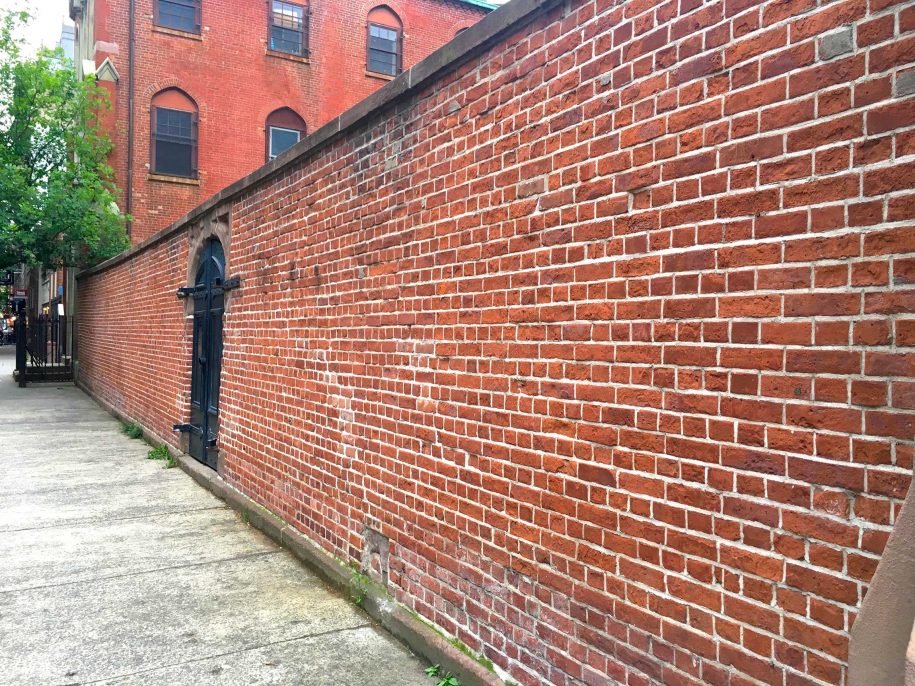
Walk down any street from Balmain to Belrose and you’ll spot the same crime scene: gorgeous old brickwork left to fend for itself against Sydney’s salt air, storm season and the occasional backyard cricket ball. Mortar’s crumbling like a stale Anzac biscuit. Render’s cracked worse than a P-plater’s confidence at the Bondi carpark. And somewhere in there, a homeowner is Googling “why does my house look 40 years older than it is” at 11pm.
Fair dinkum, we get it. Brick and render don’t fail overnight — they fail quietly, year after year, until one day the whole facade looks like it’s given up. That’s the gap Sydney Tuckpointing & Rendering fills. Not with jargon, not with a hard sell, just straight-up expert brickwork and render restoration that actually holds up to a Sydney summer.
This one’s a proper deep dive — how tuckpointing actually works, why cracked brick isn’t just a cosmetic issue, what “affordable” should really mean when you’re hiring a tradie for masonry, and how finishes like Rockcote render, texture coating and faux sandstone can transform a tired facade without a full rebuild. Grab a cuppa, this is the long read.
Why Sydney’s Brick and Render Take Such a Beating
Sydney’s climate is basically brickwork’s worst enemy dressed up as good weather. Salt-laden air off the coast, humidity that swings wildly, and clay soils that shift under footings all conspire to open up mortar joints and crack render. Add sandstone-era homes in the Inner West and Federation cottages on the North Shore, and you’ve got a city with some of the oldest, most character-rich brickwork in the country — and some of the most vulnerable.
Left unchecked, deteriorating mortar lets water into the wall cavity. Water in the cavity means efflorescence (that chalky white bloom), spalling bricks, and eventually structural issues that cost a lot more than a repoint would have. This is the “why should do” question answered plainly: brick and render maintenance isn’t vanity, it’s the cheapest insurance your building will ever get. A tuckpointing job done properly today can save a full masonry rebuild in fifteen years.
Tuckpointing vs Repointing: What’s Actually the Difference?
Here’s where most homeowners get tangled up, and honestly, half the industry doesn’t explain it well either. Repointing is straightforward — raking out failed mortar and packing the joint with fresh, colour-matched mortar. Tuckpointing goes a step further: after the joint is filled, a fine contrasting line (traditionally white or black) is drawn precisely down the centre, creating the illusion of perfectly uniform brickwork — a technique that goes back to Georgian-era England and still turns up on Federation homes across the Eastern Suburbs and North Shore today.
Professional tuckpointing in Sydney is a two-layer, high-skill process, and it’s genuinely one of the more delicate trades in the building game — get the tuck line even slightly off and the whole wall looks worse, not better. If you want the specifics on how the team approaches colour-matching, joint depth and finish, the tuckpointing and repointing service page walks through exactly how each job is scoped before a single tool touches your wall.
Quick way to decide which you need: if your mortar is simply failing and you want a clean, durable finish, repointing does the job. If you’re restoring a heritage look or want that classic crisp brick-line aesthetic, tuckpointing is worth the extra labour.
When the Damage Runs Deeper: Masonry Restoration
Sometimes a wall needs more than fresh mortar. Bowing brickwork, cracked lintels, subsidence-related movement, or decades of botched DIY patch jobs call for a proper structural assessment and full masonry restoration. This is where a lot of “affordable tuckpointing Sydney” searches actually lead people astray — cheap fixes on structurally compromised brick just delay a bigger bill.
A genuine restoration job looks at the whole picture: brick replacement where units have spalled beyond saving, lintel and DPC (damp-proof course) checks, and rebuilding sections that have moved. For anyone dealing with an older Sydney home — sandstone footings, double-brick construction, the works — it’s worth having a look through the masonry restoration and renovation breakdown before assuming a simple repoint will fix things.
Cracked Brick Repair: Small Job, Big Consequences
Hairline cracks are sneaky. They start as nothing — a stress crack from a bit of ground movement, maybe a shrinkage crack from the original build. Left alone through a few wet Sydney winters, they widen, let water in, and start eating away at the brick face itself (that’s spalling, and once it starts it doesn’t stop on its own).
The fix depends entirely on the crack: hairline cracks can often be filled and monitored, while wider or “stepped” cracks (the ones that zigzag along the mortar joints) usually point to movement that needs addressing before cosmetic repair. Mortar matching also matters more than people think — mismatched mortar colour is the single biggest giveaway of a rushed repair job. There’s a full explainer on crack diagnosis and mortar repair technique over on the brickwork and mortar repairs page, including how the crew figures out whether it’s a surface issue or something worth flagging to an engineer.
Brick Paint Removal without Wrecking the Brick Underneath
This one comes up constantly: someone buys a place where a previous owner slapped paint over perfectly good face brick (usually in the ’80s, usually white, usually a crime against architecture). Getting that paint off without damaging the brick face is its own specialist skill — this isn’t a job for a pressure washer and a prayer.
Soda blasting has become the preferred method across Sydney for exactly this reason: it’s a dustless, low-abrasion technique that strips paint and coatings without the surface damage you’d get from aggressive sandblasting, and it doesn’t rely on harsh chemical strippers either. Done right, you get the original brick back looking closer to its 1920s self than its 1980s self. The brick paint removal page covers which method suits which brick type, because — spoiler — sandstock bricks and modern extruded bricks don’t respond the same way to blasting.
Faux Sandstone: All the Grandeur, None of the Quarry Bill
Real sandstone is stunning and also, let’s be honest, ruinously expensive to source and install at scale. That’s why faux sandstone finishes have become such a popular move for Sydney renovators chasing that heritage look — think sandstone-clad entries, feature walls, or fence caps — without needing an actual quarry on speed dial.
A well-applied sandstone imitation finish replicates the colour variation, texture and joint detailing of real stone using specialised render systems, and when it’s done by someone who actually understands stone texture (not just someone who can hold a trowel), the difference from real sandstone is genuinely hard to spot from the footpath. Have a browse through the sandstone imitation gallery for a sense of what’s achievable on a standard brick veneer home.
Acrylic Render and Rockcote: The Workhorse Finishes of Modern Sydney
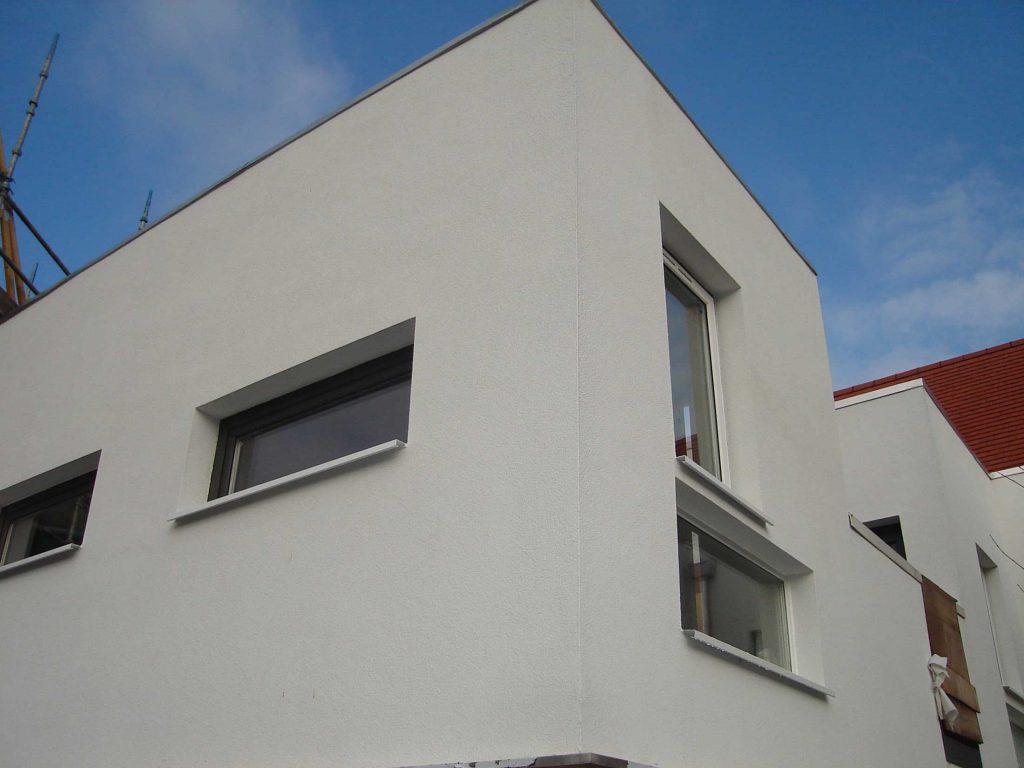
If tuckpointing is the heritage end of the spectrum, acrylic rendering is the modern workhorse. Acrylic render blends cement-based components with acrylic polymers, which makes it far more flexible than traditional cement render — meaning less cracking over time, better water resistance, and a finish that can go straight over brick, blueboard, polystyrene panels, or even previously painted walls.
Rockcote is the industry benchmark here, and for good reason — the range covers everything from smooth Cerano finishes to sandy Sandcote textures to full coloured render systems engineered specifically for harsh Australian conditions. Getting the colour right the first time (rather than repainting every five years) is one of the underrated perks of a proper Rockcote colour system, since the pigment runs through the render itself rather than sitting on top as a coat of paint. Details on the acrylic systems used are on the acrylic cement rendering page, and the specific colour and finish options are covered on the Rockcote colour page.
Texture Coating: Turning a Flat Wall Into a Feature
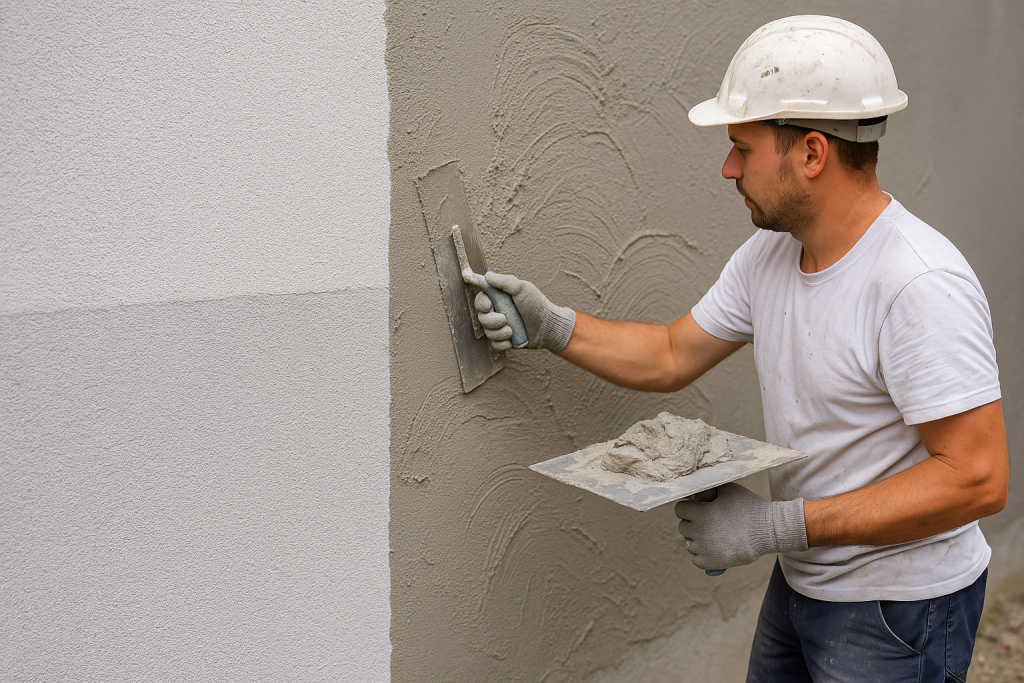
Texture render is the difference between a wall that looks “done” and a wall that looks designed. Whether it’s a fine sponge finish, a heavier bagged texture, or a coarse sand-based coat, texture coating adds depth and hides minor surface imperfections that a flat render would show up in direct light — which, in Sydney, is most of the year. It’s also a solid option for anyone renovating an extension who wants the new render to blend seamlessly with the existing house rather than looking like a patch job. The full range of textures and finish samples live on the texture coating page.
Blueboard: The Cladding Substrate Behind a Lot of Sydney’s Best Renders
Not every rendered wall is sitting on brick. Extensions, granny flats and lightweight builds across Sydney increasingly use blueboard (fibre cement sheeting) as the substrate, precisely because it takes acrylic render beautifully and is far lighter than a full brick skin. Getting the installation right — correct jointing, proper fixing patterns, weatherproof detailing at corners and openings — is what determines whether the render sitting on top lasts twenty years or five. It’s a job that rewards precision far more than speed. See how it’s approached on the blueboard and foam cladding page.
Pool Surface Rendering: Because Nobody Wants Sandpaper Feet
Pool rendering is its own beast entirely. Older Sydney pools finished in marblesheen or pebblecrete eventually go rough, stained or simply dated (that ’90s dark blue isn’t ageing well), and resurfacing means stripping the old coating back to sound concrete — usually via grinding or blasting — before a new finish goes on. Skip that step and the new render just fails again within a couple of seasons, because nothing bonds properly to a chalky, failing substrate.
Whether you’re after a smooth modern pebble finish, a refreshed marblesheen, or a full colour change to lift a tired backyard, the process starts with the same non-negotiable step: proper surface prep. There’s more detail on how pool surfaces are assessed and resurfaced on the swimming pool rendering page.
How Sydney Tuckpointing & Rendering Actually Runs a Job
No two Sydney homes are the same, so the process isn’t a copy-paste job either:
- On-site assessment — checking mortar condition, brick health, existing render, and any structural red flags before quoting.
- Honest scoping — telling you straight if it’s a repoint, a full tuckpoint, or something that needs a broader restoration conversation.
- Surface prep done properly — raking, cleaning, blasting or grinding, whatever the substrate actually needs (this is the step budget operators skip, and it’s the step that determines whether the job lasts).
- Colour and finish matching — mortar, render tint or texture matched to the existing brick or design brief, not just “close enough.”
- Clean handover — site cleared, offcuts and dust gone, walls looking like they mean it.
That’s the difference between a job that photographs well for six months and one that’s still holding up when the grandkids are climbing the same brick fence.
Call us on 0452 522 232 for a free quote, or explore more masonry guides and tips on our blog.
Your walls have been patient long enough. Let’s give them the help they deserve.
A Few Honest Answers (FAQs)
Is tuckpointing worth the extra cost over regular repointing? If you want that classic crisp, contrasting-line brick look — particularly on Federation or heritage-style homes — yes. If you just want solid, weatherproof mortar and don’t care about the aesthetic line, standard repointing is more cost-effective.
How long does acrylic render actually last in Sydney conditions? With proper prep and a quality system like Rockcote, well-applied acrylic render commonly holds up for 15+ years before it needs recoating, though coastal salt exposure can shorten that window slightly.
Can render be applied straight over old paint or existing render? Sometimes, but it depends entirely on the condition of what’s underneath. Loose, flaking or drummy sections need to come off first, or the new render will fail with them.
Is brick paint removal going to damage the brick face? Not if it’s done with the right method for that brick type. Soda blasting and controlled mechanical methods are far gentler than old-school sandblasting, which is why they’re the go-to now.
Do older Sydney pools need special handling during resurfacing? Pools rendered before the early 1990s can contain asbestos in the marblesheen coating, so any removal work on pre-’90s pools should start with a proper assessment before any grinding or blasting begins.
Ready to Stop Ignoring That Wall?
Whatever’s bugging you about your place — flaking paint on the facade, mortar that’s seen better decades, a pool that looks like a science experiment, or just wanting a fresh render colour before summer — it’s worth getting an actual assessment rather than guessing. Have a browse through more real project breakdowns on the blog, or if you’re ready to talk specifics about your place, get in touch and the team will point you toward the right fix, not just the most expensive one. You can also start from the homepage for a full rundown of every service on offer.