
Rendering, tuckpointing, heritage restoration, cracked bricks, sandstone finishes — the complete no-BS guide for Sydney homeowners
There’s a moment every Sydney homeowner dreads. You’re standing in the front yard, coffee in hand, morning light hitting the facade just right — and you notice it. A crack snaking through the brickwork. Mortar crumbling out of joints like stale biscuit. Render peeling off like a bad sunburn after a Bondi January.
You think: “Nah, she’ll be right.”
Mate, she won’t be right. And the longer you leave it, the worse — and more expensive — it gets.
This guide is your straight-talking, no-fluff deep dive into rendering contractors in Sydney, heritage tuckpointing, cracked brick repair, sandstone wall finishes, and masonry restoration. We’ll walk you through what needs doing, why it matters, how the process works, what it costs, and how the right team can genuinely save your property from slow-motion structural disaster.
Let’s get into it.
Why Sydney’s Homes Are Especially Vulnerable (And It’s Not Just the Humidity)
Sydney is a city of extremes. Scorching summers, wet winters, salty coastal air, and soil that shifts more than a politician’s opinion. These conditions are uniquely brutal on masonry.
Federation-era homes across Glebe, Newtown, Paddington and Leichhardt — built with soft sandstock bricks and lime mortar — were never designed for modern-day neglect. Victorian terraces in Balmain and Surry Hills face relentless moisture ingress. Heritage sandstone buildings in The Rocks, Parramatta and the inner west are essentially giant sponges sitting in an outdoor shower.
Then there’s the newer stuff — rendered cavity brick homes from the 1960s through 1990s, where acrylic or cement render is now reaching the end of its service life, cracking, bubbling, and letting in water.
The point? No matter how old or new your Sydney property is, the walls need attention at some stage. The smart move is knowing who to call, what to ask, and what you’re actually paying for.
What Is Cement Rendering — And Why Does Your House Need It?
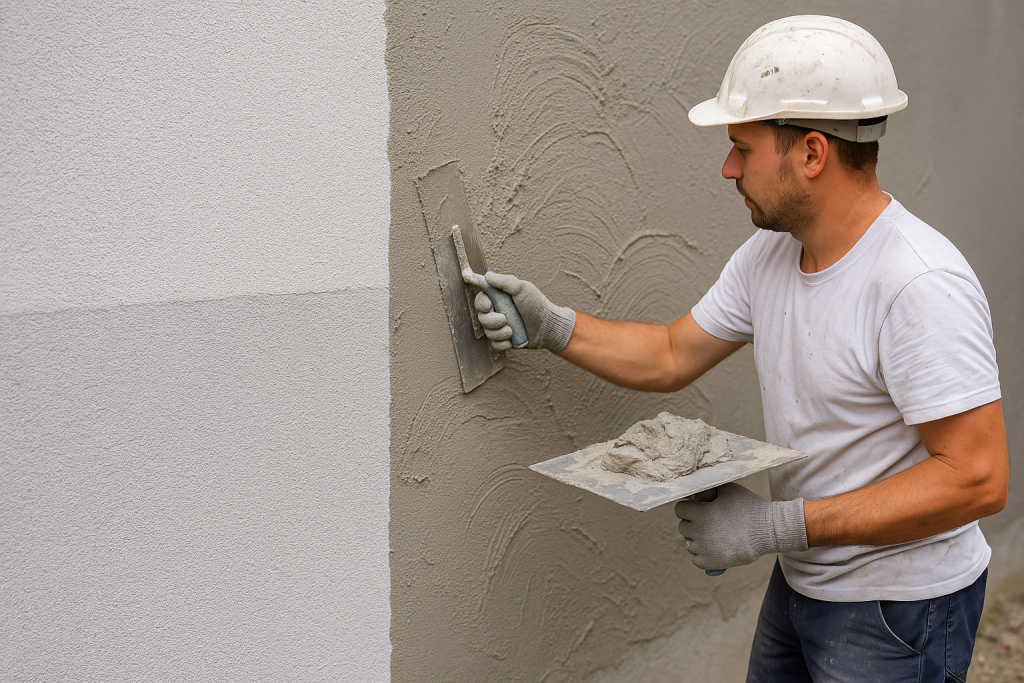
Rendering is the application of a protective and decorative coating to exterior (and sometimes interior) masonry walls. Think of it as a weatherproof skin for your home. A quality render job done by experienced rendering contractors in Sydney does three things at once: it waterproofs, it strengthens, and it transforms the look of a property.
There are several types of render used across Sydney:
Cement render is the traditional workhorse. A mix of sand, Portland cement, and lime, it’s durable and cost-effective. On the downside, it’s rigid — meaning it can crack if there’s any substrate movement. Sydney’s reactive clay soils make this a real consideration. Costs typically sit between $30–$60 per square metre depending on surface preparation and storey access.
Acrylic render is the modern go-to. It’s polymer-modified, which means it flexes rather than cracks — ideal for Sydney’s movement-prone conditions. It also comes pre-tinted, which saves painting costs down the track. Expect to pay $40–$70/m² for a quality acrylic job.
Texture coat and Rockcote finishes give that premium contemporary look — smooth or textured, the choice is yours. Great for new builds or full facade refreshes. These sit at $45–$80/m² depending on texture complexity.
Lime render is the gold standard for older heritage properties. It’s breathable, allowing moisture to move through rather than getting trapped inside — critical for sandstock brick and sandstone buildings. It costs more, takes more skill to apply, and it’s absolutely worth it if you have a heritage home.
For a double-storey house, factor in scaffolding costs of $2,000–$5,000 on top of the render price. Removing old failed render adds another $15–$30/m². A full single-storey home render (approximately 150m²) typically lands between $5,500 and $13,000 all up in the Sydney market.
What Is Tuckpointing — And Why Does Your Federation Home Need It Yesterday?
Alright, here’s one that genuinely confuses people. When most Sydneysiders say “tuckpointing,” they mean the fine white lines drawn over repointed brickwork on Federation and Victorian-era homes — creating the illusion of precise, elegant masonry joints.
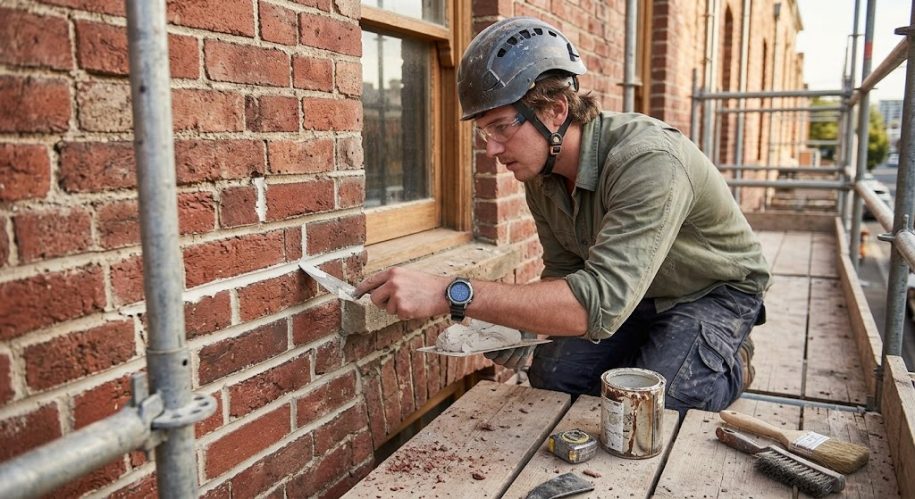
Technically, what they’re describing is a two-step process: repointing (raking out and replacing deteriorated mortar) followed by tuckpointing (applying a fine contrasting line — traditionally white — over the new mortar to create the classic decorative effect). It’s genuinely a bit of a lost art. Not many trades do it well.
The dedicated team behind Sydney’s tuckpointing and repointing services uses a system that keeps those white lines from washing off — which is the number one complaint homeowners have after dodgy tuckpointing jobs.
Why You Shouldn’t Ignore Failing Mortar Joints
Here’s the thing about crumbling mortar: it’s not just an aesthetic issue. Deteriorated joints are the number one entry point for water, and water is the enemy of masonry. Once moisture gets behind brickwork, you’re looking at:
- Salt efflorescence (those white mineral stains on your bricks)
- Spalling bricks (surface delamination that looks terrible and can’t be reversed)
- Internal damp, mould, and rising moisture
- Structural wall movement and cracking
- Potential brick loosening at heights — an actual safety hazard
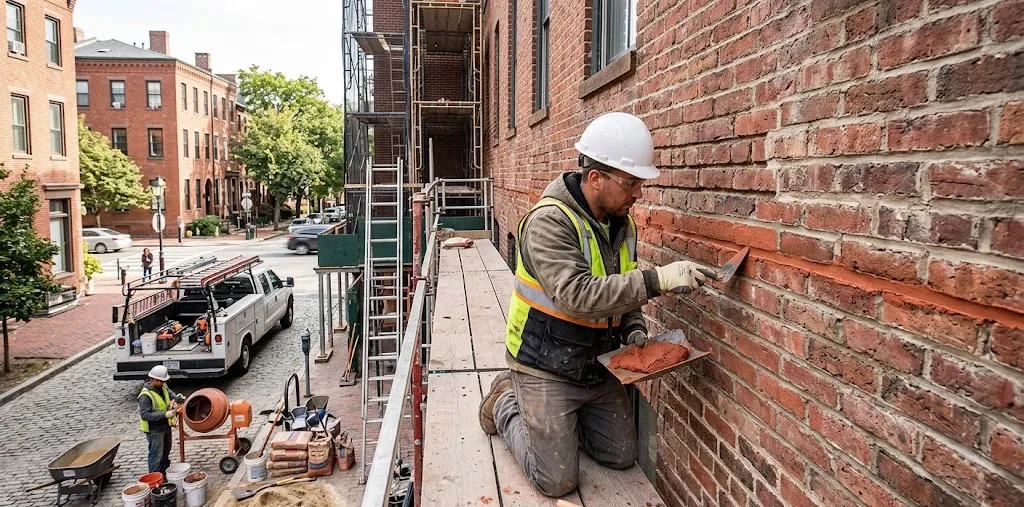
The standard process for professional repointing involves raking out the failing mortar to a depth of about 15–20mm using an angle grinder with a dust-controlled vacuum system, then injecting fresh mortar matched to the colour and composition of the original. For heritage tuckpointing, the finish coat line is applied after the mortar cures — requiring a steady hand, the right mix, and years of practice.
Done right, repointing and tuckpointing adds decades of life to brickwork and dramatically lifts the kerb appeal of period homes.
Heritage Building Restoration in Sydney: Preserving the Past Without Stuffing It Up
Sydney has more than 7,000 heritage-listed properties, and thousands more buildings over 80 years old that aren’t formally listed but deserve the same level of care. If your home falls into this category, standard trades simply won’t cut it.
Heritage building restoration in Sydney is a specialist field that requires understanding of:
- Original materials and their properties (lime mortars, sandstock bricks, sandstone, face brickwork)
- How those materials have aged and what failure modes to expect
- Appropriate repair techniques that don’t cause more harm than good
- Conservation principles that respect original fabric and appearance
The single biggest mistake in heritage restoration is using modern Portland cement mortar on an old lime mortar building. Portland cement is too hard and too rigid — it traps moisture and causes the surrounding brickwork to crack and spall. It’s the trade equivalent of using a sledgehammer for a watchmaker’s job.
Proper masonry restoration and renovation in Sydney starts with an assessment of the existing mortar composition, matching the new mortar accordingly, and applying it in a way that’s sympathetic to the original construction. For listed properties, this may also need to comply with heritage council guidelines — another reason to work with experienced specialists rather than a general renderer who’s never touched a Victorian terrace.
Cracked Brick Repair in Sydney: When Should You Actually Worry?
Not all cracks are created equal. Some are cosmetic. Some are structural. And some are the early warning signs of something serious. Here’s a quick guide:
Hairline cracks in render or mortar joints are usually caused by thermal expansion and contraction — normal, manageable, and easily repaired. No need to panic, but don’t ignore them either, because they widen over time.
Step-cracking following mortar joints in a staircase pattern is classic differential settlement — one part of the footing has moved more than another. Could be minor and stable, could be progressive. Needs assessment.
Horizontal cracking in a brick wall is a red flag. This type of cracking can indicate wall tie failure in cavity walls, or significant structural loading. Don’t DIY this one.
Diagonal cracks radiating from corners of windows and doors are common in Sydney clay soil conditions and often indicate foundation movement. Some are stable and have been sitting there for 30 years; others are actively progressing.
The good news? Most cracked brick repair in Sydney is entirely fixable without major rebuilding. Expert brickwork and mortar repairs can include crack stitching (using stainless steel helical bars embedded in the mortar joints to tie cracked sections back together), lintel replacement (the steel bars over windows and doors that rust and push the brickwork apart), and targeted brick replacement where individual damaged bricks are carefully cut out and replaced with matching originals.
The key is getting a proper assessment from someone who knows what they’re looking at — not just a quote from someone who’s never seen a helical bar in their life.
Sandstone Wall Finishes in Sydney: A Category That Demands Respect
Sydney sits on one of the world’s great sandstone deposits, and the city’s architecture reflects that. From The Rocks to Parramatta, from North Sydney to the Eastern Suburbs, sandstone is woven into the DNA of this city’s built heritage.
But sandstone is also one of the most demanding materials to work with in restoration. It’s porous, it weathers at different rates depending on orientation and exposure, and it requires mortars that are softer and more flexible than the stone itself — or you’ll damage the stone rather than protect it.
What Are Sandstone Imitations — And Why Do People Choose Them?
Not every homeowner can afford (or access) matching original sandstone for repairs and feature walls. That’s where sandstone imitation finishes come in — a specialist render technique that recreates the colour, texture, and visual character of natural sandstone at a fraction of the cost.
This isn’t your knock-off market bag situation — when done well by a skilled applicator, sandstone imitation render is genuinely difficult to distinguish from the real thing. It’s commonly used for:
- Patching sections of damaged sandstone walls where matching stone isn’t available
- New feature walls or boundary fences designed to complement a heritage streetscape
- Front fence piers and retaining walls on properties near heritage-listed buildings
- Garden walls, archways, and feature elements on modern homes wanting a classic aesthetic
The process involves multiple layers of specially formulated render tinted to match Sydney sandstone tones, finished with texture tools that replicate the grain and cut marks of dressed stone. It’s skilled, time-consuming work — and the results can be stunning.
How the Process Actually Works: From First Call to Final Finish
One of the most common frustrations homeowners have with trades is not knowing what to expect. So here’s a straightforward walkthrough of how a professional rendering or restoration job should run.
Step 1 — Site inspection and assessment. A qualified technician visits the property, inspects the existing condition of the walls, identifies the substrate type, checks for moisture issues, assesses any structural concerns, and discusses your goals and preferences. This is not a five-minute drive-by — a thorough assessment takes time.
Step 2 — Detailed quote. You receive a written scope of works and price. Be wary of anyone who quotes on the phone without seeing the job. Surface prep, existing render removal, structural repairs, and access equipment are all job-specific variables.
Step 3 — Surface preparation. Often the most labour-intensive part of the job. This might include grinding out failing mortar, cutting out damaged bricks, repairing cracks, installing wall ties or stitching bars, cleaning down surfaces, and applying bonding compounds where needed. You can’t put good render over a bad substrate. Full stop.
Step 4 — Application. Render is typically applied in two to three coats — scratch coat, brown coat, finish coat — with appropriate curing time between each. For tuckpointing, the fine line is the final step, applied with precision once the base mortar has fully cured.
Step 5 — Clean-up and inspection. A good contractor leaves the site cleaner than they found it and walks you through the completed work. Warranties on materials and workmanship should be provided in writing.
Call us on 0452 522 232 for a free quote, or explore more masonry guides and tips on our blog.
Your walls have been patient long enough. Let’s give them the help they deserve.
The Real Cost of Hiring the Wrong Contractor
Let’s talk about the elephant on the scaffold.
Sydney has no shortage of renderers and “bricklayers” advertising cheap quotes online and through letterbox drops. Some are legitimate; many are not. The most expensive thing you can do with your walls is hire someone who doesn’t know what they’re doing.
Here’s what bad work actually costs:
A failed render job using incompatible materials on heritage brickwork can trap moisture, cause the entire render to delaminate within two years, and — worse — accelerate deterioration of the underlying brickwork. Stripping it off and starting again costs more than the original job.
Repointing with too-hard Portland cement mortar on a soft brick home can literally blow the face off the bricks over the next few winters as moisture cycles through the now-sealed wall. Once a brick is spalled, you can’t un-spall it. The only fix is replacement.
Unqualified crack repair that doesn’t address the underlying cause is money thrown at a symptom. The crack comes back, usually wider.
The contact page is your starting point for a no-obligation assessment — but whoever you call, make sure they’re licensed, insured, and can show you a portfolio of actual work on Sydney properties that look similar to yours.
What to Look For in a Rendering and Restoration Contractor
When you’re getting quotes for rendering or heritage restoration work in Sydney, here’s your checklist:
Licensed and insured — they should have a NSW contractor licence and current public liability insurance. Ask for both. Don’t accept verbal confirmation.
Experience with your specific substrate — there’s a big difference between rendering a new brick veneer home and restoring a lime-mortar sandstone terrace. Ask specifically about experience with your building type.
Matching mortar knowledge — any heritage restoration specialist worth their salt should be able to discuss mortar composition, lime content, and why matching the original mix matters. If they look blank when you ask, walk away.
A proper quote, in writing — scope of works, materials specified, timeline, payment schedule. Not just a number scrawled on the back of a business card.
References and photos — ask for examples of similar work. A contractor who’s been doing quality work in Sydney will have a portfolio. Check the blog for the kind of detailed, experience-backed content that signals genuine expertise.
No cash-only, no-receipt operations — red flag, full stop.
Frequently Asked Questions
How do I know if my render needs replacing or just patching?
Tap the render with your knuckles — if it sounds hollow, the render has delaminated from the substrate and the section needs to come off. Solid-sounding areas with surface cracks can often be patch-repaired. A proper inspection will tell you exactly where you stand.
Can I paint over existing render to fix the look?
Painting over cracked, failing render is like putting lipstick on a structural issue. It masks the symptom for maybe two seasons, then the cracks reappear through the paint and you’ve wasted the painting cost too. Address the render first.
How often does tuckpointing need redoing?
On a well-maintained heritage home, properly done tuckpointing should last 20–30 years. On a neglected property where moisture has been getting in for a long time, the underlying brick damage may mean the work needs to be more comprehensive. Regular inspections every five to ten years are smart practice.
Does rendering add value to my property?
Consistently, yes — particularly in Sydney’s competitive market. Fresh render transforms the street presence of a home, which directly affects buyer perception and appraisals. A quality render job on a tired-looking property can return multiples of its cost in added value at sale.
What’s the difference between repointing and tuckpointing?
Repointing = replacing old, failed mortar in the joints. Tuckpointing = adding a fine decorative contrasting line over the repointed joints for the classic heritage look. Most Federation and Victorian homes that have had “tuckpointing” done have actually had both — repointing to fix the joints, tuckpointing to restore the appearance.
The Bottom Line
Sydney’s built fabric is genuinely extraordinary — Federation bungalows, Victorian terraces, interwar red brick, heritage sandstone, mid-century rendered homes. Every era, every material, every style tells a story. But stories get weathered. Joints crumble. Render fails. Cracks appear.
The difference between a building that ages gracefully and one that deteriorates badly comes down to the quality of the people working on it and the timing of when you call them.
If your walls are telling you something — listen. A proper assessment costs nothing. Ignoring the problem for another two years costs a lot.
The team at Sydney Tuckpointing & Rendering specialises in exactly the kind of work Sydney properties actually need — not generic volume-rendering work, but skilled, material-appropriate, heritage-sensitive restoration and finishing by people who genuinely care about the outcome. Whether it’s masonry restoration, precision repointing work, cracked brick and mortar repairs, or sandstone feature finishes that look the real deal — this is the work they do, every day, across Sydney.
Your walls have been here a long time. Make sure they stick around a lot longer.
Got a wall that’s worrying you? Get in touch for a no-obligation assessment — and check out more guides and project insights on the blog.