
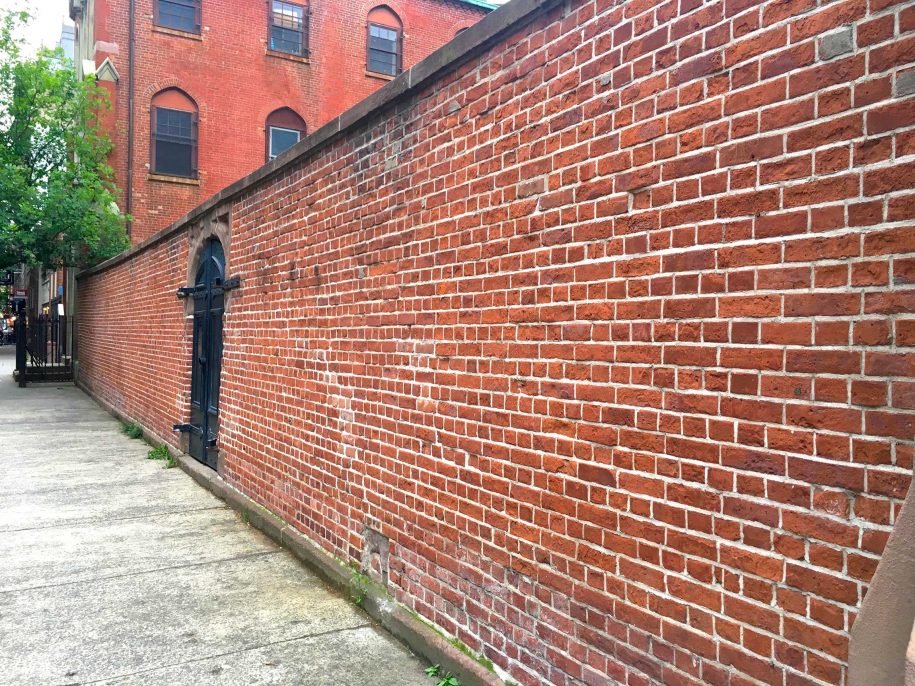
Mate, Those Cracks Aren't "Character" — They're Your Brickwork Screaming for Help
By the team at Tuckpointing & Rendering Sydney | Masonry Repair & Restoration Specialists
There’s something almost romantic about Sydney’s older homes — the Federation-era terraces in Glebe, the sandstone cottages of Hunters Hill, the Victorian red-brick beauties of Newtown. They’ve got soul, history, and stories baked right into their walls.
But here’s the thing: those walls are also quietly falling apart, and most homeowners either don’t notice or choose to believe those hairline cracks are just “settling” or “character.” Spoiler — they’re not. They’re your masonry screaming at you in the only language it knows.
If you’ve landed here, chances are you’ve finally decided to listen. Good on ya. Let’s break down everything you need to know about masonry repair in Sydney — what it actually is, why it matters more here than almost anywhere else in Australia, and how professional building restoration can transform a crumbling eyesore back into something your neighbours envy.
What Is Masonry Repair — And Why Is Sydney So Hard on Brickwork?
Masonry repair is the broad term covering anything from fixing cracked mortar joints and replacing damaged bricks to full-scale heritage building restoration and structural rehabilitation. It’s not just cosmetic — it’s the difference between a building that lasts another century and one that quietly deteriorates until a costly emergency forces your hand.
Sydney is, frankly, brutal on masonry. The city’s climate swings between scorching summer heat and wet winters. Salt-laden air rolls in from the harbour and coastline, accelerating corrosion in mortar joints and wall ties. Old Victorian and Federation homes were often built with soft lime mortars that, while flexible and breathable by design, have a lifespan — and for many Sydney properties, that lifespan expired decades ago.
Add Sydney’s expanding urban soil movements, the occasional heavy downpour, and the fact that many inner-city properties sit on narrow blocks with minimal drainage, and you’ve got the perfect recipe for masonry damage.
The result? Rising damp. Efflorescence. Cracked pointing. Spalling bricks. Bulging walls. And a property that’s slowly losing both structural integrity and market value.
Warning Signs You Should NEVER Ignore
Let’s get specific. Sydney homeowners tend to chalk these up to “old house stuff,” but each of these is a flag that your masonry needs professional attention:
- Crumbling or soft mortar between bricks Run your finger along the mortar joints. If mortar crumbles away or feels sandy and loose, it’s compromised. This is the most common sign that brick masonry restoration is overdue. Deteriorated mortar allows water infiltration, which is where everything starts to get expensive.
- White powdery stains on brick faces (efflorescence) That white chalky residue is salt being drawn out of the masonry by moisture. It signals water is moving through your walls — and where water goes, structural damage follows.
- Stair-step cracking through mortar joints A diagonal crack running in a stair-step pattern through brickwork usually indicates differential settlement or foundation movement. This is beyond a simple patch job and needs a thorough inspection before masonry renovation services can begin.
- Damp patches on internal walls Moisture on internal plaster — especially near the base of walls or around windows — often traces back to failed pointing or deteriorated mortar on the exterior face.
- Spalling or flaking brick faces When bricks literally flake or chip away on the surface, it’s called spalling. Moisture has penetrated the brick and the freeze-thaw or heat-cool cycle has blown the face off. If this isn’t addressed, you’ll be replacing entire sections of brickwork rather than just repointing.
- Bulging or bowing walls One of the most serious signs. This indicates wall tie failure, significant structural movement, or cavity wall deterioration. Do not ignore this one — it’s a safety issue, full stop.
If you’re ticking two or more of these boxes, it’s time to get professional masonry restoration and renovation underway before the problem compounds.
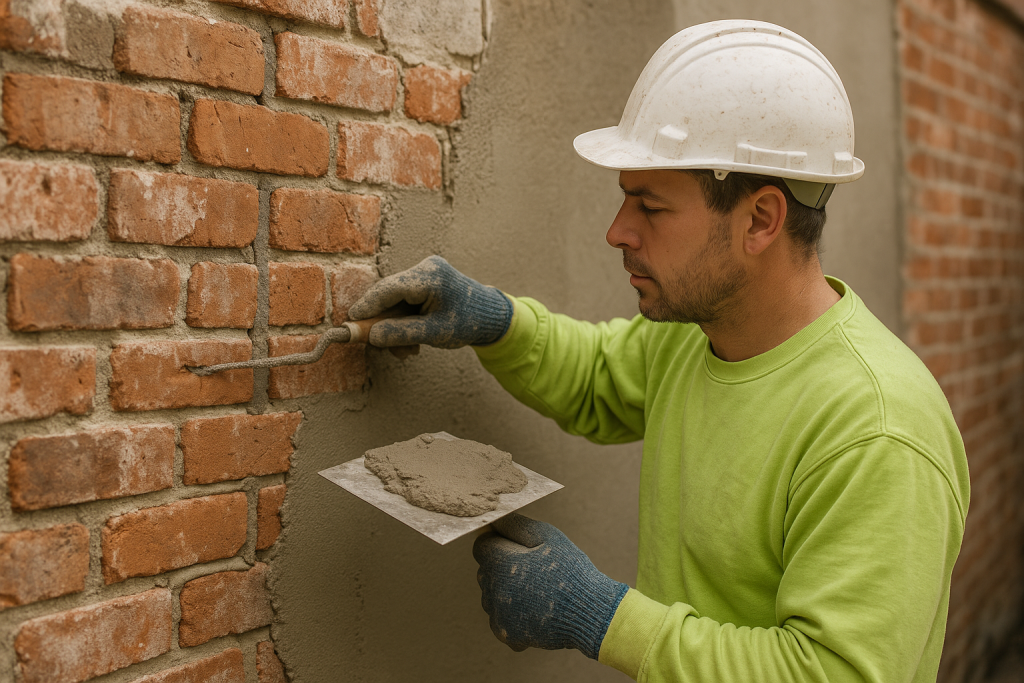
Why DIY Masonry Repair Is a Genuinely Terrible Idea
We get it. You watched three YouTube videos, you’ve got a bag of mortar mix from the hardware store, and you’re pretty handy with a trowel. How hard can it be?
Mate. Please don’t.
Here’s what usually goes wrong with DIY masonry repair:
Wrong mortar mix. This is the big one. Using a modern Portland cement-heavy mortar on a pre-1950s building is one of the worst things you can do. Old bricks were designed to work with softer lime mortars. Hard cement mortar doesn’t flex with the building’s natural movement — instead, it transfers stress directly into the bricks themselves, causing them to crack and spall prematurely. You’ll end up causing far more damage than you started with.
Not raking deep enough. Effective repointing requires removing old mortar to a depth of at least 15–20mm. Most DIY attempts scrape a centimetre off the surface, apply new mortar on top, and call it done. Within a year, it’s peeling away again — and now you’ve got two layers of failing mortar to deal with.
Colour mismatching. Mortar colour matching is genuinely skilled work. A botched colour match makes repair zones immediately visible and can actually devalue your property, particularly on heritage-listed buildings where council approval processes are involved.
Missing the root cause. Poor drainage, blocked weep holes, rising damp — if you patch the symptom without diagnosing the cause, you’ll be back on the ladder in 18 months doing the whole thing again.
This is why experienced masonry contractors aren’t just tradespeople with trowels — they’re diagnosticians first.
The Full Scope of Masonry Restoration Services in Sydney
Masonry renovation services cover a much wider range of work than most people realise. Here’s what a full-service masonry contractor should be able to offer:
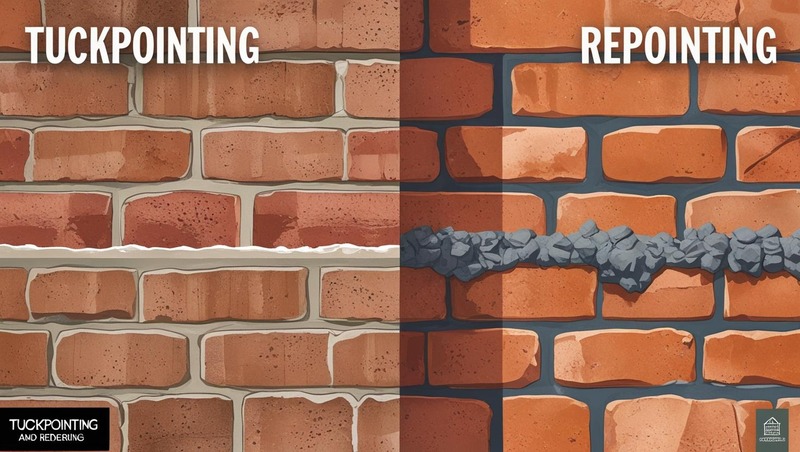
Brick Repointing & Tuckpointing
The foundational service — removing deteriorated mortar from joints and replacing it with properly matched, appropriate mortar. Professional tuckpointing and repointing is both a structural and aesthetic process; done right, it’s virtually invisible and adds decades of life to your brickwork.
Brick Replacement & Mortar Repairs
When individual bricks are damaged beyond saving, skilled brick masonry restoration involves sourcing matching or complementary bricks — sometimes reclaimed stock, sometimes stained to match — and integrating them seamlessly into the existing wall. The goal is structural integrity and visual consistency.
Heritage Building Restoration
This is where the craft really comes into its own. Working on heritage building restoration in Sydney demands a completely different skillset and mindset. You’re not just fixing a wall — you’re preserving a piece of the city’s architectural identity. That means using period-appropriate materials, compatible lime mortars, reclaimed bricks where possible, and traditional techniques that respect the building’s original construction.
Sydney has strict heritage conservation guidelines, and work on heritage-listed properties often requires council-approved methods and documentation. This is not the territory for generalist builders.
Sandstone Restoration
Sydney is blessed with some of the finest sandstone buildings in the Southern Hemisphere, but sandstone is notoriously porous and vulnerable to erosion, staining, and surface degradation. Stone restoration work includes cleaning, repointing, patching, and sealing — all requiring specialist knowledge of the stone’s characteristics and behaviour.
Brickwork & Facade Cleaning
Years of grime, pollution, and biological growth (moss, lichen, algae) can be removed through professional cleaning processes that restore the original colour and character of brickwork without damaging the surface.
Crack Repair & Structural Stitching
For more serious structural movement, modern remedial techniques include helical bar insertion into mortar joints to stitch cracked masonry back together — stabilising walls without the need for wholesale reconstruction.
Heritage Building Restoration in Sydney: It’s Personal
Sydney’s heritage buildings aren’t just old structures — they’re identity. The sandstone terraces of Paddington. The Federation bungalows of Hunters Hill. The early-colonial brick warehouses of The Rocks. These buildings tell the story of how this city grew.
Heritage building restoration in this context carries a responsibility that goes beyond the purely technical. The best masonry restorers in Sydney understand the historical context of the buildings they work on, know which materials are appropriate and which are prohibited, and approach every project with the kind of patience and precision that commercial construction timelines rarely allow.
Critical principles for heritage masonry work:
- Compatibility of materials — mortar strength and composition must be matched to or slightly weaker than the original brick. Softer mortar is sacrificial by design; it protects the irreplaceable brick faces.
- Minimal intervention — the less you change, the more you preserve. Good heritage restoration focuses on stabilising and consolidating existing fabric rather than wholesale replacement.
- Reversibility — where possible, interventions should be reversible, using materials and methods that can be undone by future conservators without causing damage.
- Sourcing — period-appropriate bricks, reclaimed stocks, and custom-matched mortars are non-negotiable on significant heritage work.
If your property falls under a heritage overlay or is located in a heritage conservation area — and significant portions of inner Sydney do — it’s worth checking with your council before any masonry repair work begins.
How Professional Masonry Contractors Actually Work: The Process
Understanding what a proper job looks like helps you identify the cowboys from the craftsmen. Here’s what a thorough masonry repair process looks like from start to finish:
- Inspection & Diagnosis A proper assessment goes beyond eyeballing the surface. Good contractors check for rising damp, test mortar strength, inspect wall ties (especially in cavity walls), assess drainage and water management around the building, and identify the root cause of any damage.
- Scoping & Specification A detailed written scope of work should specify which areas are being treated, what mortar type and mix will be used, how existing mortar will be removed, and how new materials will be matched to the existing structure. For heritage work, this document may need to satisfy council requirements.
- Mortar Removal Using angle grinders or oscillating tools — not hammers and chisels, which risk damaging the brick arrises — mortar is removed to the required depth. Dust management matters here too, especially in residential areas.
- Surface Preparation Joint faces are cleaned and dampened to ensure good adhesion of new mortar. This step is frequently skipped by less thorough operators, and it’s why so many patch jobs fail within 12 months.
- Mortar Application & Finishing New mortar is applied in stages (for deep joints), worked to a consistent profile that matches the original, and finished to shed water appropriately. Multiple finishing profiles exist — flush, weatherstruck, recessed, rodded — and the choice should match the original wherever possible.
- Curing & Protection Freshly applied mortar needs to cure slowly. In hot or windy conditions, the surface may need protection to prevent rapid drying. This is particularly important for lime-based mortars.
- Cleaning & Inspection Final clean-down, spot-check of all repaired areas, and a walkthrough with the client to confirm all work has been completed to specification.
How We Help: Sydney’s Trusted Masonry Specialists
At Tuckpointing & Rendering Sydney, we’ve built our reputation doing exactly this — proper work, properly specified, with materials chosen for compatibility and longevity rather than convenience.
Our team of highly skilled craftsmen are experienced across the full spectrum of masonry work: from routine brick masonry restoration and repointing services for residential properties, through to complex heritage building restoration requiring period-appropriate techniques and materials.
We work across all Sydney suburbs — inner city, eastern suburbs, north shore, inner west, and beyond — and we approach every job, big or small, with the same commitment to quality. We’re not a volume operation. We don’t cut corners on mortar depth. We don’t use the wrong mix because it’s cheaper. And we don’t disappear after the job is done.
Our masonry restoration and renovation services cover:
- Brick repointing and tuckpointing (residential and commercial)
- Full masonry renovation and restoration
- Heritage brickwork and sandstone conservation
- Structural crack repairs and brick replacement
- Brickwork facade cleaning and paint removal
- Sandstone imitations and rendering
Whether you’ve got a crumbling Victorian terrace in Balmain, a Federation bungalow in Strathfield with failing mortar joints, or a mid-century commercial building in need of a full facade overhaul, our team has the experience to get it done right.
Frequently Asked Questions
How do I know if I need repointing or full brick replacement? If the mortar joints are deteriorated but the bricks themselves are intact, repointing is usually sufficient. If bricks are spalling, cracking, or structurally compromised, replacement may be necessary. A qualified masonry contractor can assess this during an inspection.
Is masonry repair covered by home insurance? It depends on your policy and the cause of damage. Gradual deterioration is generally not covered, but storm or impact damage often is. Check your policy and have a professional provide documentation if you’re lodging a claim.
How long does repointing last? When done correctly with appropriate materials, professional repointing should last 20–30 years minimum. Poorly done work with incompatible mortar may need attention within 3–5 years.
Does heritage listing affect what masonry repairs I can do? Yes, significantly. Heritage-listed properties may require council approval for certain works and must use approved methods and materials. A specialist masonry contractor familiar with Sydney’s heritage controls is essential.
Can you match old mortar colour exactly? Not exactly, but close enough that repairs aren’t visible to the casual observer. Experienced tradespeople assess the original mortar’s colour, texture, and aggregate, and custom-mix accordingly.
The Bottom Line: Don’t Wait for the Wall to Tell You Twice
Masonry damage doesn’t get better on its own. Every winter rain that seeps through cracked pointing does more damage. Every summer that bakes the moisture out of compromised brickwork accelerates the deterioration. The longer you wait, the bigger the scope — and the bigger the bill.
Sydney’s built environment is genuinely special. The homes here are worth preserving — not just as assets, but as architecture. Masonry repair and building restoration isn’t just maintenance; it’s stewardship of something that took generations to build and that future owners will depend on you to hand over intact.
If you’re not sure where to start, we’re always happy to have a look and give you an honest assessment. No drama, no pressure — just straight talk about what your masonry actually needs.
Call us on 0452 522 232 for a free quote, or explore more masonry guides and tips on our blog.
Your walls have been patient long enough. Let’s give them the help they deserve.