
There’s a moment every Sydney homeowner has at some point — standing in the driveway, coffee in hand, squinting at the front wall like it just insulted your mother. The mortar’s gone crumbly. There’s a weird green tinge creeping up near the downpipe. Someone, at some point in the ’80s, decided painting the bricks was a good idea, and now you’re staring at flaking beige paint over what might be gorgeous clay brick underneath. Or maybe it’s worse — a hairline crack that’s slowly turning into a not-so-hairline crack.
The gut reaction is always the same: “I might just have to knock it down and start again.”
Nine times out of ten, you don’t. And that’s not us being nice — that’s just how old brickwork actually works. Bricks are tough. Sandstone is tougher. What fails first is almost always the stuff between the bricks or on top of them, not the structural bones of the wall itself. Fix that layer properly and the wall gets another 30, 40, sometimes 60 years out of it.
We’re Sydney Tuckpointing & Rendering, and we’ve spent a very long time crawling around old terraces, sandstone retaining walls, federation homes and everything in between, working out exactly which walls need surgery and which ones just need a good clean-up and some fresh mortar. This is basically that knowledge, dumped into one blog post, so you can stop Googling “is my brick wall dying” at 11pm.
Why Sydney Brickwork Ages the Way It Does
Sydney’s climate is not kind to masonry. We get salty coastal air rolling in from the east, humidity that never fully lets up, and then a summer that bakes everything dry before the next round of rain hits. That expansion-contraction cycle is brutal on old lime and cement mortar, which is exactly why so many homes built pre-1990 are showing the same symptoms: crumbling joints, spalling brick faces, and render that’s starting to drum hollow when you knock on it.
The good news is that almost every one of these problems has a targeted fix, rather than a “tear it all out” fix. That’s the whole idea behind restoration work — you’re not replacing the wall, you’re replacing the parts of the wall that have actually failed.
Step One: Work out What’s Actually Wrong
Before anyone touches an angle grinder, a proper assessment has to happen. This is the bit a lot of operators skip, and it’s the bit that causes the most expensive mistakes. Render over crumbling brick, for instance, can look fine for a year and then start popping off in sheets because nobody checked what was underneath it first.
A decent masonry restoration and renovation assessment looks at:
- How deep the mortar deterioration actually goes (surface flaking vs. structural loss)
- Whether the brick faces themselves are spalling or just dirty
- Signs of rising damp or salt attack, especially near ground level
- Movement cracks vs. cosmetic cracking
- What’s under any existing paint or render coat
Get this step right and everything downstream — cost, timeline, materials — gets a lot more predictable.
Repointing: The Unsung Hero of Old Brick
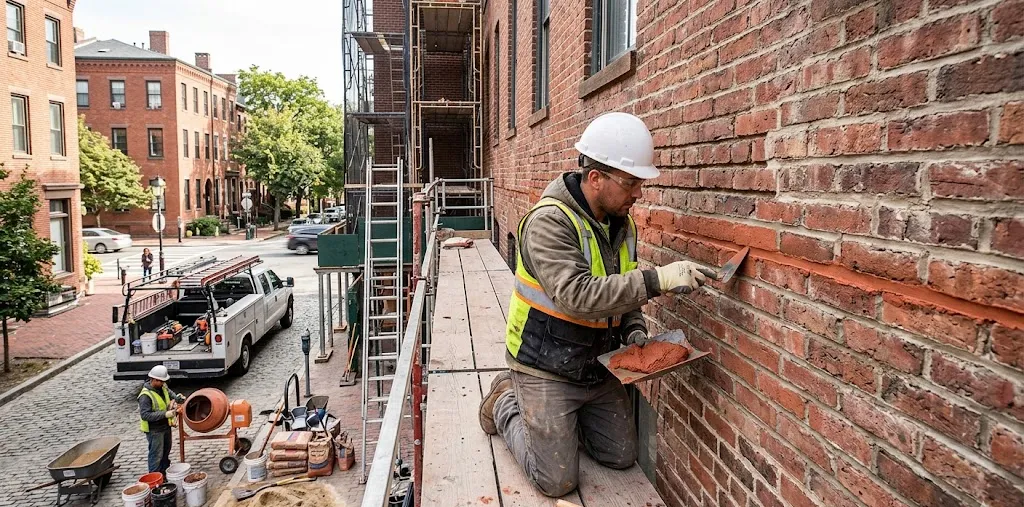
If there’s one repair that punches above its weight, it’s repointing. This is where the old, crumbling mortar joints get raked out to a proper depth and packed back in with fresh mortar mixed to match the original — colour, texture, the lot. Done well, you genuinely can’t tell where the old joint ends and the new one begins.
Tuckpointing and repointing takes it one step further with a decorative touch — a fine contrasting line worked into the fresh mortar to create that crisp, ruled-joint look you see on beautifully kept heritage terraces around the Inner West and Eastern Suburbs. It’s not just for looks either. Tight, well-finished joints keep water out, which is the single biggest factor in how long a wall lasts.
The trick with repointing is depth. A lot of cowboy jobs just skim a thin layer of fresh mortar over the top of the old, failing stuff — looks fine for six months, then it’s back to square one. Proper repointing means raking out to at least 20-25mm before repacking, so the new mortar has something to actually key into.
When It’s More than Just the Joints
Sometimes the damage has moved past the mortar and into the brick or stone itself — chipped edges, cracked units, sections where a previous “repair” was done with the wrong mortar mix (way too common, and it accelerates damage rather than fixing it). This is where general brickwork and mortar repairs come in, patching, replacing, and reinforcing individual sections without touching the wall as a whole.
This is honestly the whole philosophy in a nutshell: fix what’s broken, leave what isn’t. A wall doesn’t need a full rebuild because three courses of brick near the base copped some water damage. It needs those three courses sorted properly.
Got Painted Brick? You’ve Got Options
This one comes up constantly. Somebody, at some point, painted over lovely original brickwork — maybe to hide patchy repairs, maybe it was just the trend at the time. Now it’s peeling, or you just want the natural brick back.
Stripping paint off brick is a genuinely delicate job. Go in too aggressive with sandblasting or the wrong chemical stripper and you can pit or scar the brick face permanently — which is a one-way trip, there’s no undoing that. Professional brick paint removal uses a calibrated combination of steam, purpose-built strippers, and controlled washing to lift the paint layer by layer without taking the brick’s surface with it. What’s underneath is very often in far better shape than people expect — the paint’s actually been protecting it from UV and weather all this time.
Rendering: Not Just a Cover-Up
Render gets a bit of a bad rap because of dodgy jobs slapped over structurally unsound brick. Done properly though, render is one of the most effective ways to protect and transform a tired wall without a rebuild.
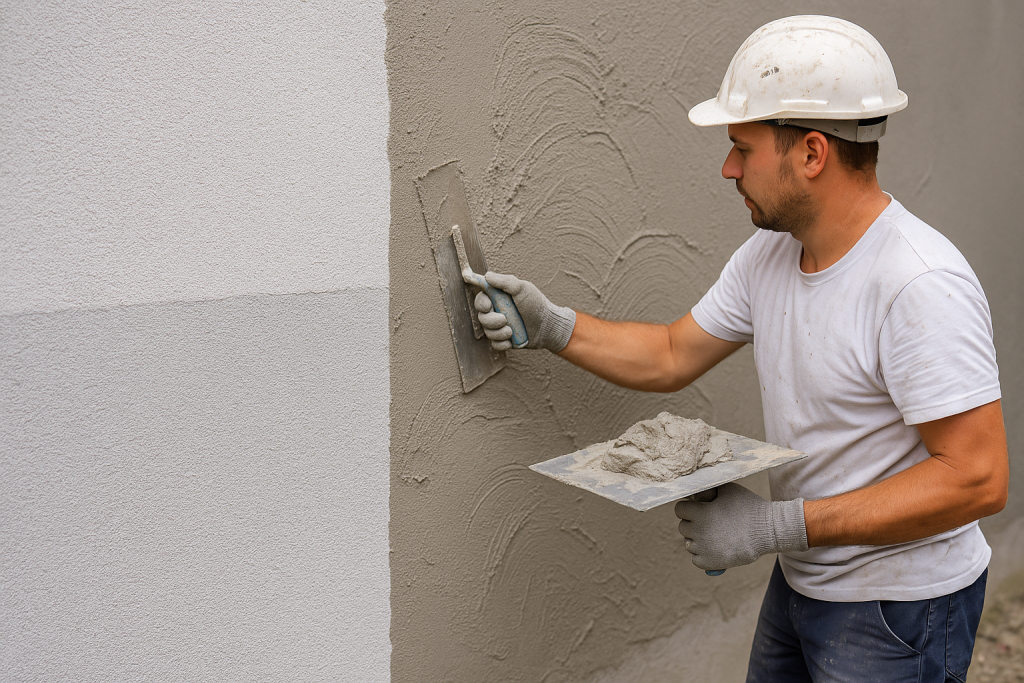
Acrylic rendering is the workhorse option for most Sydney homes — flexible, crack-resistant, and available in a huge range of finishes, which makes acrylic cement rendering a solid pick for anyone wanting a clean, modern facade without going near a full reclad.
For a more premium, colour-through finish, Rockcote colour rendering delivers a textured, UV-stable coating that doesn’t need repainting every few years the way traditional painted render does. Our Rockcote colour system is popular with renovators chasing that Hamptons or coastal-contemporary look without the ongoing maintenance headache.
If you’re after texture rather than a flat finish, texture coating builds in visual depth and helps hide minor surface imperfections that a flat render would show up. It’s a favourite for older homes where the brick underneath isn’t perfectly uniform. Have a look at what our texture coating service can do for facades that need a bit more character.
And for anyone dealing with genuine heritage sandstone, or wanting the sandstone look without the sandstone budget, sandstone rendering (also called sandstone imitation rendering) recreates that classic block-and-mortar appearance over standard brick or block. Check out our sandstone imitations work if you’re chasing that period-correct sandstone finish on a modern budget.
Call us on 0452 522 232 for a free quote, or explore more masonry guides and tips on our blog.
Your walls have been patient long enough. Let’s give them the help they deserve.
The Wildcards: Cladding and Pool Rendering
Two areas that don’t get talked about enough:
Foam cladding (blueboard cladding) is a genuine alternative when a wall’s insulation performance or weatherproofing needs a serious upgrade, and traditional render or brick repair isn’t going to cut it alone. It’s lightweight, adds thermal performance, and can be finished to look like a standard rendered wall. Our blueboard foam cladding service is worth a look if you’re renovating an extension or a wall that’s chronically cold or damp.
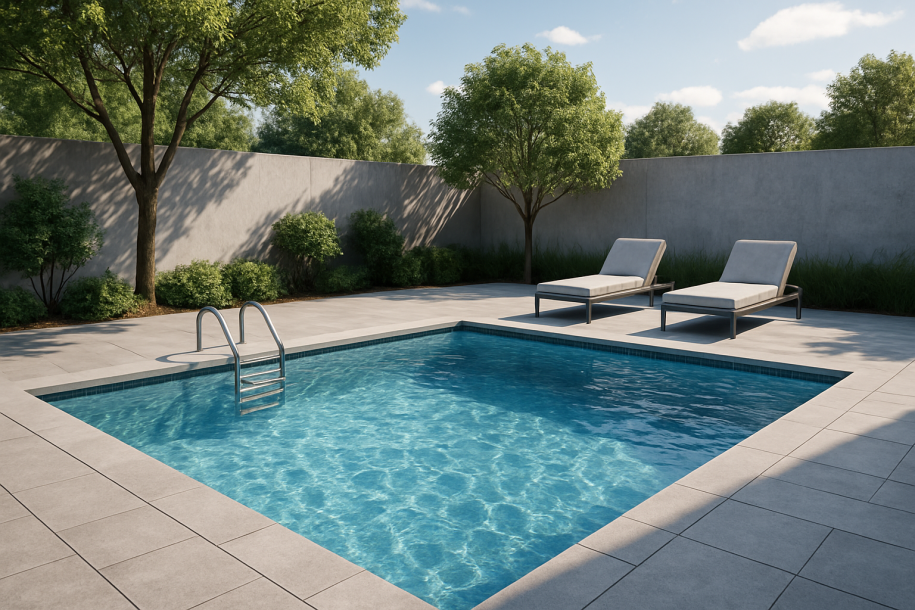
Swimming pool rendering is its own beast entirely — constant water exposure, chlorine, and UV mean pool surrounds need a completely different render specification to a house facade. If your pool render is chalking, cracking or staining, our swimming pool rendering team handles the surface prep and coating system properly, so you’re not redoing it again in three summers.
So, Rebuild or Restore? Here’s the Honest Answer
A full rebuild only really makes sense when:
- The wall has genuine structural movement (not just cosmetic cracking)
- Large sections of brick have failed and can’t be sourced or matched
- Council or engineering advice specifically calls for it
Everything short of that — and that’s the overwhelming majority of cases we get called out for — can be handled through targeted repointing, brick and mortar repair, paint removal, or rendering. It’s faster, it’s dramatically cheaper, and honestly, it usually looks better than a full rebuild anyway, because you keep the original brick character instead of starting from a blank slate.
FAQs: The Questions We Actually Get Asked
How do I know if it’s a repointing job or a full render is needed? If the brick faces themselves are intact and it’s just the mortar joints failing, repointing alone will usually sort it and keeps the natural brick look. If the brick surface is badly spalled, patchy from old repairs, or you want a uniform finish across mismatched brickwork, render becomes the better call. A proper site inspection is really the only way to know for sure — what looks like a “just needs a lick of paint” job from the footpath can look very different once you’re up close on scaffold.
Will repointing actually match my existing mortar colour? Yes, and it should be a non-negotiable part of the quote. Mortar can be colour-matched using pigment additives and sand blends to sit close to the original, especially important on heritage-listed or federation-era homes where a mismatched patch job stands out like a sore thumb. Ask to see a sample panel before work starts on the full facade.
Is it cheaper to render over damaged brick than to repoint it first? Rendering over unrepaired, crumbling mortar is a false economy — it might look fine initially, but without a sound substrate underneath, render will crack and delaminate far earlier than it should. Repointing or repairing first, then rendering, costs more upfront but saves you from redoing the whole job in two or three years.
How long does a typical tuckpointing job take on a standard Sydney terrace? For a single-storey terrace facade, most jobs land somewhere between three days and a week and a half, depending on how extensive the deterioration is and whether decorative tuckpointing lines are being added. Double-storey or full-perimeter jobs naturally take longer.
Can old sandstone be repaired the same way as brick? Sandstone needs a softer, more breathable mortar mix than standard brick mortar — using the wrong mix on sandstone actually accelerates its deterioration, because sandstone needs to release moisture differently. This is a specialist job, not a general bricklaying one.
Does paint removal damage the brick underneath? Done properly, no — but it’s method-dependent. Aggressive sandblasting can scar softer bricks permanently, which is why steam and chemical stripping methods are generally the safer route for older or softer brick types common in Sydney’s pre-war housing stock.
What’s the real difference between rendering and cladding for an old wall? Render is a coating applied directly (or over a mesh system) to the existing wall surface — good for cosmetic and light weatherproofing upgrades. Cladding, like blueboard foam systems, adds a separate insulated layer, which makes sense when thermal performance or serious moisture issues are the real problem, not just appearance.
Doesn’t Let a Tired Wall Talk You into a Rebuild
Old brickwork has a lot more fight left in it than most people give it credit for. Before you start pricing up demolition, get someone to actually look at what’s failing and what isn’t — because more often than not, the fix is smaller, faster and considerably kinder to your budget than a rebuild.
Have a browse through our blog for more deep dives into specific brick and render problems, or if you’ve got a wall that’s currently giving you grief, get in touch through our contact page and we’ll take a proper look before you commit to anything drastic.