

If your brick wall could talk, it wouldn’t be saying much right now — it’d be groaning. Every Sydney summer bakes it, every Sydney storm soaks it, and somewhere between the humidity and the salty coastal air, that once-proud mortar starts turning to sand between your fingers. Sound familiar? You’re not imagining it, and you’re definitely not alone.
Sydney’s a city built on brick and sandstone, from the sandstone terraces of Paddington to the fibro-and-brick combos out west, and every single one of them is quietly fighting a losing battle against time, weather and the odd dodgy DIY paint job from three owners ago. The good news is none of it’s a lost cause. Whether your issue is powdery mortar joints, a render job that’s cracking like a dry paddock, or a pool shell that’s gone from “resort vibes” to “swamp vibes,” there’s a fix — and usually it’s a lot less dramatic (and less expensive) than starting from scratch.
We put this guide together after digging through what other Sydney tradies are actually offering, what homeowners are asking about most, and what tends to go wrong when the job’s rushed or handled by someone who learned it all from a YouTube tutorial last Tuesday. Consider this your no-nonsense map to getting your brick and render sorted properly.
Repointing and Tuckpointing: The Unsung Hero of an Old Brick Home
Let’s start with the job nobody notices until it’s too late — repointing. Mortar joints are basically the glue holding your brickwork’s whole story together, and over 30, 50, or 100 years, that glue breaks down. You’ll see it as crumbly, powdery joints, sometimes with actual gaps you could post a letter through.
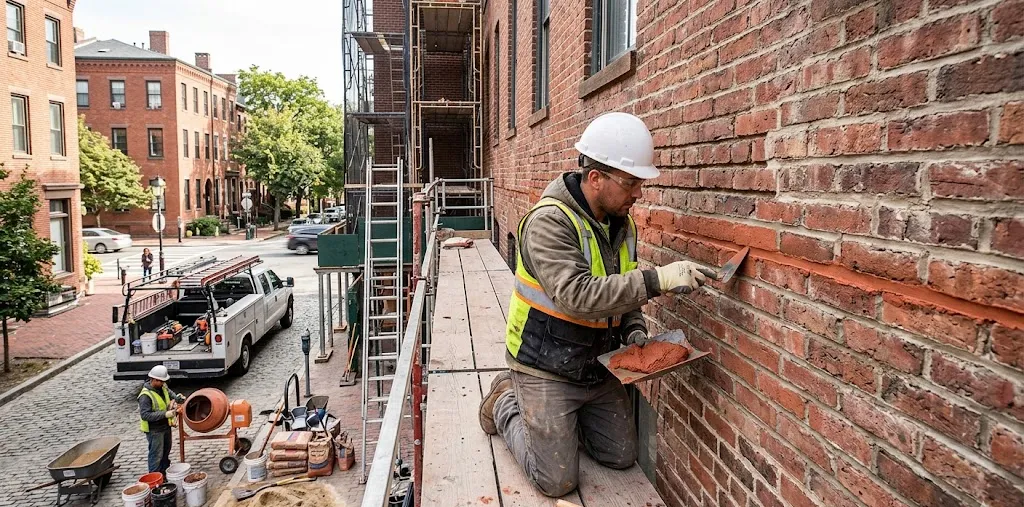
Left alone, this isn’t just cosmetic. Water gets into those gaps, works its way behind the bricks, and next thing you know you’ve got damp creeping up your internal walls or a lintel rusting away above a window. It’s the classic “small job now, big job later” situation. A proper crew doing tuckpointing and repointing work across Sydney will rake out the old mortar to the right depth, match the new mix to your original joint profile, and — if it’s a heritage-style tuckpoint — even add that fine contrasting line for the old-school look. It’s a bit like dental work for your house: not glamorous, but it saves you from losing the whole tooth later.
When the Brickwork Itself Needs More Than a Patch-Up
Sometimes it’s not just the mortar — it’s the bricks and the structure underneath that are showing their age. Cracked lintels, bowing walls, spalling (that’s when the brick face literally flakes off), or step cracking around windows and doors are all signs the wall needs proper attention rather than a quick cosmetic cover-up.
This is where genuine masonry restoration and renovation comes in — replacing damaged bricks, addressing structural movement, and bringing a tired old facade back to something you’re not embarrassed to park the car in front of. It’s especially common on Federation and Victorian-era homes around the inner west and eastern suburbs, where the bones are gorgeous but the brick has been through a lot.
And if it’s specifically the joints and surrounding brick that are falling apart rather than a full structural issue, a targeted brickwork and mortar repair is usually all that’s needed — patch the problem spots, match the mortar colour, and move on with your life.
Painted Brick: Great Idea in 1987, Not So Much Now
Here’s a confession a lot of Sydney homeowners eventually make: someone, at some point, painted the brick. Maybe it was to hide dodgy repairs; maybe it was just a fashion moment that didn’t age well. Either way, painted brick traps moisture, which is exactly what brick doesn’t want, and it flakes and peels in that particularly sad way that makes a whole street look tired.
Getting that paint off without destroying the brick face underneath is a genuinely skilled job — too aggressive with the chemicals or the pressure washer and you’ll etch or damage the brick permanently. A careful approach to removing paint from brick uses the right stripping method and pressure for your specific brick type, so what’s underneath gets a second chance to breathe and look the way it was always meant to.
Sandstone without the Sandstone Price Tag
Real sandstone is stunning — it’s also heavy, expensive, and not always practical for a full renovation or a feature wall you want finished this century. This is where sandstone imitation rendering earns its keep. Done well, a sandstone-style render gives you that warm, textured, old-Sydney look on garden walls, entrances or facades, without needing a quarry and a small mortgage. It’s popular for heritage-adjacent renovations where you want the sandstone aesthetic to tie in with a period home, minus the structural load and cost of the real deal.
Cement Rendering: Still the Backbone of Sydney Facades
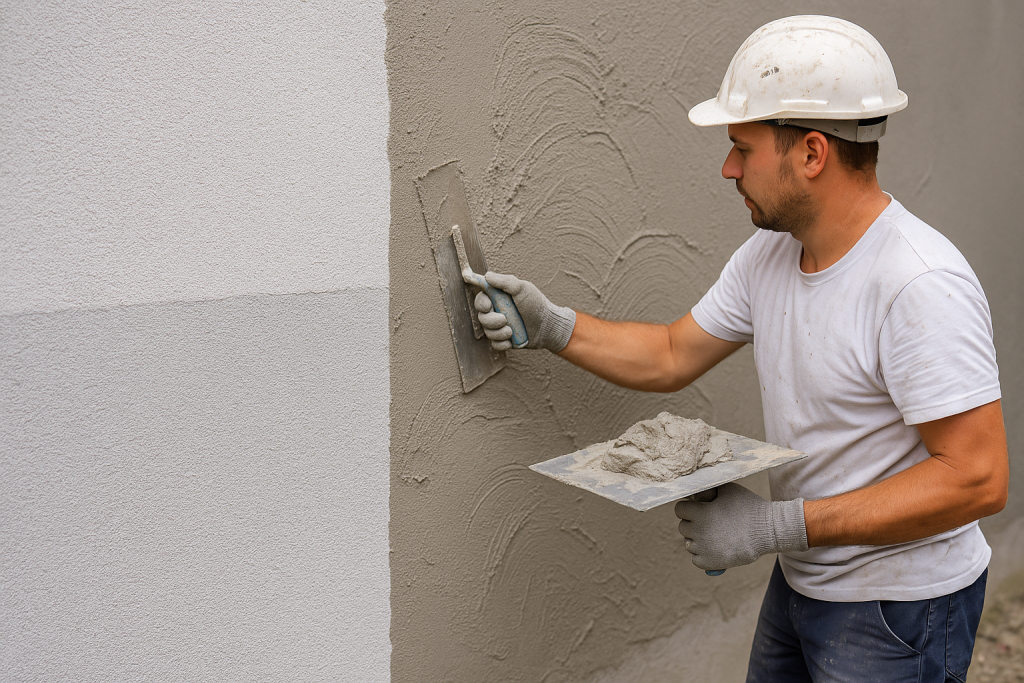
Cement render remains one of the most requested jobs across Sydney, and for good reason — it’s durable, it hides a multitude of brick sins, and it gives a clean, modern finish to everything from a 1970s brick veneer to a brand-new build. A well-applied acrylic cement render is more flexible than old-school sand-and-cement mixes too, meaning it copes better with the small movements that Sydney’s clay soils and temperature swings throw at a building over the years — less cracking, more longevity.
If you want colour baked right into the finish rather than relying on paint that’ll need redoing every five to seven years, a Rockcote colour render is worth a serious look. The colour runs through the render itself, so a scuff or minor chip doesn’t show a stark white patch underneath — it just blends back in. Genuinely one of those products that’s more low-maintenance than it looks on the brochure.
And for homeowners chasing a specific texture — pebbled, coarse, fine sand, or something more architectural — a textured wall coating lets you dial in exactly the look you’re after, whether that’s a heavy Mediterranean-style texture or something sleek and minimal for a newer build.
Foam Cladding: Lightweight, Fast, and Surprisingly Tough
Not every job is about existing brick — sometimes it’s about building the wall system from scratch, especially on extensions, granny flats, or new facades. This is where blueboard and foam cladding comes into its own. It’s lighter than traditional masonry, quicker to install, and once rendered over, most people can’t tell the difference between it and a solid brick wall. For renovations where you’re adding a second storey or don’t want to load up the existing structure with extra weight, it’s often the smarter engineering choice as much as the cheaper one.
Pool Rendering: Because Nobody Wants a Swamp in the Backyard
Last but definitely not least — the pool. Sydney loves a backyard pool, but the render on the shell doesn’t last forever, and once it starts pitting, staining, or going rough underfoot, it’s not just ugly, it’s uncomfortable (ask anyone who’s grazed a heel on old pool render). Fresh swimming pool rendering brings back that smooth, resort-style finish, seals up hairline cracks before they become leaks, and honestly makes the whole backyard feel like an upgrade rather than a chore waiting to happen.
So, Who Do You Actually Call?
There’s no shortage of blokes with a ute and a trowel advertising “rendering and repointing Sydney-wide,” and some of them are genuinely excellent. But this kind of work rewards experience in a way that’s hard to fake — matching mortar colour, knowing when a wall needs structural attention versus a cosmetic fix, and getting a render mix right for Sydney’s specific climate all come down to having done it hundreds of times before, not just once on your place.
That’s the gap Sydney Tuckpointing & Rendering aims to fill — a Sydney-based crew that treats repointing, masonry repair, rendering and cladding as genuine trades, not a side hustle. If you’re weighing up your options, it’s worth having a browse through Sydney Tuckpointing & Rendering directly to see the full run of services before deciding what your place actually needs.
If you’re still not sure exactly what your wall, chimney or pool needs, that’s genuinely fine — most homeowners aren’t meant to know the difference between a tuckpoint and a Rockcote render off the top of their head. That’s what a proper assessment is for. There’s also a stack of past project breakdowns and tips over on the blog section if you want to nerd out further, or you can just skip the research and reach out for a chat about what’s going on with your place.
Call us on 0452 522 232 for a free quote, or explore more masonry guides and tips on our blog.
Your walls have been patient long enough. Let’s give them the help they deserve.
FAQs: The Questions We Get Asked on Repeat
How do I know if I need repointing or a full render job? If the mortar between the bricks is crumbly, cracked, or missing in patches but the brick faces themselves are in decent shape, repointing usually does the trick. If the brick surface is damaged, uneven, previously painted, or you just want a completely different look, rendering is the better route.
Is cement render or acrylic render better for a Sydney home? Acrylic render tends to handle Sydney’s shifting clay soils and temperature swings better, since it flexes slightly rather than cracking. Traditional cement render is cheaper upfront but can be more prone to hairline cracking over time, especially on older or moving structures.
Can painted brick actually be restored back to bare brick? In most cases, yes — with the right stripping technique and pressure for the specific brick and paint type. It’s not a job for a rental pressure washer though, since too much force can damage the brick face permanently.
How long does a Rockcote or texture-coated render actually last? With proper prep and application, a quality coloured or textured render can comfortably last 15-20+ years before it needs any real attention, well beyond what a standard paint job manages.
Does pool rendering need to be redone on a set schedule? Not on a strict timeline, but most pool renders start showing their age — roughness, staining, or small cracks — somewhere around the 10-15 year mark, sooner if the water chemistry hasn’t been well maintained.
Is foam cladding actually as durable as brick veneer? Once properly rendered and sealed, yes — it holds up well to Sydney conditions and is often chosen specifically for extensions and upper storeys because it’s lighter without sacrificing the finished look or durability.