
Walk down any street from Paddington to Parramatta and you’ll see it: the tell-tale crumble of mortar joints, the render that’s cracking like a dry creek bed, the brickwork that’s seen one too many summers. Sydney’s climate is gorgeous for a beach day and absolutely brutal on masonry. Salt air off the coast, UV that doesn’t quit, and the kind of humidity swings that make render blister and bricks sweat out their mortar one grain at a time.
The good news? None of it is terminal. Whether you’re dealing with dodgy old pointing on a Federation semi in Glebe, a rendered block of units in the Inner West that’s gone patchy, or a swimming pool that’s started weeping through the render, there’s a fix — and usually it’s more affordable than the “just knock it down and start again” quote you got from the last bloke.
This is your no-nonsense walkthrough of the big brick and renders jobs Sydney homes actually need, why they matter, and how to tell a proper tradesperson from someone with a trowel and a dream. Consider it the blog post you wish you’d read before you got three wildly different quotes and a headache.
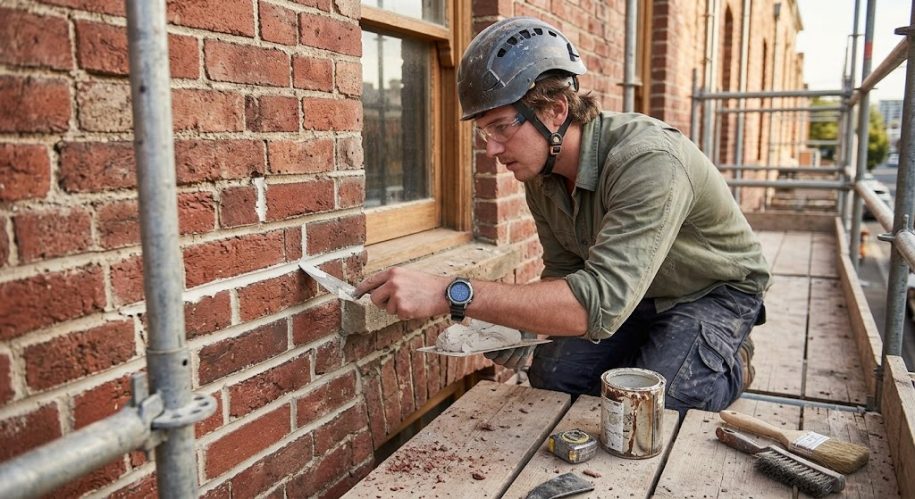
Tuckpointing and Repointing: The Unsung Hero of Old Brickwork
Let’s start with the job most people don’t know they need until someone points it out (pun very much intended). Mortar joints are the glue holding your brickwork together, and over decades of Sydney weather, that mortar erodes, cracks, and eventually starts letting water straight into the wall cavity. Once water’s in, you’re not just looking at cosmetic damage — you’re looking at rising damp, efflorescence, and eventually structural headaches.
Tuckpointing and repointing addresses this at the source. The crumbling old mortar gets raked out and replaced, and for genuine tuckpointing, two contrasting mortar colours are used to create that crisp, fine-joint look that heritage buildings are famous for. It’s part conservation, part illusion — the kind of detail that makes a hundred-year-old terrace look sharper than a brand-new builds.
If your joints are looking chalky, receding, or you can poke a key into them (please don’t actually test this at home), it’s worth getting a proper assessment of your tuckpointing and repointing needs before the problem migrates from “cosmetic” to “structural.”
Masonry Restoration: For When the Bricks Themselves Are the Problem
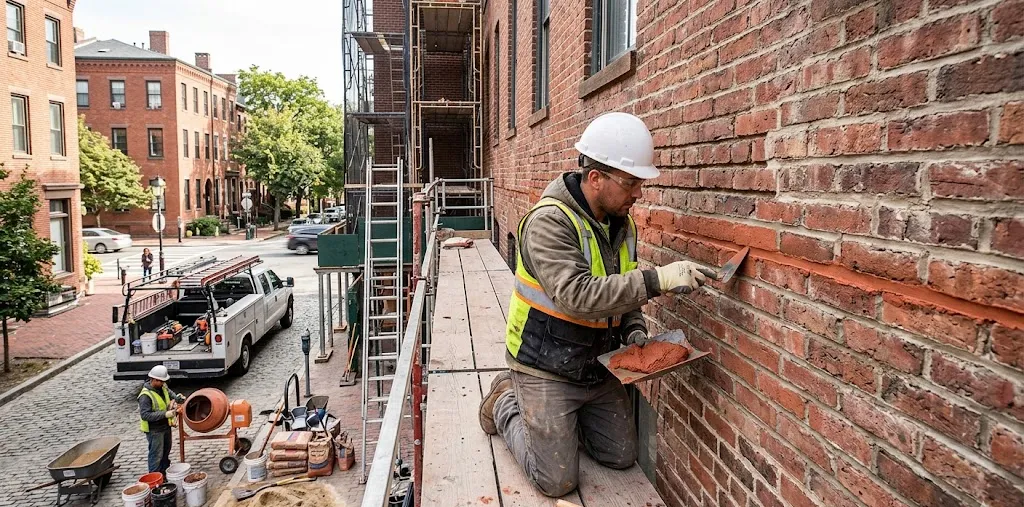
Sometimes it’s not the mortar — it’s the bricks. Spalling (that’s the technical term for bricks flaking and crumbling on the face), cracked headers, salt damp working its way up from the ground, or decades of dodgy repairs stacked on top of each other. Sydney has no shortage of gorgeous old sandstone and brick buildings, and plenty of them are quietly falling apart behind a fresh coat of paint.
Proper masonry restoration isn’t about slapping render over the problem and hoping nobody looks too closely (heritage assessors will absolutely look closely). It’s about diagnosing why the masonry is failing — usually moisture-related — and repairing with materials that match the original construction, not just whatever’s cheapest at the hardware store. For pre-1920s buildings especially, that often means lime-based mortars and breathable finishes rather than modern cement, because trapping moisture behind an impermeable layer is how you turn a small problem into a very expensive one.
If your building’s got that “loved but neglected” look, a proper masonry restoration and renovation assessment is the move before you commit to a full renovation.
Brickwork and Mortar Repairs: The Bread and Butter Job
Not every job is a full heritage restoration. Sometimes you’ve just got a cracked lintel, a few loose bricks near a downpipe, or mortar that’s failed around a window frame after a storm. These smaller brickwork and mortar repairs are arguably the most cost-effective maintenance you can do on a Sydney property, because they stop small issues becoming big ones.
Brick ties failing, hairline cracks running diagonally from window corners (a classic sign of minor movement), or patches where a previous “repair” is now falling out itself — these are all fair game for a targeted repair rather than a full rebuild. Getting on top of brickwork and mortar repairs early is the difference between a half-day job and scaffolding for a month.
Brick Paint Removal: Undoing the 1980s
Every era has its regrets. Bell-bottoms, questionable haircuts, and — in the world of Sydney real estate — painting over perfectly good face brick. It seemed like a good idea at the time. Now you’re stuck with a house that looks like it’s wearing a beige jumper it never asked for, and paint that’s trapping moisture against the brick face.
Removing paint from brickwork is a genuinely delicate job. Too aggressive with the chemicals or the pressure washer and you’ll blast the face right off the bricks, leaving them more porous and worse off than before. Done properly, with the right stripping method and gentle enough pressure, you can reveal the original brick underneath and give a tired façade a completely new lease on life — often for a fraction of the cost of re-cladding. If your place is hiding good bones under bad paint, bricks paint removal is worth investigating before you write the brickwork off entirely.
Call us on 0452 522 232 for a free quote, or explore more masonry guides and tips on our blog.
Your walls have been patient long enough. Let’s give them the help they deserve.
Sandstone Imitation: All the Glamour, None of the Quarry Bill
Sydney has a genuine love affair with sandstone — thinks The Rocks, Hyde Park Barracks, and half the grand old homes on the North Shore. Real sandstone, though, comes with a real price tag, plus ongoing maintenance as it weathers, spalls, and stains over time.
Enter sandstone imitation renders: engineered finishes that replicate the colour variation, texture, and warmth of natural stone using polymer-modified render systems, without the freeze-thaw cracking or the quarrying invoice. Modern imitation systems are genuinely convincing — most people walk straight past without realising it isn’t the real deal — and they can be applied to existing brick or block walls to completely transform a street-facing façade.
If you love the sandstone look but not the sandstone budget, it’s worth exploring sandstone imitation finishes as a genuinely legitimate alternative rather than a compromise.
Acrylic Rendering: The Facelift Most Sydney Homes Actually Need
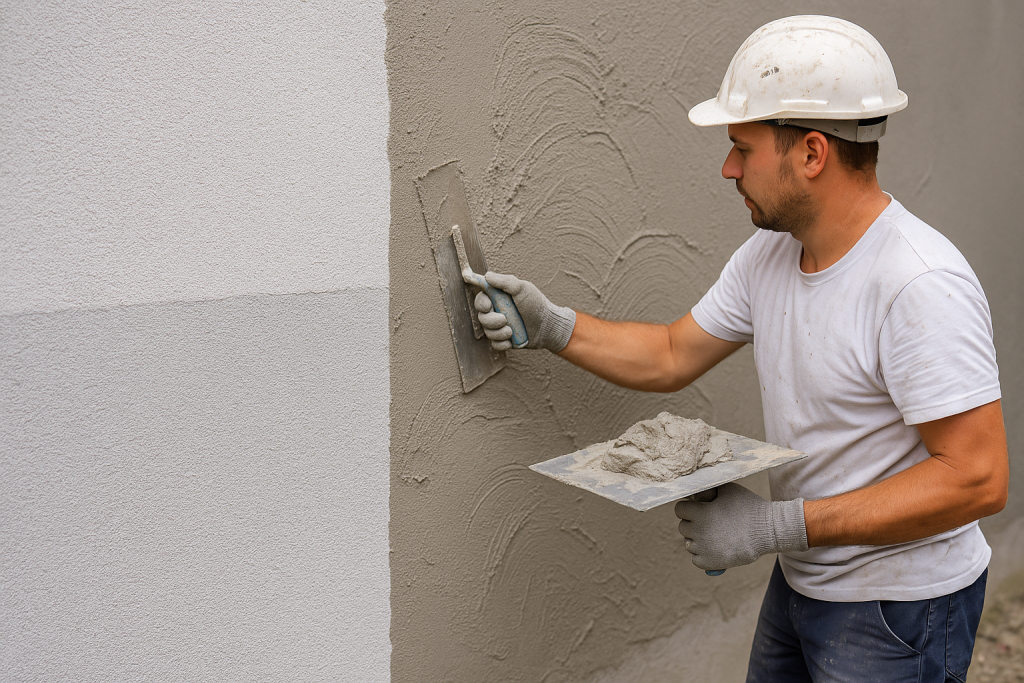
If tuckpointing is about preserving what’s there, rendering is about transforming it. Acrylic rendering has become the go-to option for Sydney homes wanting a modern makeover — it’s flexible, resists cracking better than traditional cement render, and can go straight over most existing masonry, fibre cement sheeting, and even previously painted surfaces.
The appeal is obvious once you’ve seen a tired 1970s brick veneer turned into a crisp, contemporary façade in a matter of days rather than weeks. Acrylic render also handles Sydney’s climate swings better than old-school hard render, which tends to crack under thermal movement. Those said application matters enormously — get the substrate prep wrong, work in the wrong weather, or skimp on curing time, and you’ll be looking at hairline cracking within a year or two. This is very much a “pay for the experience, not just the material” job — quality acrylic and cement rendering comes down to who’s holding the trowel as much as what’s in the bucket.
Rockcote Rendering: When You Want Colour That Doesn’t Fade Into the Sunset (Literally)
Rockcote has built a genuine reputation across Australia for coloured render and texture systems designed specifically for harsh local conditions — and Sydney’s UV levels and coastal salt air are about as harsh as it gets for exterior finishes. The advantage of a proper Rockcote system is that the colour is integrated through the render itself, rather than sitting on top as a paint film that will chalk, fade, and eventually need repainting every five to seven years.
For homeowners who want a specific colour and texture combination — smooth, sponge, or one of the more tactile natural-stone-look finishes — a Rockcote-based system gives a level of design flexibility that generic render simply doesn’t. Getting proper Rockcote colour rendering applied by someone who actually understands the system (not just someone who’s watched a YouTube tutorial) makes a genuine long-term difference to how the finish ages.
Texture Coating: Durability with a Bit of Personality
Texture coating sits in an interesting spot between render and paint — it’s a specialised exterior treatment that adds protective qualities while giving you a huge range of finish options, from fine sand textures to bolder, more dramatic looks. For older render that’s gone patchy or concrete surfaces that need both protection and a style refresh, texture coating is often a far cheaper route than a full re-render.
It’s particularly popular on Sydney commercial buildings and strata properties, where durability and low maintenance matter as much as street appeal. A well-applied texture coat can genuinely extend the working life of a wall system by years, and if your current finish is chalking, staining, or just looking dated, texture coating is worth a look before committing to anything more invasive.
Blueboard and Foam Cladding: The Lightweight Option That’s Quietly Taken Over
If you’re extending upward or outward — a second-storey addition, a granny flat, a new alfresco wing — chances are your builder has mentioned blueboard. This fibre cement sheeting is a pre-primed, texture-coated base sheet that gives you the appearance of solid rendered masonry without the structural weight, cost, or build time of actual brick and block work.
Blueboard (and foam cladding for insulation-focused projects) has become the default for double-storey additions specifically because it cuts down on scaffolding and structural costs while still allowing a full range of coloured and textured finishes. It’s not a cut corner — it’s genuinely a smarter build method for a lot of renovation scenarios, provided the installation and finishing render coat is done properly. Considering blueboard cladding for your next extension is worth a conversation with your builder early in the planning stage, not as an afterthought.
Swimming Pool Rendering: Because Nobody Wants a Leaky Pool in January
Finally, the job that gets urgent very quickly: pool rendering. Pool render isn’t just about looks (though a tired, stained, algae-streaked pool interior is nobody’s idea of a good time) — it’s a waterproofing system. When pool render starts cracking or delaminating, you’re not just looking at an eyesore, you’re looking at water finding its way behind the shell, which in Sydney’s reactive clay soils can cause genuine structural movement over time.
Specialist pool rendering uses waterproof, chemical-resistant render systems designed specifically for constant water immersion — a very different beast from wall rendering. Get it wrong and you’ll be re-rendering again within a couple of summers. Get it right, ideally before the peak of the swimming season rather than during it, and it’s one of those jobs that quietly protect a much bigger investment. If your pool’s looking rough or you’ve noticed damp patches on the surrounding paving, swimming pool rendering should be on your to-do list well before the first heatwave hits.
Why It Pays to Use One Team for the Lot
Here’s the thing about brick and render work — the jobs above rarely exist in isolation. A house that needs repointing often also needs some mortar repair nearby. A render job on an old façade might reveal masonry issues underneath that need addressing first. Chopping and changing between five different tradespeople for what is fundamentally one interconnected job (your building’s exterior) tends to end in finger-pointing when something doesn’t quite line up.
That’s the whole reason Sydney Tuckpointing & Rendering covers the full spectrum — from heritage-grade tuckpointing through to modern acrylic and Rockcote finishes, sandstone imitation, blueboard cladding, and pool rendering — under one roof, with one team who understands how each of these jobs interacts with the others.
If you want to see more real Sydney jobs and practical advice, the team regularly posts to their project blog, and if you’ve got a specific wall, pool, or heritage headache you’d like eyes on, it’s easy enough to get in touch for a free assessment.
FAQs
How do I know if I need repointing or a full render? If the bricks themselves are in reasonable condition and it’s just the mortar joints that are failing, repointing is usually all that’s needed. If the brick faces are spalling, badly stained, or you simply want a completely different look, rendering (or a sandstone imitation finish) becomes the better option.
Is acrylic rendering better than traditional cement render for Sydney homes? For most residential applications, yes — acrylic render is more flexible, resists cracking from thermal movement better, and can be painted within 48 hours of application. Traditional cement render is still preferred for certain heritage or structural contexts where breathability matters more than speed.
How long does pool rendering last before it needs redoing? A properly applied, chemical-resistant pool render system typically lasts 10–15 years, though water chemistry, pool usage, and the quality of the original application all affect that timeline significantly.
Can blueboard cladding be used on an existing brick house? Blueboard is most commonly used for new additions, extensions, and second-storey builds rather than over existing solid brick walls, since its main advantage is reducing structural load on new lightweight framing.
Does sandstone imitation look as good as real sandstone up close? Modern imitation render systems replicate colour variation and texture convincingly enough that most people can’t tell the difference without touching the surface — and they don’t come with the ongoing maintenance and spalling issues of natural sandstone.
How much does tuckpointing cost in Sydney? Pricing depends heavily on the extent of deterioration, wall accessibility, and whether heritage-matched mortar colours are required, so it’s best assessed with an on-site inspection rather than a ballpark figure over the phone.